
Anti-Glare Film for Car Mirrors: 5 Options Compared

For glare reduction on an interior rearview mirror, choose Interior Rearview Anti-Glare Film because it is specifically described as anti-glare film for that mirror type and measures 7.8 by 2.1 inches. Drivers seeking side-mirror coverage or rain-repelling features should consider Raknaok Side Mirror Film instead.
Mirror film is a thin overlay, so fit depends on the usable mirror surface and whether the film is intended for an interior or exterior mirror.
We earn a commission if you buy through links on this page. As an Amazon Associate I earn from qualifying purchases. Products are compared on manufacturer specifications, not hands-on testing.
- Best overall: Interior Rearview Anti-Glare Film – It specifically targets interior rearview mirror glare and gives a 7.8-by-2.1-inch size.
- Best for side mirrors: Raknaok Side Mirror Film – It combines anti-glare language with a hydrophobic coating for side-mirror use.
- Best for a larger oval: Oval Waterproof Mirror Film – Its 5.71-by-3.94-inch oval shape is useful when that footprint matches the mirror.
| Product | Best for | Intended fit | Size | Weather features | Shop |
|---|---|---|---|---|---|
| Interior Rearview Anti-Glare Film | Interior mirror glare | Interior rearview mirror | 7.8 × 2.1 in | Anti-glare; no rain feature stated | Check Price on Amazon |
| Raknaok Side Mirror Film | Side mirror weather | Side mirrors; most cars, trucks, SUVs | — | Hydrophobic; anti-fog; anti-glare | Check Price on Amazon |
| Frienda Rearview Mirror Film | Wet weather coverage | Car mirrors and side windows | Oval and square; dimensions not given | Waterproof; anti-fog; anti-glare | Check Price on Amazon |
| LeeLoon Nano Rearview Mirror Film | Multi-surface protection | Mirrors and side windows | 7.9 × 6.9 in to 100 × 100 mm | Anti-fog; anti-glare; waterproof | Check Price on Amazon |
| Oval Waterproof Mirror Film | Defined oval footprint | Most standard mirrors; SUVs, sedans, trucks | 5.71 × 3.94 in | Waterproof; anti-fog | Check Price on Amazon |
Anti-glare film for car mirrors
Match film shape and dimensions to the usable mirror surface, then weigh glare reduction against rain and fog features.
Interior Rearview Anti-Glare Film

Unlike the exterior-oriented options, this film is specifically framed for an interior rearview mirror and gives a defined inverted-triangle footprint of 7.8 by 2.1 inches. The maker says its layered PET construction includes an anti-reflective layer intended to reduce glare from strong light. That narrow shape may suit a mirror with a matching center area, but it will not cover a broad mirror face; measure the usable glass and compare the outline before choosing. Consider another option if rain beading on an exterior mirror is the priority.
Bottom line: Choose this for a narrow interior mirror area when glare is the main concern.
Raknaok Side Mirror Film

For side mirrors, this option differs by combining the anti-glare purpose with a hydrophobic coating. The maker says the coating repels rain and that the multi-layer PET build resists yellowing, peeling, and wrinkling. This is the more relevant direction when wet-weather visibility matters alongside glare; choose a dimensioned option instead if you need to match a specific oval or rectangle precisely.
Bottom line: Choose this when side-mirror rain protection and glare reduction are both priorities.
Frienda Rearview Mirror Film
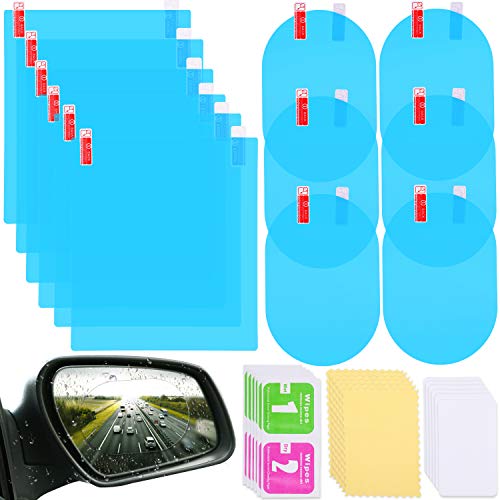
Compared with the glare-focused interior film, this pack emphasizes rainy- and foggy-weather visibility across car mirrors and side windows. Its PET and nano-coating construction is described as helping water spread rather than condense, and the maker also claims reduced light glare. The oval and square shapes offer choices, but the pack-size wording is inconsistent and gives no film dimensions; verify the piece count and measurements before ordering. It suits someone seeking both wet-weather and glare features, but not a buyer who needs a known exact footprint.
Bottom line: Consider this for mixed weather needs if the shape and measurements check out.
LeeLoon Nano Rearview Mirror Film
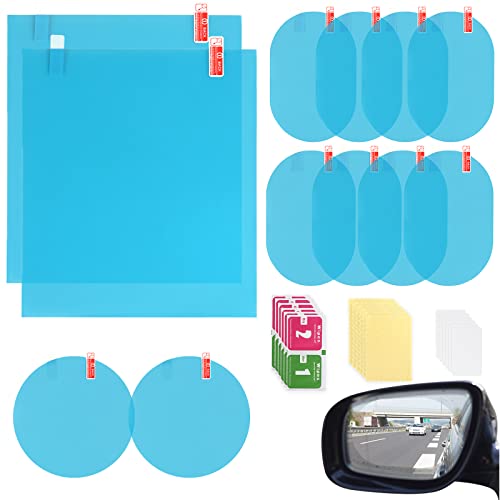
It is also described for mirrors and side windows, making it a multipurpose choice rather than a narrowly sized interior-mirror film. The size range is given as 7.9 by 6.9 inches to 100 by 100 millimeters, which is not one simple cut size; check the actual piece dimensions and shape against the intended mirror. That extra coverage may be unnecessary for a small mirror.
Bottom line: Pick this when broad mirror or window coverage matters more than a single defined shape.
Oval Waterproof Mirror Film

Unlike the options that explicitly mention glare reduction, this one is described primarily as a waterproof and anti-fog mirror overlay. Its transparent oval measures 5.71 by 3.94 inches, providing a concrete footprint for comparison with a mirror’s flat usable area. The maker says a hydrophobic coating sheds rainwater and that the multi-layer PET structure is abrasion-resistant. Because the feature emphasis is rain and fog rather than glare, it is a less direct match for shoppers focused on nighttime headlight reflections. Check the oval against the mirror before selecting it.
Bottom line: Choose this when the oval size fits and rain or fog protection is the main need.
How to choose anti-glare mirror film
Start with mirror location: interior rearview film and exterior side-mirror film are not interchangeable by purpose. Measure the flat, usable mirror surface in both directions, excluding the frame, then compare that area with the film footprint; a 7.8-by-2.1-inch triangle and a 5.71-by-3.94-inch oval cover very different shapes. If the mirror’s usable area is narrower than either dimension, select a smaller cut or skip the overlay rather than trimming across the reflective view. Decide whether the priority is glare, rain shedding, fog resistance, or a combination, because product feature sets differ. Keep any overlay fully within the mirror glass so the frame does not lift an edge.
Interior rearview versus side mirror film
Interior and exterior mirrors serve different viewing positions, so choose film intended for the mirror you plan to cover. Interior mirror film is positioned for reflections from traffic behind the vehicle, while side-mirror films in this group emphasize rain and fog features as well as glare. A convex side mirror makes distant objects appear smaller and farther away than they are; an overlay should not obscure its warning text or distort the reflected scene. Use a simple decision rule: if the application is an interior mirror and the film is narrow and triangular, compare it with the mirror’s center area; if it is a side mirror, match the shape and full usable surface first. Do not accept a fit that blocks the driver’s view.
Mirror film shapes and feature tradeoffs
Choose by shape before choosing by feature claims: an oval film will not neatly cover a triangular or rectangular mirror area. This guide’s options range from a 7.8-by-2.1-inch triangle to a 5.71-by-3.94-inch oval, while some give no single usable dimension. Wet-weather films use hydrophobic coatings intended to make water spread or roll off, whereas anti-glare claims focus on reducing reflected light. Those functions are not identical, and extra coating features do not guarantee a clearer view in every condition. Use the comparison below to decide what to verify and what purpose each type serves.
| Need | Film type to consider | Fit check |
|---|---|---|
| Interior glare reduction | Narrow anti-glare overlay | Match its outline to the interior mirror |
| Rain shedding on side mirrors | Hydrophobic exterior film | Confirm dimensions and full glass coverage |
| Rain and fog features | Waterproof or anti-fog film | Confirm shape and piece size |
Installing and checking mirror film
A clean, dry, correctly measured mirror surface is the starting point for a flat overlay; dust trapped underneath can create visible bumps and interfere with the reflected view. One supplied option describes cleaning the mirror and applying water or alcohol during installation, but application methods can differ by film, so use the method specified for the chosen material. Work from the center toward the edges to push out trapped liquid or air, and stop if wrinkles or bubbles remain in the driver’s sightline. Before driving, check the reflection from the normal seated position in daylight and at night; remove or reposition a film that creates distortion, blocks any part of the mirror, or loosens at its edges.
Frequently Asked Questions
Will mirror film stop headlight glare at night?
Some films are marketed with anti-glare or anti-reflective features, but the effect depends on the film and view through it. Check that the overlay does not distort the reflected scene or reduce usable mirror area before driving at night.
How do I measure a mirror for film?
Measure the flat glass area in both directions, excluding the frame, and compare the shape as well as the width and height. For example, a 5.71-by-3.94-inch oval will not cover a narrow triangular area neatly.
Can I use side mirror film on an interior mirror?
Only if its shape, size, and intended use fit the interior mirror. Exterior films may be sized or coated for rain exposure, while interior mirror products may target glare without a rain-shedding function.
Does hydrophobic mirror film prevent fogging?
Hydrophobic films are designed to change how water behaves on the surface, and some products also claim anti-fog performance. Fog can still obscure a mirror, so confirm the film is specifically described for anti-fog use rather than assuming water repellency alone handles it.
Can mirror film impair visibility?
Yes, any overlay can reduce usable mirror area or introduce bubbles, wrinkles, or distortion if it does not fit flat. Do not drive with film that obscures the reflected view, and check the reflection from the normal seated position before use.