
Waterproof Socks for Swimming: 3 Types Compared

OMGear 3mm Low-Cut Neoprene Socks is the clearest match for swimming in cooler water because its 3mm neoprene construction is designed for warmth and foot protection. Choose another style if you need a quick-drying fabric water shoe for dry-land walking; water socks are not a guarantee of a watertight seal.
We earn a commission if you buy through links on this page. As an Amazon Associate I earn from qualifying purchases. Products are compared on manufacturer specifications, not hands-on testing.
- Best overall: OMGear 3mm Low-Cut Neoprene Socks – Its 3mm neoprene construction and low-cut, adjustable opening suit swim and dive use.
- Best for higher coverage: XUKER 3mm High-Cut Neoprene Socks – The high-cut style adds ankle coverage, and its 3mm neoprene construction is aimed at cooler water.
- Best for fin use: Janedream Neoprene Dive Socks – The swimming and dive sock design is described for use with fins.
| Product | Best for | Material | Thickness | Cut | Shop |
|---|---|---|---|---|---|
| OMGear 3mm Low-Cut Neoprene Socks | Cool-water swimming | Neoprene/nylon | 3 mm | Low cut | Check Price on Amazon |
| XUKER 3mm High-Cut Neoprene Socks | Higher ankle coverage | 90% neoprene, 10% nylon | 3 mm | High cut | Check Price on Amazon |
| Janedream Neoprene Dive Socks | Fin-compatible swimming | Nylon | — | — | Check Price on Amazon |
Waterproof Socks for Swimming
Compare coverage, materials and sole construction to match your swim setting and footwear needs.
OMGear 3mm Low-Cut Neoprene Socks
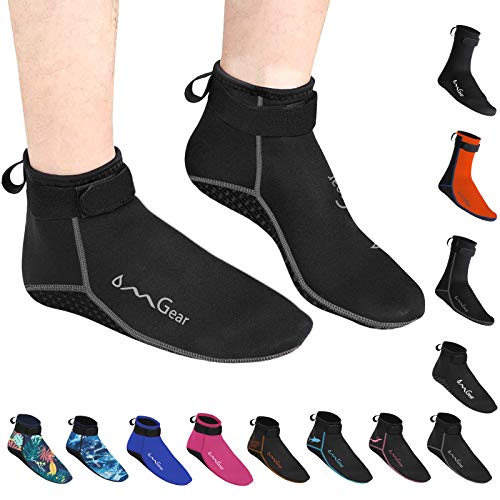
OMGear 3mm Low-Cut Neoprene Socks stands out for its 3mm neoprene construction and adjustable low-cut opening. The maker says the nylon-laminated material provides warmth and foot protection, while an ankle strap helps limit sand and debris entry. A heel loop can help with pulling the socks on and hanging them to dry, and the reinforced, anti-slip sole is intended for traction. This style suits swimmers or divers who want flexible ankle coverage and a snug opening. The low-cut leaves more of the ankle exposed than a high-cut sock, which matters when you want coverage above the ankle.
Bottom line: Pick this style for 3mm neoprene warmth with adjustable low-cut coverage.
XUKER 3mm High-Cut Neoprene Socks
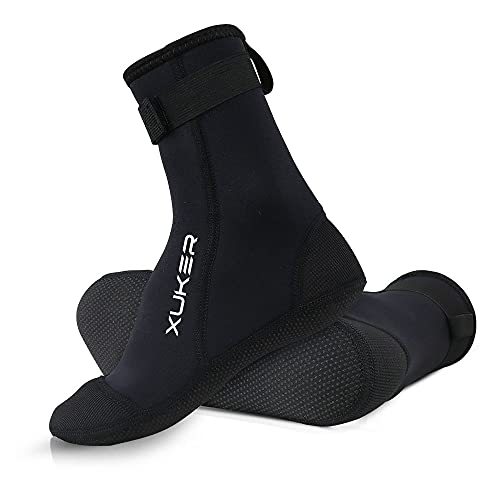
XUKER 3mm High-Cut Neoprene Socks differs from the low-cut options with a high-cut shape and sand-proof design. The maker says its 3mm neoprene-and-nylon construction offers insulation in cooler water, and its tougher-than-standard anti-slip sole is intended to protect the sole. The product is aimed at beach activities and water sports, including swimming and diving. Choose the higher cut if you want more ankle coverage than a low-cut sock offers. That extra coverage does not make the sock a watertight barrier; expect water to enter a water sock during swimming.
Bottom line: Choose this pair when higher ankle coverage matters more than a low-cut fit.
Janedream Neoprene Dive Socks
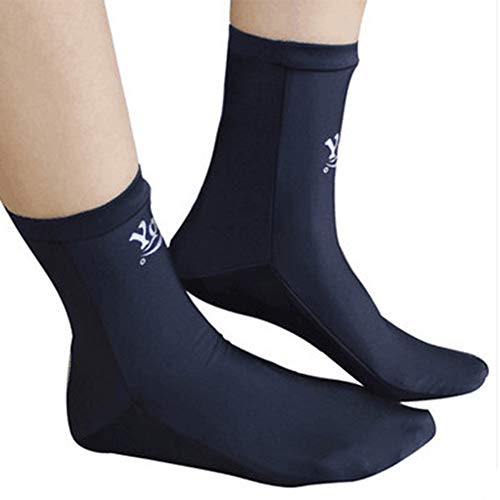
Janedream Neoprene Dive Socks is presented specifically as a swimming and dive sock, with fin use among its intended activities. Its adjustable closure is meant to help limit water entry, and the maker describes the sock as warm, elastic and comfortable. The material is nylon, unlike the explicitly neoprene 3mm options, so it is a different choice for swimmers comparing insulation. The size range spans 26–44, so check the maker’s sizing guidance against your foot before choosing; a loose fit can bunch under a fin.
Bottom line: Pick this if you want a swim-and-dive sock intended to pair with fins.
How swimming socks work in water
Swimming socks protect the foot and may add insulation, but they should not be treated as waterproof barriers. Neoprene wetsuit material works by holding a thin layer of water next to the body; body heat warms that layer, while a close fit helps limit flushing with colder water. Water still enters around openings and seams, so a snug fit matters more than a claim of being waterproof. For cool-water swims, 3mm neoprene is a common wetsuit thickness; warmer water and active swimming may call for less insulation. Socks do not provide flotation or replace a wetsuit, life jacket or other appropriate open-water safety equipment.
How to choose swim sock thickness and cut
Choose thickness based on water temperature and how long you expect to be immersed, then choose coverage to match your exposure and footwear. A 3mm sock is a practical starting point for cooler-water protection, while the products here also differ in low-cut versus high-cut coverage. Low-cut styles leave more ankle exposed and can be easier to pair with fins; higher cuts cover more of the ankle but must fit without bunching. If your fin foot pocket feels tight before adding socks, do not force a thicker sock into it—check fit with the intended sock on. A close, smooth fit is the decision rule: visible folds or pressure points mean the size or thickness may be wrong.
Neoprene socks versus fabric water socks
Neoprene and quick-dry fabric water socks serve different priorities: neoprene emphasizes insulation, while thin fabric styles emphasize flexibility and drying. The maker describes the neoprene options here as warmth-oriented and intended for water sports; the fabric aqua-sock option is aimed at water and dry-land use. This comparison helps identify the type, not certify a product as watertight or appropriate for every activity. For swimming in cold water, prioritize close-fitting insulation; for a pool or warm beach where easy walking matters, a flexible water shoe may be more suitable. Sole thickness, tread and whether the foot needs to fit inside a fin can change the best choice.
Fit and care before swimming
Fit swim socks snugly without pinching, and test them with your fins before entering the water. A sock that slips can bunch inside a fin pocket and create rubbing; one that is too thick can prevent a secure fin fit. Rinse salt, sand and chlorine from water gear with fresh water after use, then air-dry it out of direct heat and sunlight; heat can damage elastic materials and neoprene. Inspect the sole, seams and openings for damage before each swim, especially if you rely on them for rocky shore entry. Water socks are not puncture-proof footwear, so avoid sharp objects and use a purpose-built shoe when substantial sole protection is needed.
Frequently Asked Questions
Are swimming socks completely waterproof?
No; swim socks generally allow some water in, even when an adjustable opening helps limit entry. Neoprene works by trapping a thin layer of water for insulation rather than keeping the foot dry.
What thickness neoprene socks suit cool water?
Three-millimeter neoprene is a common starting point for cooler-water activities. The right thickness also depends on water temperature, swim duration, activity level and how much room your fins provide.
Can I wear socks inside swimming fins?
Yes, if the sock-and-fin combination fits smoothly without pinching or bunching. Try them together on land first, since a thicker sock can make a close-fitting fin pocket too tight.
Should swim socks cover the ankle?
Choose cut based on the coverage you want and whether the sock fits your gear. A high-cut sock covers more ankle than a low-cut design, but either style should fit closely without folds.
How should I dry neoprene swim socks?
Rinse them with fresh water and air-dry them away from direct heat and strong sunlight. Heat can damage neoprene and elastic components, while sand or salt left in the material can contribute to wear.