
Best Toeless Compression Socks: 4 Open-Toe Picks

LEVSOX Cotton Toeless Knee-High is the best toeless compression sock for most people who want a cotton blend and 20–30 mmHg graduated support across five zones. Choose a lighter 15–20 mmHg style if that is the level your clinician recommends; pressure and sizing should guide the choice, not toe exposure alone.
We earn a commission if you buy through links on this page. As an Amazon Associate I earn from qualifying purchases. Products are compared on manufacturer specifications, not hands-on testing.
- Best overall: LEVSOX Cotton Toeless Knee-High – Combines a 60% cotton fabric with 20–30 mmHg five-zone graduated support.
- Best for lighter compression: CHARMKING Open Toe, 15–20 mmHg – Offers an open-toe design at 15–20 mmHg in a three-pair set.
- Best for sheer styling: Truform 1772 Sheer Open-Toe – Uses a 20-denier sheer nylon-and-spandex construction at 15–20 mmHg.
| Product | Best for | Compression | Construction | Pack count | Shop |
|---|---|---|---|---|---|
| LEVSOX Cotton Toeless Knee-High | Cotton comfort | 20–30 mmHg | 60% cotton | 3 pairs | Check Price on Amazon |
| CHARMKING Open Toe, 15–20 mmHg | Lighter support | 15–20 mmHg | — | 3 pairs | Check Price on Amazon |
| Truform 1772 Sheer Open-Toe | Sheer appearance | 15–20 mmHg | 20 denier; nylon/spandex | 1 pair | Check Price on Amazon |
| LEVSOX Open Toe, 20–30 mmHg | Color variety | 20–30 mmHg | — | 3 pairs | Check Price on Amazon |
Best Toeless Compression Socks
Compare compression level, fabric and pack size to find an open-toe style that matches your needs.
LEVSOX Cotton Toeless Knee-High

Five graduated pressure zones distinguish this cotton style from the simpler 15–20 mmHg options. The knee-high open-toe design leaves the toes uncovered, and the fabric is 60% cotton; the maker describes the construction as flexible and breathable. This option suits shoppers who want stronger compression and a cotton-rich feel for extended wear. Its 20–30 mmHg range may be more support than some wearers need, so choose it only if that pressure is appropriate for you. Use the maker’s size guidance to match the sock to your measurements.
Bottom line: Choose this if you want cotton and have confirmed that 20–30 mmHg is suitable.
CHARMKING Open Toe, 15–20 mmHg
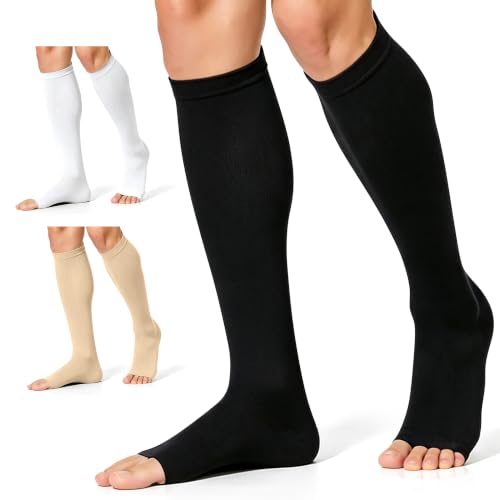
The 15–20 mmHg level sets this three-pair set apart from the 20–30 mmHg choices. Each sock has an open-toe design, and the set includes black, white and beige pairs in S/M. The maker positions the style for long days involving standing, sitting or travel, making it a practical option when you want a lighter pressure range and multiple colors. The trade-off is the limited stated size range in this variant; shoppers outside S/M should choose a size that fits their measurements rather than assuming the stretch will compensate.
Bottom line: Pick this for a three-color set when 15–20 mmHg and S/M fit your needs.
Truform 1772 Sheer Open-Toe

A sheer 20-denier finish and defined heel make this the dress-oriented option among these toeless socks. The knee-high stocking has 15–20 mmHg graduated compression, a soft top and a nude color; its nylon-and-spandex construction is latex-free. An open toe allows sandal wear without covering the toes, while the single-pair format suits someone seeking a specific sheer look rather than a multipack. Sizing matters for both fit and pressure, so use the maker’s size chart before choosing medium.
Bottom line: Choose this for a sheer, nude knee-high look at 15–20 mmHg.
LEVSOX Open Toe, 20–30 mmHg

The tie-dye three-pair set gives this 20–30 mmHg knee-high style a more colorful look than the neutral options. The open-toe construction leaves the forefoot uncovered, and the maker says the graduated pressure supports the ankle, feet and calves. This is suited to shoppers who want a stronger pressure range and a patterned set. The size for this variant is large, so it is less suitable if your measurements call for another size; the range can feel firm, so confirm the recommended pressure before choosing it.
Bottom line: Pick this if large fits and you want patterned socks in the 20–30 mmHg range.
How to Choose Toeless Compression Socks
Choose compression by the pressure range recommended for your needs, then match the size to your ankle and calf measurements. Compression socks are commonly labeled in mmHg; 15–20 mmHg is a lighter range than 20–30 mmHg, but a higher number is not automatically a better choice. Graduated styles apply the most pressure near the ankle and less toward the calf. Open toes are useful when you want toes uncovered, but they do not change the compression level. If you have diagnosed circulation problems, reduced sensation, or leg swelling with a new cause, ask a clinician before using compression; a poorly fitting sock can create pressure points.
What the Compression Numbers Mean
The mmHg label indicates the sock’s pressure range, not its fabric thickness or warmth. The products here offer 15–20 or 20–30 mmHg, so compare that range with the recommendation you have rather than treating them as interchangeable. A graduated design should feel snug at the ankle and less restrictive higher on the leg; a tight band, numbness, pain, or skin color change are reasons to remove the sock and seek medical advice. Measure each leg at the points required by the maker’s size chart, preferably when swelling is least. If your measurements fall between sizes or the sock rolls or bunches, do not force a fit.
Open-Toe Socks and Other Hosiery Types
Open-toe compression socks cover the foot and lower leg while leaving the toes exposed; sheer stockings add a dress-hosiery appearance, while opaque or cotton styles prioritize a different look or feel. Choose by the actual need: toe access, visible sheerness, fabric preference, or pressure range. An open toe can make room for sandals or toe inspection, but the exposed area does not mean the sock is medically suitable for every foot condition. Use this comparison to narrow the style before checking the size chart.
| Style | Useful when | Trade-off |
|---|---|---|
| Open-toe knee-high | Toes should remain uncovered | Does not cover or warm toes |
| Sheer open-toe stocking | A dressier, hosiery-like appearance matters | May be less suited to a casual sock look |
| Closed-toe compression sock | Full-foot coverage is preferred | Toes are enclosed |
How to Get a Safer Fit
A correctly sized compression sock lies flat, with no deep wrinkles, rolled top, or pinching at the ankle. Pull it on gradually and smooth the fabric rather than tugging hard at the top; bunching can concentrate pressure in one spot. Check the skin after removing the socks, especially if you have reduced sensation or fragile skin. Stop wearing them if they cause pain, numbness, or a marked color change, and get clinical guidance rather than switching to a stronger pressure level. People with diabetes, known arterial disease, or significant foot wounds should ask a healthcare professional whether compression is appropriate before use.
Frequently Asked Questions
Should I choose 15–20 or 20–30 mmHg compression?
Choose the pressure range recommended for your situation; 20–30 mmHg applies a stronger range than 15–20 mmHg. If you have not been advised which to use, ask a clinician instead of selecting the higher number by default.
How do I measure for knee-high compression socks?
Use the sock maker’s chart and measure the ankle and calf at the points it specifies. Measure both legs if they differ, and do not size up or down based only on shoe size.
Can I wear open-toe compression socks with sandals?
Yes, an open-toe design leaves the toes exposed and can be worn with sandals if the sock otherwise fits properly. Check that the heel and foot fabric do not bunch inside the shoe.
How should compression socks fit at the ankle?
They should feel snug without pain, pinching, or numbness, and the fabric should lie flat rather than form deep wrinkles. Remove the sock and seek advice if you notice pain, numbness, or a marked skin color change.
Are compression socks safe for everyone with swollen legs?
No; compression may be unsuitable for some people, including those with arterial circulation problems or reduced foot sensation. Ask a clinician before wearing them if swelling is new, persistent, or linked to a diagnosed condition.