
Radiator Hose Repair Tape: 5 Options Compared

For radiator hose repair tape, ARVYNE is the named match with a continuous-use range up to 392°F and a 36-foot roll. Self-fusing silicone tape is an emergency wrap, not a replacement for a split hose; choose a different roll if you need more temperature headroom or a shorter roll.
We earn a commission if you buy through links on this page. As an Amazon Associate I earn from qualifying purchases. Products are compared on manufacturer specifications, not hands-on testing.
- Best overall: ARVYNE Self-Fusing Silicone Tape, 1 in x 36 ft – A 36-foot roll with a continuous-use rating up to 392°F.
- Best for heat headroom: XFasten Self-Fusing Silicone Tape, 1 in x 36 ft – Its maker gives a 500°F maximum temperature claim.
- Best for short repairs: Self-Fusing Silicone Tape, 1 in x 5 ft – The 5-foot roll includes specific stretch and overlap instructions.
| Product | Best for | Roll length | Temperature claim | Shop |
|---|---|---|---|---|
| ARVYNE Self-Fusing Silicone Tape, 1 in x 36 ft | Longer wrap jobs | 36 ft | -76°F to 392°F continuous | Check Price on Amazon |
| XFasten Self-Fusing Silicone Tape, 1 in x 36 ft | Higher heat claims | 36 ft | Up to 500°F | Check Price on Amazon |
| Self-Fusing Silicone Tape, 1 in x 5 ft | Compact repair kits | 5 ft | — | Check Price on Amazon |
| AnykNow Silicone Tape, 2 Rolls, 1 in x 10 ft | Two-roll kits | 20 ft combined | -100°F to 500°F | Check Price on Amazon |
| Bond It Rescue Tape, 1 in x 12 ft | Chemical exposure | 12 ft | -85°F to 500°F | Check Price on Amazon |
Radiator Hose Repair Tape Options
These self-fusing silicone tapes differ most in roll length, stated heat range and wrapping guidance.
ARVYNE Self-Fusing Silicone Tape, 1 in x 36 ft
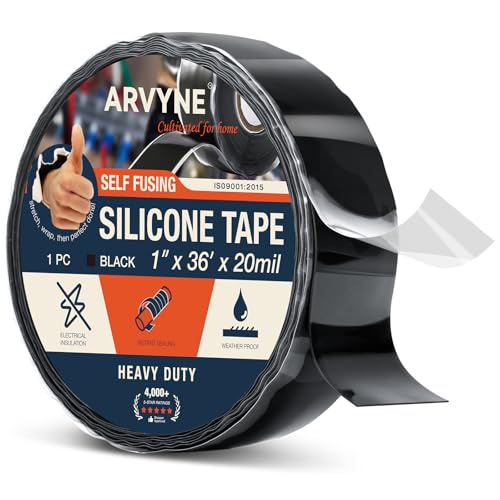
ARVYNE stands out for its continuous-use range of -76°F to 392°F and 36-foot roll. The 1-inch-wide, 20-mil silicone tape bonds to itself without adhesive, and the maker claims a tensile strength of at least 950 PSI and insulation up to 8,000 volts per layer. That longer roll suits several emergency wraps or a long repair area. The product is only a wrap, however; a hose that is split, bulging or leaking heavily needs replacement rather than a tape patch.
Bottom line: Choose this for a longer wrap and a continuous-use rating up to 392°F.
XFasten Self-Fusing Silicone Tape, 1 in x 36 ft
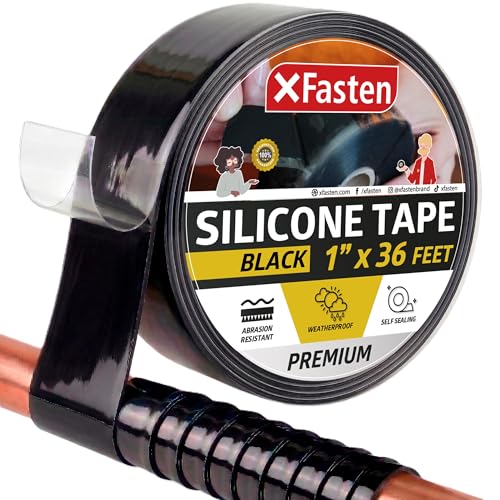
XFasten separates itself with the highest maximum temperature here: the maker says it does not melt up to 500°F. The 1-inch by 36-foot roll is silicone rubber, with a tensile strength capacity of 900 PSI; the maker also claims insulation up to 600 volts per mil. Its flexibility is intended to conform around tight corners and small diameters. The temperature figure is a maximum claim, not a recommended operating temperature for a pressurized cooling system, so this remains an emergency measure rather than a lasting hose repair.
Bottom line: Pick this when a higher stated maximum heat limit matters more than documented continuous-use rating.
Self-Fusing Silicone Tape, 1 in x 5 ft

This 5-foot roll differs from the longer options by spelling out the wrap technique: stretch the tape to three or four times its original length and overlap each pass by at least 50%. Those steps activate the self-fusing bond, which works without a sticky adhesive. The compact length makes it a sensible kit-sized option for one small emergency wrap. The specifications do not give a temperature limit, so buyers dealing with a hot hose should confirm the roll’s usable range before relying on it.
Bottom line: Choose this for a compact kit if you can verify its heat suitability first.
AnykNow Silicone Tape, 2 Rolls, 1 in x 10 ft

AnykNow comes as two rolls, totaling 20 feet, rather than one continuous long roll. Each roll is 1 inch wide and 19 mil thick, and the maker gives a temperature range of -100°F to 500°F. Because the tape has no stickiness, it must be stretched and wrapped tightly so it bonds to itself. Two separate rolls can be useful when keeping spare tape in more than one vehicle or kit.
Bottom line: Choose this if keeping two shorter rolls in separate kits is useful.
Bond It Rescue Tape, 1 in x 12 ft

Bond It distinguishes itself with resistance to fuels, oils, acids, solvents, salt water, road salt and UV exposure, alongside a -85°F to 500°F temperature range. Its 1-inch-wide, 12-foot tape fuses to itself when stretched and leaves no adhesive residue. That mix makes it useful for carrying as a general emergency repair wrap in a vehicle or workshop.
Bottom line: Pick this for a compact roll when chemical and weather resistance are priorities.
How to choose radiator hose repair tape
Choose a self-fusing silicone wrap by heat rating, width and wrapping instructions, not by a high maximum temperature alone. Automotive cooling systems commonly operate around 195°F to 220°F, and hot coolant can cause severe burns; never wrap or handle a pressurized hot hose. Allow the engine to cool fully before inspecting it. Stretchable silicone tape bonds to itself rather than sticking to the hose, so clean, dry surfaces and tight overlapping turns help create a seal. Use a wrap only for an emergency trip to a safe repair location. Replace a hose that is split, soft, swollen or leaking heavily, and replace a clamp that no longer holds securely.
Wrapping a radiator hose for an emergency
Wrap past the damaged area on both sides, using firm tension and overlapping each pass; one roll specifically calls for stretching to three or four times its length and at least 50% overlap. Silicone tape fuses to itself, so the final turns need to press onto earlier layers rather than rely on glue. Avoid wrapping a hot, running or pressurized hose, and keep hands clear of fans and belts when working in the engine bay. A tape seal is not a substitute for a rated hose or clamp. After the engine cools, arrange a proper hose replacement; stop driving if coolant continues to escape or the temperature gauge rises.
Heat ratings and cooling-system limits
A radiator hose carries hot coolant under pressure, so tape’s temperature limit alone cannot establish that a repair will hold. The five rolls here give different kinds of claims: one specifies continuous use through 392°F, while others state maximum limits up to 500°F or give no range. Those numbers are not directly interchangeable. Cooling-system pressure varies by vehicle; the pressure cap is commonly around 13 to 16 psi, but use the cap specification for the vehicle rather than assuming a universal value. Never remove a radiator cap while hot. If the hose is leaking at a joint, check for a loose or damaged clamp after cooling instead of covering the connection with tape.
Common radiator hose tape mistakes
The most common mistake is treating a tape wrap as a permanent repair; rubber hoses deteriorate from heat cycles and age, while tape cannot restore damaged reinforcement. A second mistake is applying self-fusing tape without stretching it: loose turns may not bond into a continuous sleeve. Keep at least half-width overlap where the tape instructions call for it, and make sure each layer contacts the previous layer. Do not wrap over oily coolant residue or a wet surface, since contamination interferes with a close wrap. If the hose has a bulge, deep crack, exposed reinforcement or a leak too large to control, replace it rather than relying on a temporary seal.
Frequently Asked Questions
Can radiator hose repair tape be permanent?
No, self-fusing silicone tape is an emergency wrap, not a replacement for a deteriorated or split radiator hose. Replace the hose before relying on the vehicle for regular driving.
How hot can radiator hose repair tape get?
The rolls here have different claims, including continuous use up to 392°F and maximum temperatures up to 500°F. A maximum rating is not the same as a continuous-use rating or proof that a pressurized repair will hold.
How much should self-fusing tape overlap?
A roll in this group calls for at least 50% overlap and stretching the tape to three or four times its original length. Tension and contact between layers create the self-fusing bond.
Is it safe to tape a hot radiator hose?
No, wait until the engine and cooling system are fully cool before inspecting or wrapping a hose. Hot coolant is pressurized and can cause severe burns, and the radiator cap should not be removed while hot.
What pressure does a radiator hose usually carry?
Many passenger-vehicle cooling systems use pressure caps around 13 to 16 psi, but the correct limit depends on the vehicle. Use its specified cap rating, and do not assume tape can safely contain system pressure.