
Best Softball Pitching Toe Guards: 3 Options Compared

Tuff Toe Pro Cleat Saver suits most softball pitchers because its kit contains enough material to cover two shoes, while Tuff Toe Molded Cleat Toe Protector is a molded guard for a right cleat only. Choose a different option if you need a ready-shaped toe cover, a particular color, or an application kit with an applicator.
Pitching toe guards add a protective layer where repeated toe dragging can wear cleats; molded covers and liquid coatings differ in how they are applied.
We earn a commission if you buy through links on this page. As an Amazon Associate I earn from qualifying purchases. Products are compared on manufacturer specifications, not hands-on testing.
- Best overall: Tuff Toe Pro Cleat Saver – The kit contains enough material to protect two shoes and bonds to multiple materials.
- Best molded guard: Tuff Toe Molded Cleat Toe Protector – A flexible molded cover offers a pre-shaped option for a right cleat.
- Best for navy cleats: Tuff Toe Pro V2 Pitching Toe Guard – The navy coating kit includes an applicator and enough material for two shoes.
| Product | Best for | Style | Color | Coverage | Shop |
|---|---|---|---|---|---|
| Tuff Toe Pro Cleat Saver | Two-shoe coating | Liquid coating | Black | 2 shoes | Check Price on Amazon |
| Tuff Toe Molded Cleat Toe Protector | Right-cleat cover | Molded cover | White | Right cleat | Check Price on Amazon |
| Tuff Toe Pro V2 Pitching Toe Guard | Navy two-shoe kit | Liquid coating | Navy blue | 2 shoes | Check Price on Amazon |
Softball Pitching Toe Guards
Compare molded coverage with liquid coatings, and choose by the cleat side, color and application style you need.
Tuff Toe Pro Cleat Saver

Unlike a molded cover, this kit applies as a coating and contains enough material for two shoes. Tuff Toe says its polyurethane epoxy glue bonds to cleats made from materials including leather, rubber and vinyl, and that the waterproof layer is flexible. That makes it a fit for pitchers who want to coat both cleats or restore a worn area rather than attach a pre-shaped cap. The limitation is its liquid application: pitchers who prefer a molded cover or need a specific right-cleat shape should consider another style.
Bottom line: Choose this if you want a liquid coating kit for both shoes.
Tuff Toe Molded Cleat Toe Protector
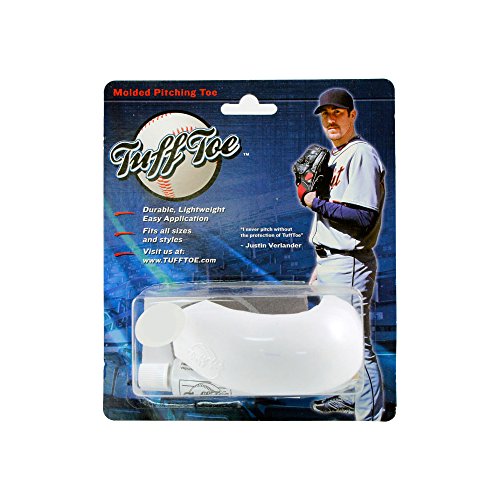
This is the molded option in the group, so its shape distinguishes it from the liquid coatings. The white protector is intended for a right cleat and is described as fitting most sizes and styles. Tuff Toe says its flexible, waterproof guard bonds to materials such as leather, rubber, steel and canvas, protecting against toe-drag wear and scuffs. It may suit a pitcher who wants a shaped cover rather than spreading a coating. The key limitation is the side: this version is for a right cleat, so check your pitching-foot setup before choosing it.
Bottom line: Pick this when a white molded cover for a right cleat is the right fit.
Tuff Toe Pro V2 Pitching Toe Guard

The navy color and included applicator set this coating kit apart from the other options. Tuff Toe says its water-resistant polyurethane adhesive forms a flexible, permanent bond and that the 4.8-ounce kit covers two shoes. It is intended for pitchers seeking a coating for cleat wear, water exposure and toe-drag abrasion. The applicator makes this a practical choice for a buyer who wants a tool included for home application. Its limitation is that it is a liquid coating, not a molded toe cap, so it will not provide a pre-shaped cover.
Bottom line: Choose this if you want a navy coating kit with an applicator.
How to choose a softball pitching toe guard
Start with the guard style that matches how you want to protect the cleat: a molded cover or a liquid coating. A molded cover gives you a shaped piece; a coating is spread onto the shoe, and the specifications here distinguish kits that cover one right cleat from kits intended for two shoes. Toe-drag abrasion concentrates wear at the toe, so compare the protected area with the portion of your cleat that contacts the ground. If the worn patch extends beyond the guard’s coverage, a small cap may leave part of the damaged area exposed. Also decide whether color and an applicator matter. Follow the chosen kit’s preparation and curing directions; adhesion depends on clean, dry surfaces and adequate cure time.
Molded toe guards versus liquid coatings
Molded covers and liquid coatings solve the same broad problem in different ways: one adds a shaped cap, while the other forms a layer on the shoe. A pre-shaped protector can be simpler to position, but its side and dimensions must match the cleat. A coating can cover irregular wear or more than one shoe, depending on the kit, but application needs attention to placement and curing. The products here include one right-cleat molded cover and two coatings for two shoes. Use this quick comparison to narrow the style before considering color and coverage.
| Need | Choose | Why |
|---|---|---|
| Shaped cover for a right cleat | Molded guard | Pre-shaped style |
| Coating for two shoes | Two-shoe kit | Coverage stated for two shoes |
| Navy coating with applicator | Navy kit | Applicator included |
For a worn patch that reaches past the toe, prioritize the coverage area rather than color alone.
Check cleat fit and toe-drag coverage
Fit the protector to the cleat side and the actual wear zone, not just the shoe size. The molded option here is for a right cleat; confirm your pitching-foot setup before ordering, especially if you expect to protect a left cleat. For coatings, consider whether the kit covers one or two shoes and whether you want the same protective treatment on both. A practical rule is to avoid a guard whose edge would stop short of the visible scuffed or worn patch. Look at the toe from the top and side, since toe dragging can wear an area that wraps around the front edge. A protector does not replace checking the cleat for damage that affects fit or stability.
Applying and caring for a pitching toe guard
Surface preparation and curing affect how well an adhesive guard stays bonded, so use the application directions supplied with the specific kit. Clean off dirt and let the cleat dry before applying a coating; moisture or loose debris can interfere with contact. Keep the applied material confined to the intended toe area and allow the cure time before field use. Liquid coatings may need careful, even placement, while molded guards need alignment before the bond sets. After use, inspect the edges and protected area for peeling, cracks or exposed wear; address separation before relying on the guard for another outing. Do not assume waterproof claims mean a wet shoe is ready for application.
Frequently Asked Questions
Which cleat should a pitching toe guard go on?
Put the guard on the cleat that drags and wears at the toe during your pitching motion. Check your own mechanics and inspect both cleats, since the molded option here is specifically for a right cleat.
Can a liquid toe guard cover both softball cleats?
The two coating kits here are described as containing enough material for two shoes. Apply the coating to the intended wear area and allow the kit’s specified cure time before use.
Should I choose a molded or liquid toe guard?
Choose a molded cover if you want a pre-shaped protector, and choose a coating if you want material applied directly to the shoe. Confirm the molded guard’s cleat side and compare its coverage with the worn area.
How do I make a toe guard adhere to a cleat?
Start with a clean, dry surface and follow the specific kit’s preparation and curing directions. Dirt, moisture or using the cleat before the bond cures can compromise adhesion.
When should I replace a softball toe guard?
Inspect the guard after use and replace or repair it if it peels, cracks or exposes the worn cleat underneath. Check more often when toe dragging has visibly enlarged the wear patch.