
3-Piece Golf Balls: Models Compared by Feel and Spin

For a 3-piece golf ball with a soft feel, mid spin and stated tournament conformity, choose Snell PR3 3-Piece Golf Balls; golfers prioritizing a small sleeve or a larger practice supply may prefer another option.
A three-piece ball has a core, a middle mantle layer and an outer cover, balancing distance and control differently from simpler two-piece designs.
We earn a commission if you buy through links on this page. As an Amazon Associate I earn from qualifying purchases. Products are compared on manufacturer specifications, not hands-on testing.
- Best overall: Snell PR3 3-Piece Golf Balls – Its three-piece urethane construction, mid-spin profile and stated USGA and R&A conformity suit golfers seeking control and soft feel.
- Best for a small sleeve: PGM 3-Piece Golf Balls, 3-Ball Sleeve – It comes as a 3-ball sleeve and has a built-in putting alignment line.
- Best for practice quantity: PGM 24-Pack 3-Piece Golf Balls – Its 24-ball pack is intended for practice, training and play.
| Product | Best for | Cover | Pack size | Shop |
|---|---|---|---|---|
| Snell PR3 3-Piece Golf Balls | Soft feel | TPU-X urethane | 12 balls | Check Price on Amazon |
| PGM 3-Piece Golf Balls, 3-Ball Sleeve | Small sleeve | Cover claims conflict | 3 balls | Check Price on Amazon |
| PGM 24-Pack 3-Piece Golf Balls | Practice supply | — | 24 balls | Check Price on Amazon |
3-piece golf balls compared
Compare construction claims, cover materials and pack sizes to match a ball to your playing priorities.
Snell PR3 3-Piece Golf Balls

Snell PR3 3-Piece Golf Balls is the clearest fit for golfers who want a soft feel with a mid-spin profile. Its three layers are a faster core, high-energy mantle and TPU-X urethane cover; the maker gives a compression range of 80–85 and says the ball conforms to USGA and R&A rules. The 12-ball pack suits regular play better than a small sleeve. The mid-spin profile may be less suitable for golfers specifically seeking a low-spin ball, and the maker’s performance claims are not a guarantee of results for every swing.
Bottom line: Choose this if soft feel, mid spin and stated tournament conformity are priorities.
PGM 3-Piece Golf Balls, 3-Ball Sleeve
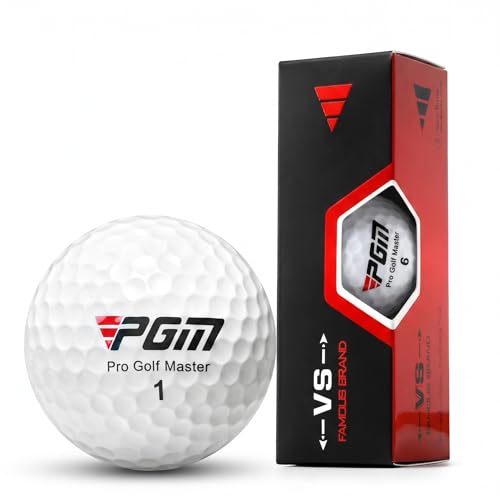
PGM 3-Piece Golf Balls, 3-Ball Sleeve stands out for its compact 3-ball sleeve and built-in putting alignment line, a practical format for golfers who want to try a small quantity or use a visual aiming aid. The name identifies a three-piece ball, and the features mention a thick, high-density core and consistent distance and accuracy. However, the cover material conflicts: the name says Surlyn while the maker says urethane. Confirm the cover material before choosing it based on cover feel or durability. The sleeve is much smaller than the 12- and 24-ball packs in this comparison.
Bottom line: Pick this if a small sleeve and alignment line matter more than a settled cover specification.
PGM 24-Pack 3-Piece Golf Balls
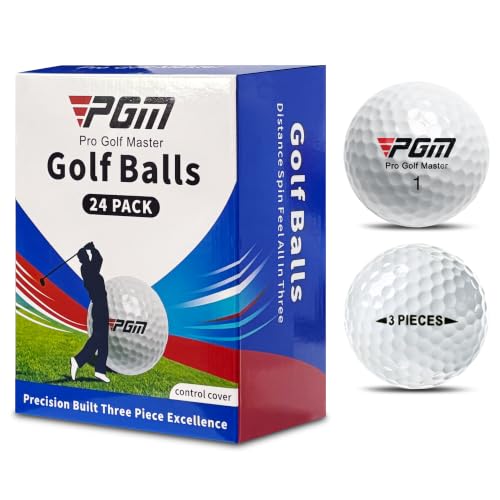
PGM 24-Pack 3-Piece Golf Balls is distinguished by its 24-ball quantity, making it the option for golfers who want a larger supply for practice or training. Its features describe a three-layer design with a responsive middle layer, durable outer layer and distance-focused core, and position the balls for indoor practice, outdoor training and competitive play. The cover material and a more precise feel or spin profile are not established here, so it is a weaker match for golfers choosing by cover type or greenside response. Its pack size is less convenient when only a few balls are needed.
Bottom line: Choose this for a larger practice supply when cover-specific feel is not your main criterion.
How to choose a 3-piece golf ball
Start with feel and spin, then consider the cover and how many balls you want in a pack. A three-piece ball places a mantle between the core and outer cover; that added layer lets designers tune feel and spin, but the layer count alone does not predict how a ball will perform for every golfer. Urethane covers are commonly chosen for softer feel and greenside response, while ionomer covers such as Surlyn are often associated with durability and firmer feel. Those are broad material tendencies, not a substitute for a particular ball’s characteristics. Choose a ball with a spin profile that suits your priorities, and verify conflicting cover claims before buying based on material.
Golf ball size and rules
For a regulation ball, the USGA minimum diameter is 1.68 inches and the maximum weight is 1.62 ounces. Those limits are useful checks when comparing balls for tournament play, but size and weight alone do not establish that a model conforms to the rules. The maker says Snell PR3 3-Piece Golf Balls conforms to USGA and R&A requirements; confirm a ball’s status if tournament eligibility is essential. Compression is another common comparison point, but there is no single universal compression scale that makes every brand’s number directly comparable. Treat the 80–85 range given for Snell PR3 3-Piece Golf Balls as that maker’s specification, not a guarantee of a particular launch or feel for every swing.
Three-piece versus simpler golf balls
A three-piece ball has a core, mantle and cover, while a typical two-piece ball combines a core and cover. The extra layer gives manufacturers another way to tune the tradeoff between distance, spin and feel, but it does not automatically make a three-piece ball the right choice for every golfer. A golfer who values greenside response may favor a soft-cover model with a spin profile; someone focused on practice quantity may put pack size first. Use this quick guide to match the construction choice to the decision that matters most.
Choose by the priority that matters most, not by layer count alone.
| Priority | Useful comparison |
|---|---|
| Soft feel and spin | Cover material and stated spin profile |
| Small quantity | Ball count per sleeve or pack |
| Practice supply | Total ball count |
| Tournament eligibility | Conformity claim and applicable rules |
Common mistakes when comparing golf balls
Do not assume a three-piece ball is always softer, longer or more controllable than a two-piece ball; cover material, compression and the player’s swing all affect the result. Do not treat pack count as a measure of performance, either: a sleeve and a 24-ball pack answer different quantity needs. A further mistake is relying on a material label when the claims conflict. In that case, confirm whether the cover is Surlyn or urethane before making material the deciding factor. For tournament use, check conformity rather than assuming that a regulation-looking size or a performance label establishes eligibility.
Frequently Asked Questions
What does a three-piece golf ball contain?
A three-piece golf ball has a core, a mantle layer and an outer cover. Manufacturers tune those layers to balance distance, spin and feel.
What is the minimum size for a regulation golf ball?
A regulation golf ball must be at least 1.68 inches in diameter and no heavier than 1.62 ounces. Meeting those dimensions alone does not prove tournament conformity.
Does a three-piece ball always spin more?
No, layer count alone does not determine spin. Cover material, design and swing conditions also matter, so compare a ball’s spin profile rather than assuming all three-piece balls behave alike.
What is the difference between urethane and Surlyn covers?
Urethane is commonly selected for softer feel and greenside response, while Surlyn, an ionomer, is often associated with durability and firmer feel. These are general tendencies; specific ball design can change the result.
Does golf ball compression predict how far it goes?
Compression alone does not predict distance because swing speed, contact and ball design also affect results. The 80–85 compression range given for Snell PR3 3-Piece Golf Balls is a maker specification, not a distance guarantee.