
Best Reebok Men’s Softshell Jackets for Layering

Reebok 3-in-1 Softshell Winter Jacket suits most people because its water-resistant shell and zip-in fleece can be worn together or separately. Choose Reebok Sherpa-Lined Softshell Jacket for a sherpa-lined feel, or Reebok Lightweight Fleece-Lined Softshell if you want a lighter single-layer jacket for commuting and travel.
We earn a commission if you buy through links on this page. As an Amazon Associate I earn from qualifying purchases. Products are compared on manufacturer specifications, not hands-on testing.
- Best overall: Reebok 3-in-1 Softshell Winter Jacket – The shell and zip-in fleece offer three wearing configurations for changing conditions.
- Best for cozy lining: Reebok Sherpa-Lined Softshell Jacket – A sherpa-lined softshell pairs a hood with a fleece lining.
- Best for commutes: Reebok Lightweight Fleece-Lined Softshell – A lightweight fleece-lined softshell is geared toward daily commutes and travel.
| Product | Best for | Layering | Lining | Shell | Shop |
|---|---|---|---|---|---|
| Reebok 3-in-1 Softshell Winter Jacket | Flexible layering | Shell, fleece, or both | Polar fleece | Water-resistant ripstop | Check Price on Amazon |
| Reebok Sherpa-Lined Softshell Jacket | Cozy daily wear | Single jacket | Sherpa and fleece | Weather-resistant softshell | Check Price on Amazon |
| Reebok Lightweight Fleece-Lined Softshell | Lightweight commutes | Single jacket | Fleece-lined | Wind- and water-resistant | Check Price on Amazon |
Reebok Men’s Softshell Jackets
Compare the jackets by how their layers work and the conditions their shells are designed to handle.
Reebok 3-in-1 Softshell Winter Jacket

Reebok 3-in-1 Softshell Winter Jacket is the most adaptable option here: its hooded ripstop outer shell and zip-in polar fleece can be worn separately or together. The shell is water-resistant and designed for wind, light rain, and snow; the maker does not describe it as waterproof. Four pockets add storage, while the separate layers let you adjust clothing as conditions change.
Choose this system if you want one jacket that can shift between a shell and a warmer combined layer. It may be more than you need if you prefer a simple, lightweight jacket without a removable inner layer.
Bottom line: Choose this if you want a shell and fleece that can be worn separately or together.
Reebok Sherpa-Lined Softshell Jacket

Reebok Sherpa-Lined Softshell Jacket stands apart with sherpa lining and a fleece-lined hood, giving this softshell a warmer, cozier design than a standalone lightweight shell. It has a stand collar and an athletic cut intended to layer over a tee or hoodie, with everyday wear, travel, and casual outdoor activity in mind. The maker describes the jacket as wind- and water-resistant.
Pick it for chilly daily wear when a built-in lining is preferable to managing separate layers. Because the jacket is presented as lightweight, shoppers seeking the flexibility of a detachable fleece layer may prefer another design.
Bottom line: Choose this for a cozy lined jacket for everyday wear in cool conditions.
Reebok Lightweight Fleece-Lined Softshell
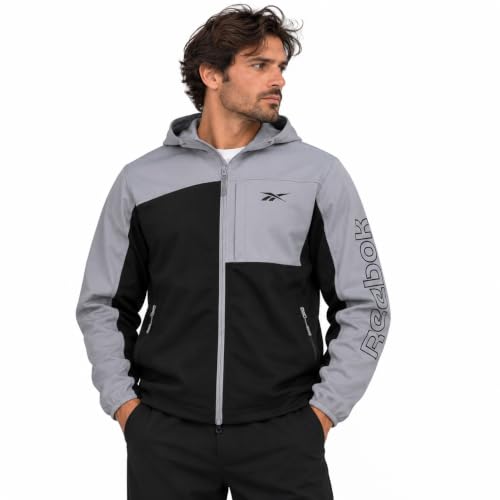
Reebok Lightweight Fleece-Lined Softshell is the lightweight single-jacket choice, with a fleece-lined interior, hood, protective collar, and streamlined athletic cut. Its design is aimed at daily commutes, travel, and outdoor activities, and the maker says the shell resists wind and water. Compared with the other options, it does not add a separate zip-in fleece layer or a sherpa-lined hood.
Consider it if you want a less involved layer for chilly commutes or travel. Its lightweight design is not the best match for someone specifically seeking the warmth of sherpa lining or a jacket that can be split into separate layers.
Bottom line: Choose this for a lightweight, fleece-lined jacket for commuting and travel.
How to choose a Reebok men’s softshell jacket
Choose by layering first: a 3-in-1 jacket changes configuration, while a single softshell keeps the layers together. Softshells are generally intended for wind protection and light precipitation, not prolonged heavy rain; water-resistant does not mean waterproof. For changing temperatures, a removable inner layer offers more options than a fixed lining. For routine chilly-weather wear, a fixed fleece or sherpa lining avoids handling separate pieces. If you expect sustained rain, confirm waterproof construction and seam sealing before ordering rather than relying on a water-resistant claim.
Match the jacket to your usual activity: a commute often favors a simpler layer, while variable outdoor conditions can reward flexibility.
Softshell layers and weather protection
A softshell is typically a flexible outer layer built for wind and intermittent moisture, whereas a dedicated rain shell prioritizes blocking rain. Water-resistant treatments can shed light precipitation, but performance can decline as a garment wears; a waterproof jacket usually relies on a waterproof membrane or coating and sealed seams. Those construction details matter more in prolonged rain than a general water-resistant label.
Use a practical threshold: if your outing commonly puts you in steady rain for more than a brief shower, choose a garment with an explicit waterproof rating and seam-sealed construction. For breezy conditions or light showers, a softshell can be more comfortable to layer. Snow and cold also call for insulation appropriate to the temperature; a shell alone is not a substitute for a warm layer.
Choosing between fixed and removable linings
Fixed linings keep the jacket simple, while removable layers let you adapt as activity and temperature change. A fleece layer worn alone can work in milder weather, and combining it with a shell adds a weather barrier. Fixed fleece or sherpa lining avoids extra zippers and separate pieces, but gives you fewer ways to adjust warmth.
| Need | Design to choose | Trade-off |
|---|---|---|
| More layer configurations | Shell plus zip-in fleece | More components to manage |
| Simple cozy wear | Fixed sherpa or fleece lining | Layers stay together |
| Lightweight daily use | Lightweight fleece-lined shell | Less adaptable than a removable layer |
Consider how often you remove a layer during the day. If you routinely move between a warm interior and cool outdoors, separate pieces can be useful; if you want one uncomplicated jacket, a fixed lining is easier.
Fit and care checks before wearing
Layering changes the fit you need: try the jacket over the thickest midlayer you expect to wear, and check that you can reach forward without pulling at the shoulders or hem. A close fit can reduce room for insulation, while excess looseness can let cold air circulate. Use the garment’s size chart and body measurements rather than assuming every jacket in the same nominal size fits alike.
Follow the care label for washing and drying, especially for water-resistant finishes; fabric softener and high heat can affect some technical garments. Reapply a compatible durable water-repellent treatment only when the care label permits it and water no longer beads on the surface. Hang the jacket dry after wet use, and avoid storing it damp.
Frequently Asked Questions
Can a softshell jacket replace a rain jacket?
A softshell suits wind and light precipitation, but it is not a dependable replacement for a waterproof rain jacket in sustained rain. Look for an explicit waterproof rating and sealed seams when extended rain exposure is likely.
What does a 3-in-1 jacket mean?
A 3-in-1 design combines an outer shell and an inner layer, which can be worn separately or together. That gives three configurations: shell, inner layer, or both.
Is fleece or sherpa warmer under a softshell?
Warmth depends on the garment’s insulation and fit, not just the lining name. For cold weather, leave enough room for a midlayer without restricting shoulder movement.
How should a softshell fit over layers?
A softshell should allow your usual midlayer without pulling across the shoulders or restricting arm movement. Try it over your thickest expected layer, and use body measurements against the size chart.
How do you care for a water-resistant softshell?
Use the garment care label for washing and drying because heat and fabric softener can affect technical finishes. Dry the jacket fully after wet use, and only renew a water-repellent treatment if the care directions allow it.