
LS2 Advant X Carbon Bluetooth Helmet Compared

LS2 Advant X Carbon with Midland Spectrum suits most riders looking for an LS2 Advant X Carbon Bluetooth helmet because it pairs the 9K carbon modular shell with a pre-installed Midland Spectrum headset. Choose LS2 Advant X Carbon with Cardo 4X instead if you want the Cardo 4X system and a small size; LS2 Advant X Carbon Helmet is the helmet-only option for riders bringing their own communications system.
We earn a commission if you buy through links on this page. As an Amazon Associate I earn from qualifying purchases. Products are compared on manufacturer specifications, not hands-on testing.
- Best overall: LS2 Advant X Carbon with Midland Spectrum – Combines the carbon modular helmet with a pre-installed Midland headset and four-rider intercom capability.
- Best for Cardo users: LS2 Advant X Carbon with Cardo 4X – Includes Cardo 4X Bluetooth 5.2, voice control, and a small size.
- Best without a headset: LS2 Advant X Carbon Helmet – Provides the Advant X Carbon helmet without a bundled Bluetooth system.
| Product | Best for | Bluetooth system | Size | Shop |
|---|---|---|---|---|
| LS2 Advant X Carbon with Midland Spectrum | Midland bundle | Midland Spectrum | Large | Check Price on Amazon |
| LS2 Advant X Carbon Helmet | Helmet only | None included | Large | Check Price on Amazon |
| LS2 Advant X Carbon with Cardo 4X | Cardo bundle | Cardo 4X | Small | Check Price on Amazon |
LS2 Advant X Carbon Bluetooth helmet options
Compare the headset bundle, size, and shell specifications to choose the version that fits your riding setup.
LS2 Advant X Carbon with Midland Spectrum
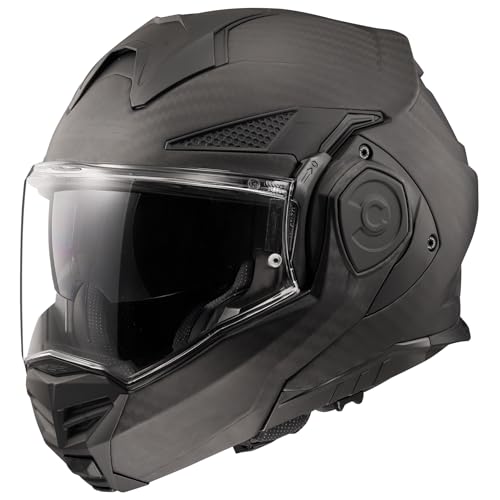
LS2 Advant X Carbon with Midland Spectrum is the Midland-bundled version, distinguishing it from the helmet-only model and the Cardo bundle. Its 9K carbon fiber shell and carbon chin bar weigh 1,470 g ±50 g, and the included headset offers four-rider intercom capability, AI noise cancellation, and RCF audio. The helmet has a quick-release polycarbonate shield, included Pinlock Max insert, and drop-down sun shield. The size is large. The main limitation is that the headset is a Midland system, so riders who specifically want Cardo should choose another version.
Bottom line: Choose this if you want the carbon modular helmet bundled with Midland communications.
LS2 Advant X Carbon Helmet
LS2 Advant X Carbon Helmet is the helmet-only choice, unlike the two bundles that include Bluetooth headsets. The 9K carbon fiber shell includes a full carbon chin bar and weighs 1,470 g ±50 g. Its 180-degree pivot lets the chin bar move behind the head, and the helmet is certified for open- and full-face use under ECE P/J; it also meets DOT FMVSS 218. A multi-port ventilation system is included. This option suits riders who already have a communications setup or do not want a bundle, but it does not include a Bluetooth headset.
Bottom line: Choose this if you want the helmet without an included headset.
LS2 Advant X Carbon with Cardo 4X

LS2 Advant X Carbon with Cardo 4X stands apart with its integrated Cardo 4X USC system and small size. The headset uses Bluetooth 5.2, supports voice control, and is specified for a 1.2 km range and connections with up to four riders. The helmet has a 9K carbon fiber shell and chin bar, a quick-release polycarbonate shield, built-in sun shield, and included Pinlock Max insert. The maker says this helmet runs small and recommends ordering at least one size larger than the sizing chart suggests. That sizing advice is a limitation for anyone choosing by label alone; measure your head and assess fit before riding.
Bottom line: Choose this if you want the Cardo 4X bundle and need a small-size option.
How to choose an LS2 Advant X Carbon Bluetooth helmet
Choose by headset first, then confirm the helmet size fits securely. LS2 Advant X Carbon with Midland Spectrum bundles Midland Spectrum, while LS2 Advant X Carbon with Cardo 4X includes Cardo 4X; LS2 Advant X Carbon Helmet has no bundled headset. The two Bluetooth systems differ in the specified features: Midland lists AI noise cancellation and RCF audio, while Cardo lists Bluetooth 5.2, voice control, and a 1.2 km range. Modular helmets have a movable chin bar, but a Bluetooth bundle does not change the need for a correctly fitted helmet. Measure the largest part of your head circumference above the eyebrows and ears, then compare it with the manufacturer’s chart. A helmet should feel evenly snug without painful pressure points, and the shell should not rotate freely when fastened.
Modular helmet fit and safety checks
A proper fit is snug all around, with the chin strap fastened and the helmet resisting rotation when you try to move it. Measure head circumference with a flexible tape roughly an inch above the eyebrows, then use the brand’s size chart; head shape can make two helmets with the same circumference fit differently. This matters especially for LS2 Advant X Carbon with Cardo 4X, whose size is small and whose maker advises sizing up from the chart. DOT FMVSS 218 is the U.S. motorcycle helmet standard; the labels in these options also reference ECE certification, including P/J for open- and full-face use on LS2 Advant X Carbon with Midland Spectrum and LS2 Advant X Carbon Helmet. Never ride with a loose strap or a helmet that shifts over your eyes.
What the modular chin bar and visor offer
A modular chin bar pivots to open the front of the helmet, but only a helmet approved for the relevant configuration should be ridden that way. LS2 Advant X Carbon Helmet specifies ECE P/J approval for open- and full-face use, and LS2 Advant X Carbon with Midland Spectrum states dual ECE approval as well. The shield features across the options include a quick-release polycarbonate visor, drop-down sun shield, and Pinlock Max insert. A Pinlock insert works by creating an insulating air gap inside the visor to limit fogging; keep its sealing edge clean and correctly seated. A drop-down sun shield is convenient in changing light, but it does not replace a clear visor in low-light riding. Follow the helmet’s permitted configuration and use a clear forward view before moving.
Bluetooth range, intercom, and pairing expectations
Bluetooth intercom range is a best-case specification, not a guarantee on every ride. LS2 Advant X Carbon with Cardo 4X gives a 1.2 km range and four-rider capability, while LS2 Advant X Carbon with Midland Spectrum specifies four-rider intercom and noise cancellation; terrain, traffic, and separation can reduce practical range. Pair devices before a ride, verify that microphones and speakers are positioned correctly, and set volume while stationary. A Bluetooth intercom allows rider communication, but riders should keep attention on traffic and avoid adjusting controls while moving. Helmet fit can affect speaker placement: thick cheek pads or an offset speaker may press uncomfortably against the ear. Confirm that the system’s controls are usable with gloves and that the headset remains secure without interfering with the strap.
Frequently Asked Questions
How should an LS2 helmet fit around the cheeks?
An LS2 helmet should feel evenly snug, with the cheek pads making firm contact but not causing pain. Fasten the chin strap and check that the shell cannot rotate freely; recheck fit after the liner settles.
How do I measure my head for a modular helmet?
Wrap a flexible tape around the largest circumference of your head, about an inch above your eyebrows and ears. Compare that measurement with the manufacturer’s size chart, and check the fit on your head because circumference alone does not capture head shape.
Can a modular helmet be ridden with its chin bar open?
Only ride with the chin bar open if that helmet is approved for open-face use. The LS2 versions here reference ECE P/J approval, but verify the approval marking and permitted configuration on the specific helmet before riding.
Does a Pinlock insert stop every visor from fogging?
A Pinlock insert helps reduce fogging by creating an insulating air gap inside the visor, but it cannot guarantee a fog-free view in every condition. Keep its contact edge clean and seated, and do not ride if your forward view is obscured.
How often should a motorcycle helmet be replaced?
Replace a helmet after a crash or significant impact, even if the outer shell looks intact, because the energy-absorbing liner may be damaged. For routine replacement, many manufacturers recommend about five years of use, but follow the helmet maker’s guidance and inspect for damaged straps, shell cracks, or degraded liner.