
Indoor Sunglasses for Light Sensitivity: 3 Picks

For most people seeking indoor sunglasses for light sensitivity, AVDLAB Indoor FL-Flex FL-41 Cat Eye is the clearest fit because its 25% light-pink lens targets 480–520 nm light. Choose Bloomoak Rose FL-Flex Acetate Square instead for an acetate square frame and anti-reflective nylon lens, or MAXJULI FL-41 Rose Glasses for a lightweight, flexible polycarbonate option.
Indoor tinted glasses filter some visible light; they are not a substitute for outdoor sunglasses, and a tint can alter how colors look.
We earn a commission if you buy through links on this page. As an Amazon Associate I earn from qualifying purchases. Products are compared on manufacturer specifications, not hands-on testing.
- Best overall: AVDLAB Indoor FL-Flex FL-41 Cat Eye – Its 25% light-pink FL-41 lens is specified to target 480–520 nm light.
- Best for acetate frames: Bloomoak Rose FL-Flex Acetate Square – The classic square frame pairs an anti-reflective nylon lens with a rose tint.
- Best for flexible wear: MAXJULI FL-41 Rose Glasses – The maker describes its lightweight frame as flexible and its rose-tinted lens as polycarbonate.
| Product | Best for | Tint | Lens material | Frame style | Shop |
|---|---|---|---|---|---|
| AVDLAB Indoor FL-Flex FL-41 Cat Eye | Targeted light filtering | 25% light pink | — | Cat eye | Check Price on Amazon |
| Bloomoak Rose FL-Flex Acetate Square | Acetate square frame | Rose | Nylon | Square | Check Price on Amazon |
| MAXJULI FL-41 Rose Glasses | Flexible frame feel | FL-41 rose | Polycarbonate | — | Check Price on Amazon |
Indoor Sunglasses for Light Sensitivity
Compare the tint, lens construction and frame details that distinguish these indoor options.
AVDLAB Indoor FL-Flex FL-41 Cat Eye
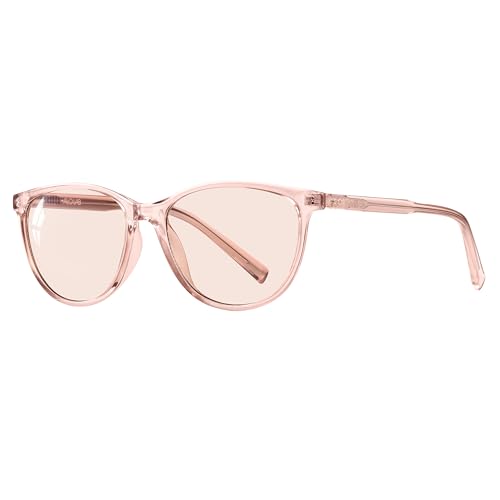
AVDLAB Indoor FL-Flex FL-41 Cat Eye is the only option here with a 25% light-pink lens tint and a 54 mm size. The maker says its FL-41 lens targets 480–520 nm wavelengths and includes 100% UVA/UVB coating. That makes this pair a fit for shoppers who want a defined tint level and wavelength range for indoor use. The cat eye frame is pink. The 25% tint may feel too light or too dark depending on the room and the wearer; choose it for the specified tint rather than assuming it will suit every lighting condition.
Bottom line: Choose this pair if you want a specified light-pink tint and a cat eye frame.
Bloomoak Rose FL-Flex Acetate Square

Bloomoak Rose FL-Flex Acetate Square stands apart with a classic acetate square frame and an anti-reflective nylon lens, rather than the explicitly quantified tint of AVDLAB Indoor FL-Flex FL-41 Cat Eye. The maker says the rose lens reduces 480–520 nm blue light and includes UV400 protection. Its medium size and transparent petal-pink frame suit buyers who prefer a square shape and a light indoor look. The tint level is not quantified, so this choice is less suitable if you need to compare darkness by a percentage; prioritize frame style and lens construction instead.
Bottom line: Pick this option if an acetate square frame matters more than a specified tint percentage.
MAXJULI FL-41 Rose Glasses
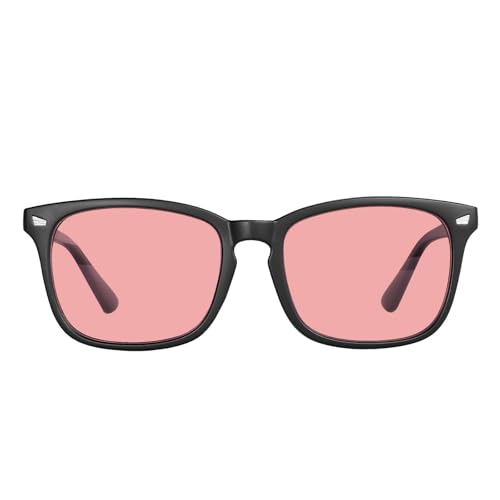
MAXJULI FL-41 Rose Glasses is the only option here whose lens is identified as polycarbonate and whose frame is described as lightweight and flexible. The maker says its FL-41 rose tint filters blue and high-stimulus light from fluorescent, LED and digital-screen sources; the lens is also non-prescription and anti-reflective. Its standard size and black frame offer a straightforward appearance. No tint percentage is supplied, so buyers who need a precise darkness level should compare that requirement before choosing; the dimensions do not establish how the glasses will fit an individual face.
Bottom line: Choose this pair if a flexible frame and polycarbonate lens are your priorities.
How to Choose Indoor Sunglasses for Light Sensitivity
Start with lens tint and the light setting, then choose a frame that fits without blocking side vision. FL-41 rose lenses are designed to filter a portion of blue-green visible light; the products here identify 480–520 nm as their target range, but their tint strengths are not all quantified. A percentage such as 25% describes a lens tint specification, not a guarantee of comfort for every person. If you move between bright and dim rooms often, avoid choosing a very dark indoor tint without trying it in the conditions where you plan to wear it. Check for a secure fit at the temples and nose, and make sure the frame does not press uncomfortably.
Indoor Lens Tint and Outdoor UV Protection
Indoor tinted lenses are meant to reduce some visible light, while outdoor sunglasses need UV protection for exposure to sunlight. UV400 refers to blocking ultraviolet rays through 400 nm; a rosy tint by itself does not establish UV protection. The products that explicitly include UV coverage are AVDLAB Indoor FL-Flex FL-41 Cat Eye and Bloomoak Rose FL-Flex Acetate Square, while MAXJULI FL-41 Rose Glasses is presented around indoor light filtering. Do not assume that one pair covers both settings unless its UV protection is specified. A practical rule is to use a pair with explicit UV protection outdoors, and reserve indoor tints for rooms or screens where brightness is uncomfortable. If you drive, make sure a lens tint does not impair visibility in low light.
Fit and Lens Details That Matter
Frame size labels such as medium or standard are not interchangeable with a measured fit. When possible, compare the lens width, bridge width and temple length printed inside a current pair; those three measurements help narrow down frame fit. A 54 mm lens width is one useful reference for AVDLAB Indoor FL-Flex FL-41 Cat Eye, but it does not describe the bridge or temple fit. Lens material also changes practical tradeoffs: polycarbonate is commonly chosen for impact resistance and low weight, while nylon lenses can offer a light lens option. Neither frame shape nor material ensures a comfortable fit, so check for slipping, pinching and clear peripheral vision before extended wear.
Using Tinted Glasses Safely
Indoor tints can change color perception and reduce the amount of visible light reaching the eye, so take them off before entering a dim stairwell or driving at night if visibility feels reduced. A darker tint is not automatically better for photophobia; it can make a dim environment harder to navigate. UV protection matters outdoors because indoor-purpose tint alone is not proof of protection from ultraviolet rays. For new, severe or worsening light sensitivity—especially after an eye injury or procedure—contact a qualified eye-care professional rather than relying on tinted glasses alone. Keep lenses clean with a soft cloth so smudges do not add glare, and store the glasses in a case to limit scratches.
Frequently Asked Questions
What does FL-41 mean in indoor glasses?
FL-41 is a rose-colored lens tint used to filter a portion of visible light. The options here identify 480–520 nm as a target band, but tint strength and lens construction differ by pair.
Can indoor tinted glasses be worn outside?
Only rely on a pair outdoors if it has explicit UV protection. UV400 indicates ultraviolet blocking through 400 nm, and a rose tint alone does not prove that protection.
Are darker lenses better for light sensitivity?
Not necessarily; a darker tint can reduce visibility in dim rooms and alter color perception. Choose a tint for the lighting where you will use it, and remove it if it interferes with safe movement.
How should indoor light sensitivity glasses fit?
The frame should sit securely without pinching the nose or temples and should not block peripheral vision. Compare lens width, bridge width and temple length with a pair that already fits well.
Can tinted glasses replace an eye exam for photophobia?
Seek prompt professional care for sudden or worsening symptoms, especially after an eye injury or procedure.