
Safety Seals for Bottles: Types and Fit Compared

For general tamper evidence, choose Clear PVC Shrink Bands, 45 x 30 mm if a heat-shrink band suits your bottle; its 45 by 30 mm size is intended for small bottle and jar caps. Choose a pressure-sensitive liner instead when you need a seal inside the cap, and match its diameter to the opening.
Hidden Flask Foam Seals, 21 mm and Hidden Flask Foam Seals, 25 mm are replacement seals for hidden flask bottles, so choose another type if you need ordinary packaging or a seal for routine product storage.
We earn a commission if you buy through links on this page. As an Amazon Associate I earn from qualifying purchases. Products are compared on manufacturer specifications, not hands-on testing.
- Best overall: Clear PVC Shrink Bands, 45 x 30 mm – A 600-piece supply of clear PVC shrink bands with easy-to-tear lines for small caps.
- Best for 24 mm openings: 24 mm Pressure-Sensitive Foam Liners, 300 – Pressure-sensitive foam liners attach when a tightly screwed cap applies pressure.
- Best for 25 mm flask openings: Hidden Flask Foam Seals, 25 mm – A 12-pack of replacement foam seals for shampoo and conditioner flasks.
| Product | Best for | Seal type | Size | Pack count | Shop |
|---|---|---|---|---|---|
| Clear PVC Shrink Bands, 45 x 30 mm | Tamper evidence | Heat-shrink band | 1.77 x 1.18 in | 600 | Check Price on Amazon |
| 24 mm Pressure-Sensitive Foam Liners, 300 | Standard bottle caps | Pressure-sensitive foam liner | 0.94 in | 300 | Check Price on Amazon |
| Hidden Flask Foam Seals, 25 mm | Flask replacements | Pressure-sensitive foam liner | 0.98 in | 12 | Check Price on Amazon |
| Hidden Flask Foam Seals, 21 mm | Small flask openings | Pressure-sensitive foam liner | 0.83 in | 100 | Check Price on Amazon |
Safety Seals for Bottles Compared
Match the seal style to the cap and intended use before choosing a pack.
Clear PVC Shrink Bands, 45 x 30 mm

Unlike the foam cap liners, this option wraps around the outside of a cap and neck to show whether the closure has been disturbed. The pack contains 600 clear PVC bands sized 45 by 30 mm, with easy-to-tear lines. The maker says the bands shrink with heat and resist moisture. They suit small bottles, droppers, essential-oil bottles, and test tubes when the band dimensions match the cap and neck.
A heat source is required, and a band does not replace a liner that seals the bottle opening. Confirm that the band dimensions suit your closure before ordering.
Bottom line: Pick this if you want an outer tamper-evident band and can apply heat.
24 mm Pressure-Sensitive Foam Liners, 300
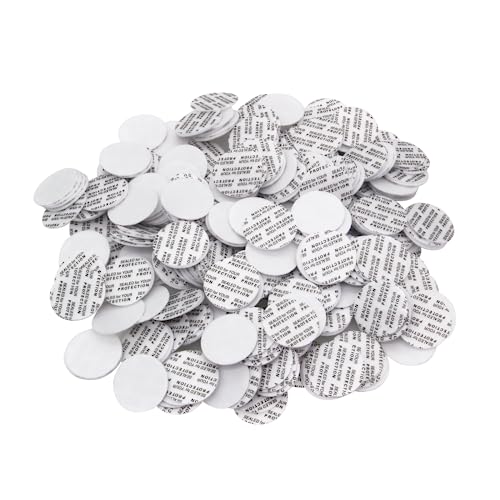
This is the broadest-use cap liner in the group: a 24 mm pressure-sensitive foam seal that adheres when a screw cap is tightened, without a separate sealing device. The 300-piece pack is intended for dry solids, powders, and particles, and the maker says it helps keep out dirt and moisture. It suits buyers who need a liner inside a compatible cap rather than an external shrink band.
The maker cautions against corrosive or volatile liquids, so this is not a universal liquid seal. Match the liner diameter to the cap and opening; pressure-sensitive liners need firm cap contact to adhere.
Bottom line: Choose this for dry contents in a cap compatible with a 24 mm liner.
Hidden Flask Foam Seals, 25 mm

For shampoo and conditioner flask owners, this 12-pack is a replacement option rather than a general packaging seal. The 25 mm foam seals go inside the cap; the maker’s instructions call for a dry rim, the printed side facing inward, and several minutes closed after tightening. That use-specific fit distinguishes it from the shrink bands and 24 mm liner pack.
The pack is small, and its flask use makes it a poor choice for ordinary bottles unless the cap dimensions match. Treat it as a closure liner, not an exterior tamper band, and verify diameter fit before use.
Bottom line: Pick this only when replacing a compatible 25 mm flask seal.
Hidden Flask Foam Seals, 21 mm

This option is sized for hidden sunscreen or shampoo flasks, not general bottle packaging. It supplies 100 white polystyrene foam liners at 21 mm, a larger pack than the 12-seal flask alternative. The maker says the liners are intended for pressure-sensitive seal closures and gives a penny-sized opening as a fit reference.
The intended use is narrow, so these are not a substitute for a shrink band or a liner chosen for ordinary product storage. Check that the cap’s inside diameter matches 21 mm; a close size mismatch can prevent a cap liner from sealing evenly.
Bottom line: Choose this for a compatible 21 mm hidden flask opening.
How to choose a safety seal for a bottle
Start by deciding whether you need evidence around the cap or a liner across the opening. An external shrink band sits over the closure and neck; a pressure-sensitive foam liner sits inside the cap and adheres as the cap is tightened. Neither style is automatically child-resistant, and a tamper-evident feature is not proof of a leakproof or sterile package. For a liner, compare its diameter with the cap’s sealing surface; for a band, compare both dimensions with the cap and neck. With a measured cap-liner diameter of 24 mm, a 24 mm liner is the closest fit here; a 25 mm or 21 mm liner may not cover the same sealing surface. Keep the intended contents in mind, since liner material and compatibility matter.
How bottle seal sizes and fit work
Seal sizes refer to different measurements depending on the style: a liner is sized by diameter, while a shrink band uses two dimensions. Measure the cap’s inside sealing area for a liner and the cap-plus-neck area for a band; do not compare those measurements as if they mean the same thing. A nominally matching diameter can still fit poorly if a cap has a recessed or unusually shaped interior. The four options here span 21 mm to 25 mm liners and one 45 by 30 mm band. Use this guide to narrow the type, then verify closure fit before buying.
| Need | Seal style | Fit check |
|---|---|---|
| Visible closure disturbance | External shrink band | Cap and neck dimensions |
| Seal inside a screw cap | Pressure-sensitive foam liner | Liner diameter and cap surface |
What a tamper-evident seal can and cannot do
A tamper-evident seal helps show whether a closure has been disturbed; it does not by itself establish child resistance, freshness, sterility, or a leakproof package. An external band and an internal liner provide different closure cues, so choose based on how the bottle is closed and handled. For products that touch food, cosmetics, or medicines, confirm that the seal material is suitable for the contents and intended contact; a material name alone does not establish that compatibility. Avoid treating a foam liner as a pressure-rated closure or assuming that a shrink band seals the opening. Match the component to the package design and the contents.
Applying and checking bottle seals
A pressure-sensitive liner needs a clean, dry contact surface and firm cap pressure to adhere; the 25 mm flask-seal instructions specifically call for a dry rim and several minutes closed. A heat-shrink band instead needs heat applied evenly around the cap and neck, and excessive heat can damage packaging or contents. Use only a heat source appropriate to the package, keep hands clear of hot surfaces, and let the closure cool before handling. After applying either style, check that the liner lies flat or the band is snug and intact. If a seal is uneven, loose, or damaged, replace it rather than relying on it.
Frequently Asked Questions
Does a bottle safety seal make a bottle child-resistant?
No, a tamper-evident band or foam liner is not the same as a child-resistant closure. Child resistance depends on the cap-and-container system, so use a closure specifically designed for that purpose when required.
How do I measure a bottle cap for a foam seal?
Measure the inside diameter of the cap’s sealing area in millimeters and compare it with the liner diameter. A 1 mm mismatch can affect how evenly a liner contacts the cap, especially if the cap has a narrow or recessed sealing surface.
Can I use pressure-sensitive liners with liquids?
Some pressure-sensitive liners are intended for liquids, but the 24 mm option here is cautioned against for corrosive or volatile liquids. Check contents compatibility and closure fit rather than assuming every foam liner is suitable for every liquid.
Do shrink bands seal a bottle opening?
No, an external shrink band covers the cap and neck to provide visible tamper evidence; it does not sit across the bottle opening like a cap liner. Choose a liner if your package needs an inner cap seal.
How long should a pressure-sensitive liner stay closed?
Allow several minutes closed after tightening when applying the 25 mm flask seals, as their instructions specify. Other liner designs can use different application directions, so match the process to the specific liner.