
Spray-On Bermuda Grass Seed: Kits and Seed Compared

Hydro Mousse Bermuda Refill, 1 lb is the closest match for spray-on Bermuda grass seed because it is a Bermuda refill made for hose-applied mousse, with a blend that also includes perennial ryegrass. Choose Hydro Mousse Bermuda Rye Spray Kit if you want a spray kit that combines seed, fertilizer and soil conditioner; choose Scotts Turf Builder Bermudagrass Seed, 1 lb if you want conventional Bermudagrass seed rather than a mousse applicator.
We earn a commission if you buy through links on this page. As an Amazon Associate I earn from qualifying purchases. Products are compared on manufacturer specifications, not hands-on testing.
- Best overall: Hydro Mousse Bermuda Refill, 1 lb – A Bermuda refill with mousse pod, and coverage for both overseeding and new lawns.
- Best for a complete kit: Hydro Mousse Bermuda Rye Spray Kit – Combines seed, fertilizer and soil conditioner in a hose-attached spray system.
- Best for conventional seed: Scotts Turf Builder Bermudagrass Seed, 1 lb – Bermudagrass seed blend with fertilizer and soil improver, without a spray mousse system.
| Product | Best for | Seed blend | Overseeding coverage | New-lawn coverage | Shop |
|---|---|---|---|---|---|
| Hydro Mousse Bermuda Refill, 1 lb | Refill coverage | 49.40% common unhulled Bermuda | 1,000 sq. ft. | 330 sq. ft. | Check Price on Amazon |
| Hydro Mousse Bermuda Rye Spray Kit | Complete spray kit | Bermuda-rye mixture | — | — | Check Price on Amazon |
| Scotts Turf Builder Bermudagrass Seed, 1 lb | Conventional seeding | Bermudagrass with fertilizer and soil | 1,000 sq. ft. | 330 sq. ft. | Check Price on Amazon |
Spray-On Bermuda Grass Seed Options
Compare the spray formats, seed mixes and coverage to match the product to your lawn project.
Hydro Mousse Bermuda Refill, 1 lb

Hydro Mousse Bermuda Refill, 1 lb is the dedicated Bermuda refill in this group, with a mousse pod and 1 pound of seed for hose-based application. Its blend is nearly half common unhulled Bermuda and half perennial ryegrass, so it is not a pure Bermuda seed mix. The maker gives coverage of up to 1,000 square feet for overseeding and 330 square feet for a new lawn, making the overseeding figure the better planning guide for thin existing turf. This option suits someone who already has a compatible Hydro Mousse system; buyers seeking a complete kit should choose a different format.
Bottom line: Pick this if you already have the applicator and want a Bermuda-based refill.
Hydro Mousse Bermuda Rye Spray Kit

Hydro Mousse Bermuda Rye Spray Kit stands apart as the complete hose-attached kit rather than a refill: its mousse combines seed, fertilizer and soil conditioner. The maker says the green mousse adheres to soil and helps show where you have applied it, which can help with spot repairs and uneven patches. The seed is a Bermuda rye mixture, so it is not a pure Bermudagrass choice. The maker recommends watering two to three times daily for the first three weeks; that frequent moisture can be demanding in hot or windy weather. Choose this format if you need the applicator and bundled lawn inputs in one system.
Bottom line: Choose this if you want a full hose-spray kit for patch repair or seeding.
Scotts Turf Builder Bermudagrass Seed, 1 lb
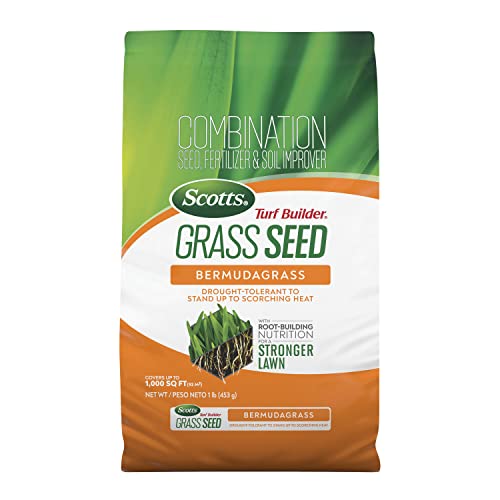
Scotts Turf Builder Bermudagrass Seed, 1 lb is the conventional-seed alternative, not a mousse spray product; its blend combines Bermudagrass seed with fertilizer and soil improver. The maker describes it as intended for full sun, with high drought resistance and durability, and recommends late spring or early summer for new lawns or overseeding. Its coverage is 1,000 square feet for overseeding and 330 square feet for a new lawn. This suits buyers who prefer to distribute seed using a conventional method and want Bermudagrass rather than a Bermuda rye mix. It does not include a hose-attached mousse applicator.
Bottom line: Choose this for conventional Bermudagrass seeding in a sunny area.
How to Choose Spray-On Bermuda Grass Seed
Start with whether you need a complete hose system or only a refill: a refill is useful only if you already have its compatible applicator. Bermuda is a warm-season grass, and seed generally germinates best when soil is around 65–70°F; cool soil can delay emergence. For an established lawn, compare the overseeding rate rather than the new-lawn rate, because the thinner seeding rate covers more area. A practical rule is to measure the bare or thin patches first and buy by that area, not by the lawn’s total square footage. Also check whether the seed is pure Bermuda or mixed with ryegrass: a blend can establish differently from a Bermuda-only planting.
When to Seed Bermuda Grass
Late spring through early summer is the usual window for sowing Bermuda because warm soil and warm weather support germination and growth. Aim for soil near 65–70°F rather than relying only on a calendar date; local temperatures and shade can shift the window. Bermuda is a sun-loving turfgrass, so choose another grass type for a mostly shaded lawn rather than expecting seed to thrive under dense tree cover. Seed needs consistent moisture during germination, but saturated soil can wash seed away, particularly on slopes. For a spray mousse product, follow its package directions for watering, and avoid applying immediately before heavy rain. Keep foot traffic off seeded ground until seedlings are established.
Spray Mousse Versus Conventional Bermuda Seed
Spray mousse applies seed with a visible carrier, while conventional seed is distributed separately with a hand spreader or broadcast spreader. The mousse can make treated spots easier to see, but it does not remove the need for soil contact, preparation and watering. Conventional seed gives more control over the spreading tool and pattern, while a hose system bundles the application format with other inputs in some kits. The table below distinguishes the practical choice by task.
| Need | Choose | Key tradeoff |
|---|---|---|
| Replace a compatible system’s contents | Refill | Requires the matching applicator |
| Buy a bundled hose application system | Spray kit | Seed may include another grass type |
| Spread seed without mousse | Conventional seed | Needs separate spreading and watering |
Match the product’s coverage to the project type: a new lawn typically needs a heavier seeding rate than overseeding.
Preparing and Watering a Bermuda Seedbed
Prepare the surface so seed can contact soil: remove debris and loosen the top layer rather than sowing into a thick mat of thatch. On bare ground, smooth the surface and avoid burying seed deeply; small grass seed generally needs shallow placement and light soil contact. During germination, keep the seedbed evenly moist with light, frequent watering instead of allowing it to dry between sessions. The spray kit in this comparison recommends watering two to three times per day for its first three weeks. Once seedlings emerge and begin rooting, gradually water less often but more deeply. On slopes, use gentle watering that will not carry seed downhill.
Frequently Asked Questions
How warm should the soil be for Bermuda seed?
Bermuda seed generally germinates best when soil is about 65–70°F. Cold soil can slow emergence, so wait for sustained warmth rather than sowing only by the date.
Can Bermuda grass seed grow in partial shade?
Bermuda performs best in full sun and is a poor choice for dense shade. If a lawn receives only a few hours of direct sun daily, select a shade-tolerant grass instead.
How often should I water newly seeded Bermuda?
Keep the seedbed evenly moist with light, frequent watering during germination. The spray kit here recommends two to three waterings daily for its first three weeks; reduce frequency once seedlings are rooted.
How much Bermuda seed do I need for a new lawn?
Use the new-lawn coverage rather than the overseeding coverage when estimating. The products with coverage here cover 330 square feet per pound-sized package for new lawns, versus 1,000 square feet for overseeding.
Should Bermuda seed be covered with soil?
Keep grass seed close to the surface, with light soil contact rather than deep burial. A thin covering or gentle raking helps protect seed while allowing seedlings to emerge.