
Best Shoulder Brace for Torn Rotator Cuff: 4 Compared

The Sparthos Rotator Cuff Shoulder Brace is the best fit for most people seeking a shoulder brace for a torn rotator cuff because it offers adjustable compression and moderate stabilization without aiming for severe immobilization. Choose BINITS Shoulder Brace S-M instead if you specifically want an adjustable immobilizer design, but get clinical guidance before limiting shoulder movement.
A shoulder brace is an external support, not a way to confirm or repair a rotator cuff tear. A clinician can assess whether a brace is appropriate for your injury and activity.
We earn a commission if you buy through links on this page. As an Amazon Associate I earn from qualifying purchases. Products are compared on manufacturer specifications, not hands-on testing.
- Best overall: Sparthos Rotator Cuff Shoulder Brace – Adjustable straps and moderate stabilization suit mild to moderate support needs.
- Best for immobilizer-style support: BINITS Shoulder Brace S-M – Its adjustable design is described as providing compression and immobilization.
- Best for durable neoprene: Komoko Shoulder Brace – Neoprene rubber and precision stitching distinguish its construction.
- Best for light activity: Adjustable Shoulder Compression Sleeve – Its adjustable compression design is intended for daily activities and light workouts.
| Product | Best for | Fit | Support design | Material | Shop |
|---|---|---|---|---|---|
| Sparthos Rotator Cuff Shoulder Brace | Moderate support | Universal | Adjustable compression | — | Check Price on Amazon |
| BINITS Shoulder Brace S-M | Immobilizer design | S-M | Adjustable compression and immobilization | Neoprene | Check Price on Amazon |
| Komoko Shoulder Brace | Neoprene construction | Adjustable; left or right arm | Compression sleeve and arm sling | Neoprene rubber | Check Price on Amazon |
| Adjustable Shoulder Compression Sleeve | Light activity | Right or left shoulder | Adjustable compression; natural movement | Lightweight breathable fabric | Check Price on Amazon |
Shoulder Braces for Torn Rotator Cuff
Compare support style and fit, then match a brace to guidance from a clinician rather than choosing by the injury label alone.
Sparthos Rotator Cuff Shoulder Brace

Adjustable compression and moderate stabilization set this brace apart from designs described as immobilizers. The universal-size sleeve fits either the left or right arm, with chest and arm straps that adjust using hook-and-loop closures. The maker says it is intended for mild to moderate shoulder discomfort and is not for severe immobilization. That limitation matters if a clinician has told you to keep the shoulder still or you need a prescribed sling; this brace is designed to allow movement. Ask a clinician whether it suits your tear and planned activities.
Bottom line: Choose this if you need adjustable, moderate support while retaining shoulder movement.
BINITS Shoulder Brace S-M

The immobilizer-style design makes this a different choice from braces centered on moderate support and free movement. This black S-M sleeve wrap uses adjustable hook-and-loop closures and breathable mesh, and it is made of neoprene. The maker says it is designed for compression and immobilization and for day-and-night comfort. Immobilizing a shoulder can limit movement, so this is not an automatic choice for an undiagnosed tear or routine exercise; ask a clinician whether that level of restriction is suitable. Check the sizing guidance against your measurements before ordering.
Bottom line: Choose this if a clinician recommends an adjustable immobilizer-style brace.
Komoko Shoulder Brace
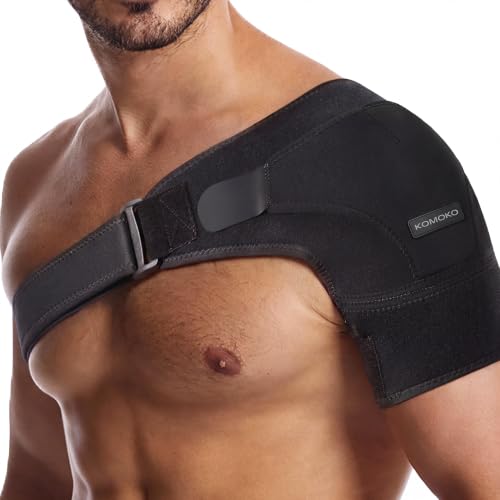
Neoprene rubber and stated dimensions distinguish this brace from products without measurements in the specifications: 9.8 inches long, 6.7 inches high, and 1.9 inches wide. The adjustable design fits either arm and combines a compression sleeve with an arm sling. The maker says the brace is intended to support stability while allowing mobility; that positioning may not suit someone who has been told to immobilize the shoulder. The measurements describe the brace, not the wearer’s fit, so confirm that the design works with your body and clothing before relying on it.
Bottom line: Choose this if neoprene construction and the brace dimensions suit your needs.
Adjustable Shoulder Compression Sleeve

This brace is framed around daily activities and light workouts, unlike the options that specifically mention an immobilizer or sling. Its adjustable straps allow the wearer to tailor compression, and its lightweight, breathable fabric is intended for all-day comfort. The maker says it is designed to support stability without restricting natural movement. That makes it a poor match when a clinician has prescribed strict immobilization; a flexible support cannot substitute for that instruction. The specifications identify right- or left-shoulder use but do not give a size range, so check fit before ordering.
Bottom line: Choose this for adjustable support during light activity when movement is appropriate.
How to choose a shoulder brace for a torn rotator cuff
Choose a brace by the amount of movement your clinician wants you to retain, not by the word “rotator cuff” on the package. A compression sleeve supports the shoulder while allowing motion; an immobilizer or sling restricts motion more. Those designs are not interchangeable, and prolonged restriction can contribute to shoulder stiffness. A brace does not diagnose a tear or replace an examination. If you have sudden weakness, a traumatic injury, or cannot raise your arm, seek prompt medical assessment instead of testing different braces. For mild symptoms without urgent warning signs, ask a clinician or physical therapist what activities and support level are appropriate. Use the brace only in the way they advise, and stop wearing it if your hand becomes numb, cold, or discolored.
Shoulder brace fit and sizing
A shoulder brace should feel secure without squeezing the arm or chest. Start with the manufacturer’s measurement method and size range; universal sizing does not guarantee a fit for every body. Adjust straps in small increments, then check that you can breathe comfortably and that your hand remains warm with normal sensation. A strap that slides may indicate a poor fit, while tingling, swelling, or color change means you should loosen or remove the brace and seek advice if symptoms persist. Wear the brace over a thin layer if that improves comfort, but avoid bulky folds under straps. Before using a brace for sleep, ask a clinician whether overnight wear is suitable; positioning can change pressure on the shoulder and arm.
Compression sleeves, slings, and immobilizers compared
Compression sleeves allow more shoulder movement, while sling or immobilizer designs hold the arm closer to the body. A sling may be advised for short-term protection after some injuries, but the right duration depends on the diagnosis and care plan. Use this comparison to identify design, not to select treatment without an assessment.
| Design | Movement | Best considered when |
|---|---|---|
| Compression sleeve | Generally allows movement | Support is desired without full restriction |
| Arm sling | Supports the arm at the side | A clinician recommends temporary support |
| Immobilizer | Restricts movement more | A clinician specifies immobilization |
Do not assume a more restrictive design is better for a rotator cuff injury. The diagnosis, pain, weakness, and treatment plan determine whether motion should be limited.
When to wear a shoulder brace and when to get help
Wear a shoulder brace only for activities or durations that fit your clinical advice; all-day comfort claims are not a medical wear schedule. Most shoulder injuries need a diagnosis based on history and examination, and clinicians may use imaging when it would change care. Seek urgent care after a major injury, visible deformity, sudden loss of strength, or severe pain. Numbness or a cold, pale, or blue hand while braced can signal excessive pressure or another problem: remove or loosen the brace and get medical guidance. Avoid lifting overhead or exercising through sharp pain until you have a clear plan. A brace should not be used to mask worsening symptoms so you can keep doing a painful activity.
Frequently Asked Questions
Can a shoulder brace heal a torn rotator cuff?
A shoulder brace does not repair a torn tendon. It may provide external support, but a clinician should determine the diagnosis and treatment plan, especially if weakness or pain is worsening.
Should I sleep in a shoulder brace?
Only sleep in a brace if a clinician advises it for your situation. Overnight pressure can affect comfort and circulation, so remove it and seek advice if your hand becomes numb, cold, or discolored.
How tight should a rotator cuff brace feel?
A brace should feel secure, not constricting. Loosen or remove it if you notice tingling, swelling, numbness, or changes in hand color or temperature.
Can I exercise while wearing a shoulder brace?
Do not use a brace to push through shoulder pain during exercise. Ask a clinician which movements are appropriate; sharp pain, new weakness, or reduced range of motion are reasons to stop and get assessed.
When should shoulder pain be checked urgently?
Get prompt assessment for severe pain after an injury, visible deformity, or sudden inability to raise the arm. Sudden weakness or a cold, pale, or blue hand also needs urgent medical attention.