
Gloves for Handling Hot Food: 5 Types Compared

For handling hot food, choose Aillary 14-Inch Neoprene-Coated Gloves when you need a long, washable glove for wet or greasy items; its 14-inch neoprene-coated design covers the wrist. ANBOSON 5-Mil Nitrile Gloves with Liners is a better match for food prep that needs disposable nitrile gloves and cotton liners, while FITFIV Long Aramid Grill Gloves is built for oven and grill contact.
Disposable nitrile gloves are for handling food, not a substitute for insulated gloves when lifting hot cookware or reaching into a hot oven.
We earn a commission if you buy through links on this page. As an Amazon Associate I earn from qualifying purchases. Products are compared on manufacturer specifications, not hands-on testing.
- Best overall: Aillary 14-Inch Neoprene-Coated Gloves – Its 14-inch waterproof neoprene-coated design pairs a cotton liner with a textured grip for greasy, wet food.
- Best for disposable prep: ANBOSON 5-Mil Nitrile Gloves with Liners – The set combines 50 disposable nitrile gloves with two reusable cotton liners.
- Best for oven use: FITFIV Long Aramid Grill Gloves – Its aramid-fiber outer layer, silicone grip, and 13.78-inch length suit oven and grill tasks.
| Product | Best for | Construction | Length | Pack contents | Shop |
|---|---|---|---|---|---|
| Aillary 14-Inch Neoprene-Coated Gloves | Wet, greasy food | Neoprene coating, cotton liner | 14 in | 1 pair | Check Price on Amazon |
| ANBOSON 5-Mil Nitrile Gloves with Liners | Disposable food prep | 5-mil nitrile, cotton liners | — | 50 gloves, 2 liners | Check Price on Amazon |
| ANBOSON 10-Mil Nitrile Gloves with Liners | Heavy-duty prep | 10-mil nitrile, cotton liners | — | 100 gloves, 4 liners | Check Price on Amazon |
| FITFIV Long Aramid Grill Gloves | Oven and grill | Aramid fiber, silicone grip | 13.78 in | Pair | Check Price on Amazon |
| RAPICCA 14-Inch Neoprene Gloves | Hot greasy meat | Neoprene, cotton liner | 14 in | Pair | Check Price on Amazon |
Gloves for Handling Hot Food
Match the glove construction to whether you are prepping food, gripping hot cookware, or handling greasy items.
Aillary 14-Inch Neoprene-Coated Gloves
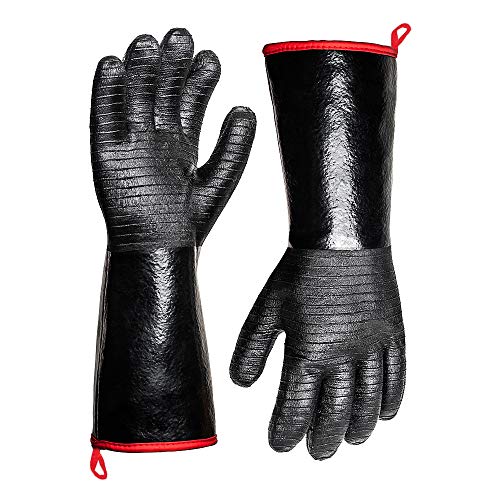
For wet or greasy hot food, this pair differs from disposable prep gloves with a waterproof neoprene coating and a longer cuff. The 14-inch length reaches past the wrist, while the textured surface is intended to improve grip on slick items. The maker claims heat resistance up to 932°F, but that figure is not a safe handling-time guarantee; contact time and the object’s heat transfer still matter. These gloves suit fryer, grill, and smoker handling. They are bulkier than disposable nitrile gloves, so they are less suited to fine food-prep work.
Bottom line: Choose this pair for greasy or wet items when wrist coverage and washability matter.
ANBOSON 5-Mil Nitrile Gloves with Liners

For food prep that needs disposable gloves, this set is the lighter nitrile option, with 50 gloves and two reusable cotton liners. The 5-mil nitrile is powder- and latex-free, and the liners let the wearer add a layer between the hand and glove. The maker positions the gloves for greasy food and hot utensils, but thin disposable nitrile should not be treated as an oven mitt or direct-contact heat barrier. Choose this set for messy prep and meat shredding where dexterity matters more than extended heat protection; it is not the right choice for lifting hot pans.
Bottom line: Choose this set for disposable prep and handling when you want more dexterity than a bulky insulated glove.
ANBOSON 10-Mil Nitrile Gloves with Liners

This set is the thicker disposable nitrile alternative, with 10-mil gloves and four cotton liners, compared with the 5-mil set’s two liners. Textured grip is intended for greasy food and utensils, and the pack contains 100 gloves. The maker claims tear resistance and heat protection, but nitrile remains a poor choice for prolonged contact with hot cookware; use insulated gloves designed for that task. The extra thickness can suit messy meat handling and pulled-pork prep, although it may feel less nimble for detailed work than a thinner disposable glove.
Bottom line: Choose this set for messier prep when thicker disposable gloves and more liners are useful.
FITFIV Long Aramid Grill Gloves

For oven and grill tasks, this pair stands apart with an aramid-fiber outer layer and silicone grip rather than a waterproof coating. Each glove measures 13.78 inches long and 6.33 inches across the palm. The maker claims a maximum tolerance of 1472°F; that number does not mean the gloves can safely hold an object at that temperature indefinitely. These reusable gloves suit handling hot cookware and grill equipment where grip is important. They are not disposable food-prep gloves, and the construction does not make them the best option for oily or wet meat.
Bottom line: Choose these for oven or grill handling when a silicone grip and long glove are priorities.
RAPICCA 14-Inch Neoprene Gloves
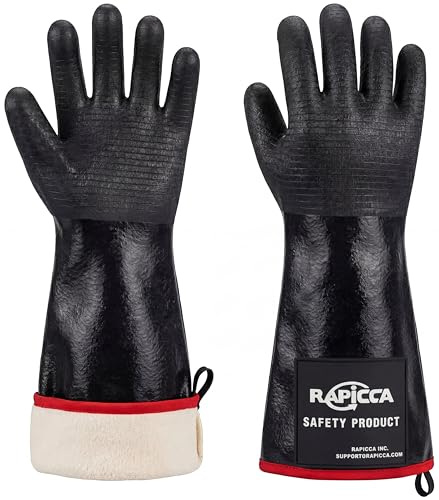
For hot, greasy meat, this pair combines neoprene with a textured palm and double-layer insulated liner. Its 14-inch sleeve matches the longer reach of the other neoprene option, while the maker claims resistance to water, oil, stains, and heat up to 932°F. That maximum is not a safe exposure duration, so avoid assuming the gloves protect against sustained contact with very hot surfaces. The design is aimed at grilling, smoking, and deep-frying tasks. Compared with disposable nitrile, these are reusable and bulkier, making them less appropriate for routine fine food prep.
Bottom line: Choose these for handling hot, oily meat when a lined, reusable glove is preferable to disposable nitrile.
How to choose gloves for handling hot food
Choose by the heat source and the kind of contact, not by a maximum-temperature number alone. Disposable nitrile gloves are primarily food-prep gloves; cotton liners add a layer but do not turn thin nitrile into an oven mitt. For hot pans, oven racks, or grill grates, use insulated gloves that cover the hand and wrist. For wet, greasy meat, a textured waterproof coating can improve grip. A measurable rule: if the task involves reaching into an oven or lifting hot cookware, skip disposable nitrile and choose a purpose-built insulated glove.
Heat labels do not tell you how long a glove can safely hold a hot object. Contact duration, moisture, pressure, and the object’s material all affect heat transfer, so avoid relying on a rating as permission for prolonged contact.
Glove types for cooking and grilling
Disposable nitrile suits short food-prep tasks, while insulated fabric or coated gloves suit contact with hot equipment and greasy food. Nitrile gives a close fit and can be changed between tasks; reusable gloves typically trade some dexterity for insulation, longer cuffs, or a more substantial grip. Cotton liners can add comfort and a layer under nitrile, but the liner itself is not a heat rating.
The table separates the main task fit of these glove styles. Use it to narrow the type first, then check length and fit for your hand and work area.
| Task | Glove type | Key tradeoff |
|---|---|---|
| Messy food prep | Disposable nitrile | Dexterity, limited heat barrier |
| Wet or greasy meat | Coated insulated glove | Grip and coverage, less dexterity |
| Oven or grill equipment | Aramid or insulated glove | Heat handling, bulkier feel |
Length, grip, and fit for hot-food gloves
A long cuff matters when forearms approach a grill, fryer, or oven opening; the two coated options here are 14 inches long, and the fabric pair is 13.78 inches. Length does not replace correct sizing: a glove that is loose can reduce control, while a tight glove can make it harder to grip. Check palm width and cuff reach against the task, especially if you will handle slick meat with tongs or move cookware.
Textured palms and silicone grip patterns help with slick surfaces, but they do not make a hot load safe to carry if it is heavy or awkward. Keep the route clear and use both hands for large cookware.
Safe use and care for reusable cooking gloves
Reusable gloves need to be clean and dry before heat handling; moisture trapped in a liner can transfer heat quickly. Wash coated gloves after greasy food contact, and allow the interior to dry fully before reuse. Follow the maker’s care directions for materials such as neoprene, silicone, and aramid, since heat and cleaning methods differ.
Inspect seams, coating, and liners before each use. Cracks, worn patches, or damp insulation are reasons to stop using a glove for hot handling. Disposable nitrile gloves should be changed when torn or contaminated and should not be reused as heat protection.
Frequently Asked Questions
Can disposable nitrile gloves handle hot food?
Disposable nitrile gloves are suited to food prep, not sustained contact with hot cookware. Cotton liners add a layer, but use an insulated glove for oven racks, pans, or grill grates.
How long should cooking gloves be for grilling?
A 14-inch cuff reaches farther up the forearm than a short food-prep glove. Choose longer coverage when your hands and wrists approach a grill, fryer, or smoker opening.
Are heat-resistant glove temperature ratings a safe limit?
A maximum temperature rating is not a safe holding-time limit. Contact duration, moisture, pressure, and the object’s material affect how quickly heat reaches the hand.
Can I wash reusable gloves after handling meat?
Wash reusable gloves after greasy or raw-meat contact and dry the interior fully before heat use. Damp liners can transfer heat more quickly than dry insulation.
Do cotton liners make nitrile gloves heatproof?
Cotton liners add a layer and can improve comfort, but they do not make thin nitrile suitable for lifting hot pans. Use purpose-built insulated gloves for direct cookware handling.