
Copper Anti-Seize Grease: 5 Options Compared

Permatex 09128 Copper Anti-Seize, 8 oz suits most buyers because its maker gives a -30°F to 1,800°F range and names several automotive thread applications. Copper anti-seize is a lubricant applied to metal threads to help limit seizing and corrosion; choose a smaller container if you only service a few parts, or compare applicator style when frequent use matters.
Choose another type of lubricant if the component maker specifies a different product, and keep any lubricant off brake pads, rotors and other friction surfaces.
We earn a commission if you buy through links on this page. As an Amazon Associate I earn from qualifying purchases. Products are compared on manufacturer specifications, not hands-on testing.
- Best overall: Permatex 09128 Copper Anti-Seize, 8 oz – Its maker specifies a -30°F to 1,800°F range and applications including spark plug and exhaust manifold threads.
- Best for occasional use: Keze Copper Anti-Seize, 1 oz – The 1-ounce size is suited to a small number of maintenance jobs.
- Best for brush application: Loctite 38650 Copper Anti-Seize, 8 oz – The 8-ounce container has a brush top for applying the compound.
| Product | Best for | Package size | Temperature range | Applicator | Shop |
|---|---|---|---|---|---|
| Permatex 09128 Copper Anti-Seize, 8 oz | General automotive threads | 8 oz | -30°F to 1,800°F | — | Check Price on Amazon |
| Keze Copper Anti-Seize, 1 oz | Small maintenance jobs | 1 oz | -30°F to 1,800°F | — | Check Price on Amazon |
| Keze Copper Anti-Seize, 8 oz | Larger Keze container | 8 oz | -30°F to 1,800°F | Bottle brush | Check Price on Amazon |
| BTAS Copper Antiseize, 8 oz | Conductive copper formula | 8 oz | — | — | Check Price on Amazon |
| Loctite 38650 Copper Anti-Seize, 8 oz | Brush-top container | 8 oz | — | Brush top | Check Price on Amazon |
Copper anti-seize grease options
Compare package size, stated temperature range and applicator style to match the compound to the job.
Permatex 09128 Copper Anti-Seize, 8 oz
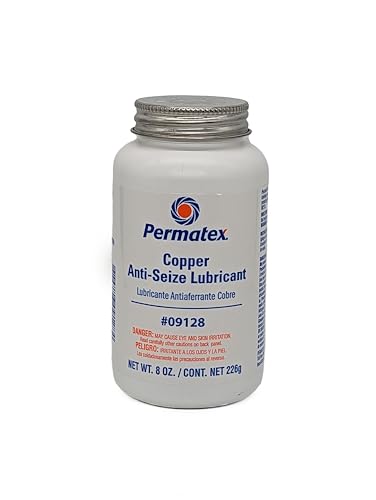
Permatex 09128 Copper Anti-Seize, 8 oz is the clearest choice when a temperature range and multiple automotive applications matter. Its maker says the copper lubricant helps prevent seizing, corrosion and galling in high-temperature conditions, and names spark plug threads in aluminum, exhaust manifold bolts, oxygen sensors and battery cable connections among suggested uses. The 8-ounce container suits recurring maintenance better than a 1-ounce container. The maker also says the compound provides electrical conductivity, so it is not an insulating barrier; verify that a component’s service instructions permit conductive lubricant before applying it.
Bottom line: Choose it for a broad range of automotive thread work with a temperature range.
Keze Copper Anti-Seize, 1 oz

Keze Copper Anti-Seize, 1 oz comes in a 1-ounce package, making it the smallest option here for occasional thread maintenance or a limited number of jobs. Its maker describes a blend of copper powder, lithium composite and petroleum distillates, and gives a -30°F to 1,800°F operating range. Named uses include spark plug threads, lug nuts, exhaust manifold studs and lawnmower parts. The package size is its main distinction from the 8-ounce choices; buyers who service several vehicles or work frequently may prefer a larger container to avoid running out mid-task.
Bottom line: Pick it for a few automotive or equipment jobs rather than frequent shop use.
Keze Copper Anti-Seize, 8 oz
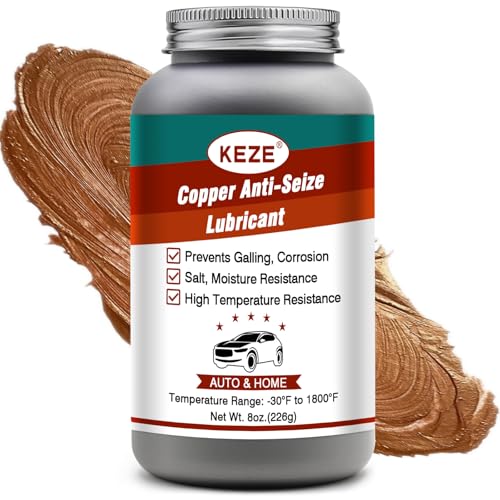
Keze Copper Anti-Seize, 8 oz pairs the Keze formula’s stated -30°F to 1,800°F range with an 8-ounce bottle-brush format, unlike the same maker’s 1-ounce option. The maker names spark plug threads, oxygen sensors, exhaust studs and brake assemblies as possible automotive applications, and says the compound resists salt and moisture. Its larger volume fits repeated maintenance better than a one-off repair. The uses do not override component-specific service guidance: avoid applying anti-seize to brake friction surfaces, and confirm whether a fastener should be lubricated before assembly.
Bottom line: Choose it when you want the Keze formula in a larger, brush-equipped package.
BTAS Copper Antiseize, 8 oz

BTAS Copper Antiseize, 8 oz is an 8-ounce semi-synthetic grease with micro copper flakes, setting it apart by the formula named by its maker rather than by a temperature range. The maker says it contains rust and corrosion inhibitors and recommends it for spark plug threads, wheel hub nuts, exhaust manifold bolts, oxygen sensors and battery connections. It also describes the compound as electrically conductive, which can matter around electrical connections and sensors.
Bottom line: Choose it when its copper-flake formula and named applications fit, after confirming heat suitability.
Loctite 38650 Copper Anti-Seize, 8 oz

Loctite 38650 Copper Anti-Seize, 8 oz is the only option identified here with a brush-top applicator, a practical distinction for controlled application from an 8-ounce container. The product name identifies it as a copper anti-seize lubricant, while the specifications give no application examples or operating range to compare with the other formulas. That makes this a straightforward choice only when the brush format is the deciding feature and the component instructions independently confirm compatibility. For a job that requires a particular temperature limit or a named vehicle application, verify those requirements before selecting it.
Bottom line: Pick it when a brush-top package is the deciding feature and its compatibility is confirmed.
How to choose copper anti-seize grease
Match the lubricant to the fastener material, operating environment and component instructions before comparing package size. Copper anti-seize compounds commonly combine a carrier grease with copper particles; the carrier helps spread the compound while the particles remain between metal surfaces. Temperature range matters most on exhaust hardware, while salt and moisture exposure can matter on outdoor or marine equipment. A measurable rule: if the job’s expected temperature exceeds the product’s upper limit, do not use that compound for the job. Also compare the application method: a brush can help place a small amount on threads, while a smaller package can suit infrequent maintenance. Do not assume every anti-seize formula is interchangeable with a specified threadlocker, dry assembly, or specialty lubricant.
Where anti-seize belongs on automotive parts
Apply anti-seize only to compatible metal contact areas named by the component maker, such as threads when lubrication is permitted. Keep it completely off brake pads, rotors and drum friction surfaces; lubricant contamination can reduce braking friction. Avoid coating sensor tips, electrical contacts or other functional surfaces unless the service procedure specifically calls for it. Spark plug installation deserves particular care: some plug makers call for clean, dry threads, and added lubricant changes thread friction and can alter clamp load at the same torque. Use the vehicle or component torque instruction for the exact assembly, not a dry-thread torque value by assumption. If the fastener instruction requires dry threads, use no anti-seize.
Copper anti-seize application and common mistakes
Clean loose dirt and corrosion from threads before applying a thin, even film; a thick coating can squeeze into neighboring areas and contaminate surfaces. Keep the compound out of blind holes where excess material can hydraulically load the bottom of the hole as a bolt tightens. Lubricated threads do not behave like dry threads: friction is lower, so the same torque can produce a different clamping force. That makes a dry torque specification unsuitable when the procedure calls for a lubricated fastener. Use only enough compound to cover the intended thread surfaces and wipe away excess. For brake work, separate anti-seize use from friction components and follow the vehicle’s service procedure for sliding or threaded hardware.
What the temperature range tells you
A printed range is useful for screening products, but it is not a universal permission to use the compound on every hot component. Copper anti-seize products may have different carrier bases and application limits, and a maximum does not determine whether a vehicle maker approves the product on a particular fastener. Compare the expected operating temperature with the limit, leaving margin rather than selecting a product exactly at its maximum. If a component runs above the range or the product has no usable range for the job, confirm suitability before application. Temperature is only one criterion: thread material, electrical conductivity, contamination risk and assembly torque instructions also affect the correct choice.
Frequently Asked Questions
Can copper anti-seize go on spark plug threads?
Only use it when the spark plug or vehicle instructions allow lubricated threads. Some plugs call for clean, dry threads, and anti-seize changes friction, so use the specified torque procedure for the allowed condition.
Should anti-seize be used on brake parts?
Never put anti-seize on pads, rotors or drum friction surfaces. For other brake hardware, use it only where the vehicle’s service procedure permits, since contamination can impair braking.
How much copper anti-seize should I apply?
Use a thin film on the permitted threaded contact area rather than filling the threads or a blind hole. Excess can spread onto nearby surfaces, and lubricated threads can produce different clamping force at the same torque.
Does copper anti-seize conduct electricity?
Copper-containing anti-seize can be electrically conductive; one product here explicitly claims conductivity. Do not treat it as insulation, and confirm whether conductive grease is suitable before applying it around electrical components.
Can I use copper anti-seize on aluminum threads?
Some copper anti-seize products name spark plug threads installed in aluminum as an application, but follow the specific fastener and vehicle instructions. Thread material alone does not establish that lubrication is approved or what torque to use.