
Best Indoor Dog Potty With Walls: 4 Options Compared

HOMBYS High-Wall Pad Holder suits most people seeking an indoor dog potty with walls because its 17.7-inch walls are the tallest among the options and its footprint is 33.8 by 28 inches. Choose a different setup if you need a pull-out drawer for cleanup or a grass-free drain system.
We earn a commission if you buy through links on this page. As an Amazon Associate I earn from qualifying purchases. Products are compared on manufacturer specifications, not hands-on testing.
- Best overall: HOMBYS High-Wall Pad Holder – Its 17.7-inch walls are the tallest here, with a 33.8-by-28-inch footprint.
- Best for drawer cleanup: Dog Grass Pad Tray with Drawer – The 30-by-19.7-inch tray includes a pull-out waste drawer and three 14.2-inch walls.
- Best for adjustable entry: Pup En Suite High-Wall Potty – Four walls slot into the base, and one can be left open.
| Product | Best for | Footprint | Wall height | Waste handling | Shop |
|---|---|---|---|---|---|
| HOMBYS High-Wall Pad Holder | Large dogs | 33.8 × 28 in | 17.7 in | Pad holder | Check Price on Amazon |
| Dog Grass Pad Tray with Drawer | Drawer cleanup | 30 × 19.7 in | 14.2 in | Pull-out drawer | Check Price on Amazon |
| Pup En Suite High-Wall Potty | Flexible entry | 30.7 × 24.8 in | 15 in | Pad; optional grass | Check Price on Amazon |
| Foldable High-Wall Tray with PVC Liner | Wide footprint | 35.4 × 23.6 in | 15.75 in | Waterproof PVC liner | Check Price on Amazon |
Indoor Dog Potties With Walls
Compare the wall configuration, footprint and waste handling to find a setup that fits your dog and room.
HOMBYS High-Wall Pad Holder

At 17.7 inches high, this foldable pee pad holder has the tallest walls among these picks and a 33.8-by-28-inch footprint. The product features describe a PP holder with elevated side protection and an open top; it is intended for small, medium and big dogs. That larger footprint may suit a dog that needs room to turn, provided the holder fits the intended spot. The tradeoff is that cleanup uses a pad rather than a pull-out drawer or drain hose, so pad changes are part of the routine.
Bottom line: Choose this if you want the tallest walls and have room for its broad footprint.
Dog Grass Pad Tray with Drawer

The pull-out drawer distinguishes this tray from the other wall-sided grass options: the product features say liquid waste collects in a drawer that can be removed for emptying and rinsing. The 30-by-19.7-inch surface has three 14.2-inch walls, leaving one side without a wall. The artificial-grass surface and drawer make this a fit for someone who wants a turf-style setup without lifting the whole tray for routine cleanup. Its narrower footprint and three-wall design may be less suitable when a dog needs more turning room or protection on all sides.
Bottom line: Pick this if a removable drawer matters more than having four walls.
Pup En Suite High-Wall Potty
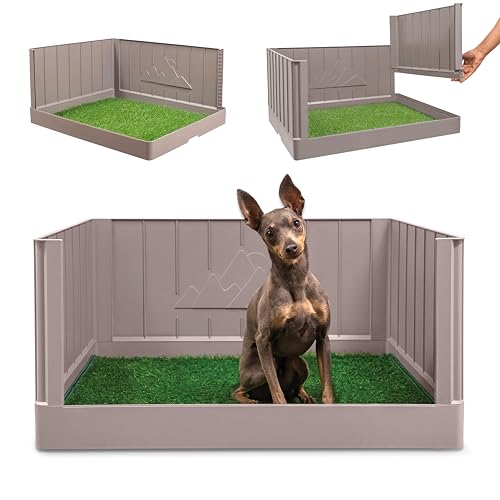
A removable-wall configuration sets this option apart: its four walls slot into the base, and the product features say one can be left open. It measures 30.7 by 24.8 inches and stands 15 inches high. The setup is described for lining with a pee pad, with grass as an optional layer, so it can accommodate either surface preference. The adaptable entry is useful when a dog is reluctant to step over a wall. A buyer who needs an enclosed entry on every side should keep in mind that one wall may be left open.
Bottom line: Choose this if you want the option to leave one side open for entry.
Foldable High-Wall Tray with PVC Liner

This option offers a long, rectangular footprint of 35.4 by 23.6 inches and 15.75-inch walls, with a built-in waterproof PVC liner. The product features identify it as a foldable tray with artificial grass, aimed at small and medium dogs and indoor use. Its longer side may help when the available floor area is narrow but extended. Unlike the drawer-equipped option, this design relies on the liner and tray for containment; consider whether removing and cleaning that setup suits your routine.
Bottom line: Pick this if you need a longer tray with a waterproof liner.
How to Choose an Indoor Dog Potty With Walls
Choose by the dog’s stance and the space needed to enter, turn and squat—not wall height alone. A dog that lifts a leg needs a barrier in the direction it aims; a three-wall design leaves one side open, while four-wall products can offer more complete containment. Compare the usable floor area with your dog’s body length and turning space, and measure the floor before choosing a footprint. For example, these options range from 30 by 19.7 inches to 35.4 by 23.6 inches. If the dog cannot turn and settle without contacting the walls, move up to a larger footprint rather than relying on taller walls. Keep the entry easy to reach, especially for puppies or dogs with limited mobility.
Wall Height and Entry Fit
Wall height is only useful when the dog can still step in comfortably and stand naturally inside. The options here range from 14.2 to 17.7 inches high; compare that measurement with the dog’s leg-lift height and the room’s available placement. A taller barrier can contain more spray, but it does not replace a sufficiently large floor area or a sensible opening. Measure the doorway or passage to the intended spot as well as the floor footprint: a tray that fits the floor may be awkward to carry through a narrow doorway. If a dog hesitates at raised edges, a removable wall or an open side can make entry less imposing.
Grass, Pads and Drainage Compared
Surface and waste path determine much of the cleanup routine. Artificial grass sits above a tray in grass-style systems; pad holders instead rely on an absorbent pad, while a drain-style system routes liquid through a tray. The table compares the main setup choices represented here.
| Setup | Waste path | Useful when |
|---|---|---|
| Grass tray with drawer | Removable drawer | You want to empty a separate collection drawer |
| Pad holder | Replaceable pad | You prefer a pad-based routine |
| Drain tray | Tray and hose system | You want a grass-free system |
Whichever surface you choose, remove waste promptly and clean the surface and collection area regularly. A washable component still needs thorough drying before reuse; trapped moisture and residue can make a potty area unpleasant.
Placement and Potty Routine
Place an indoor potty on a flat, stable, easy-to-clean floor, away from food and water bowls and from busy paths. Leave enough clearance around the entry for the dog to approach without squeezing past furniture. During training, take the dog to the same spot after waking, eating, drinking and active play, then reward the intended behavior promptly. Dogs vary in how quickly they learn, so keep the location and cue consistent rather than moving the tray around. For leg-lifting dogs, position the walled sides toward nearby walls or furniture and check the surrounding floor after early uses to see whether the opening needs to face a different direction.
Frequently Asked Questions
How large should an indoor dog potty be?
Choose a surface that lets the dog enter, turn and assume its normal potty stance without pressing against the walls. Measure the dog’s body length and compare it with the tray’s inside usable area; outside dimensions include the walls and may overstate the standing space.
Are higher walls better for male dogs?
Higher walls can block more urine spray, but placement and an adequate footprint still matter. The options here have walls from 14.2 to 17.7 inches; observe the dog’s stance and orient the walls toward the likely spray direction.
Should an indoor dog potty have four walls?
Four walls can surround the surface, while some designs let you remove one for easier entry. If a dog balks at stepping over a wall, an open side may help; position that side away from vulnerable floors or furniture.
Where should I place a dog potty indoors?
Use a flat, stable area with room for an unobstructed approach and easy cleanup. Keep it away from food and water bowls, and avoid high-traffic passages where people may startle the dog.