
Fortune Tormenta Tires: 5 Models Compared by Fit

For a mixed-road choice, the Fortune Tormenta A/T2 in 275/65R18 pairs an all-terrain tread with 3D siping and a 116H rating; choose by your vehicle’s required size and load rating first. Drivers focused on highway, rugged-terrain or mud-terrain use should consider a different Tormenta type.
These are light-truck tire options, and the size printed on a tire must match the vehicle’s approved fitment.
We earn a commission if you buy through links on this page. As an Amazon Associate I earn from qualifying purchases. Products are compared on manufacturer specifications, not hands-on testing.
- Best overall: Fortune Tormenta A/T2 275/65R18 – The A/T2 combines an all-terrain design with a 275/65R18 size and 116H rating.
- Best for mud terrain: Fortune Tormenta M/T FSR310 285/70R17 – The M/T FSR310 is identified as a mud-terrain tire and carries an E (10-ply) rating.
- Best for highway use: Fortune Tormenta LMD FSR103 265/75R16 – The LMD FSR103 is identified as a highway tire in 265/75R16.
| Product | Best for | Size | Tread type | Shop |
|---|---|---|---|---|
| Fortune Tormenta A/T2 275/65R18 | Mixed-road driving | 275/65R18 | All-terrain | Check Price on Amazon |
| Fortune Tormenta R/T FSR309 285/70R17 | Rugged-terrain use | 285/70R17 | Rugged-terrain | Check Price on Amazon |
| Fortune Tormenta LMD FSR103 265/75R16 | Highway-focused use | 265/75R16 | Highway | Check Price on Amazon |
| Fortune Tormenta M/T FSR310 285/70R17 | Mud-terrain driving | 285/70R17 | Mud-terrain | Check Price on Amazon |
| Fortune Tormenta A/T2 265/65R18 | A/T2 alternate size | 265/65R18 | All-terrain | Check Price on Amazon |
Fortune Tormenta tires by tread type and size
Compare the tread purpose and sidewall ratings, then confirm the tire size against your vehicle’s requirements.
Fortune Tormenta A/T2 275/65R18

The 275/65R18 A/T2 is the all-terrain Tormenta option here, with a 116H rating and standard-load construction. Fortune says its 3D siping adds snow-traction edges, while wide tread gaps help clear mud and stones; its dual-pitch design is intended to reduce highway noise. The cut-and-chip-resistant compound and wide footprint are also intended to support tread life and even wear. This fit suits drivers who split time between pavement and rougher roads. Its all-terrain focus is less specialized than the mud-terrain pattern for frequent deep-mud use.
Bottom line: Choose it for mixed pavement and off-road driving when 275/65R18 is an approved fit.
Fortune Tormenta R/T FSR309 285/70R17

The FSR309 is the rugged-terrain choice in 285/70R17, distinct from the A/T2’s all-terrain positioning and the M/T’s mud-terrain focus. Its tire designation gives a 126/123Q load/speed rating and E (10-ply) construction for light trucks and SUVs. This is a fit to consider when the vehicle calls for this exact size and the intended use falls between conventional all-terrain and mud-terrain categories.
Bottom line: Pick this for a 285/70R17 requirement and a rugged-terrain category.
Fortune Tormenta LMD FSR103 265/75R16
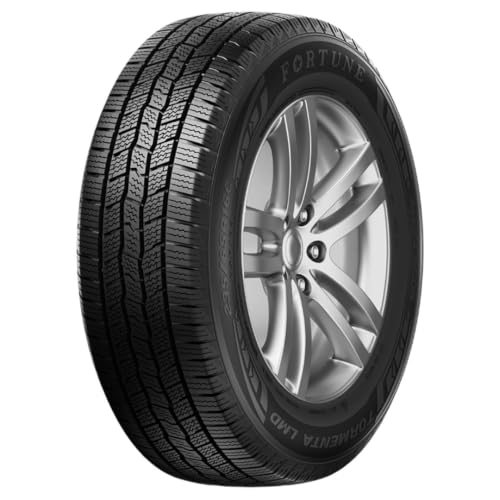
The LMD FSR103 is the highway-design Tormenta in this group, sized 265/75R16 with a 123/120R rating and E (10-ply) construction. That makes it the clearest category match for light-truck drivers prioritizing a highway tire rather than an all-terrain, rugged-terrain or mud-terrain label. The tire is sold without a rim, so it is not a wheel-and-tire assembly. Choose it only when 265/75R16 and its load rating meet the vehicle’s requirements; its highway designation makes it a different-purpose option from the more terrain-oriented models.
Bottom line: Choose it for highway-oriented use when the vehicle accepts 265/75R16.
Fortune Tormenta M/T FSR310 285/70R17
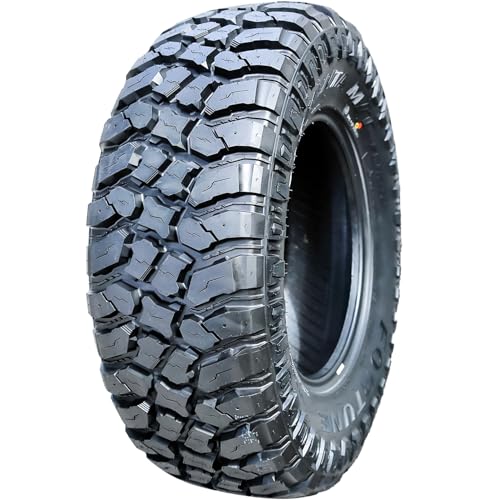
The M/T FSR310 is the explicitly mud-terrain model, in 285/70R17 with a 126/123Q rating and E (10-ply) construction. Its product designation says it has studdable all-season traction, and the load index supports up to 3,748/3,417 pounds per tire for the dual/single rating positions. This is the specialized choice for drivers seeking a mud-terrain category rather than a general all-terrain pattern. Mud-terrain tread is a more focused fit than the highway LMD; confirm that the vehicle’s approved size and required load capacity align before selecting it.
Bottom line: Pick this when mud-terrain use and the 285/70R17 fit are both appropriate.
Fortune Tormenta A/T2 265/65R18
The 265/65R18 A/T2 offers the same all-terrain family and named tread technologies as the 275/65R18 version, but in a different size with a 114T rating. Fortune says its siping supports snow traction and its dual-pitch pattern is designed to reduce highway noise; broad gaps are intended to clear mud and stones. The size difference matters more than the shared A/T2 name: these two sizes are not interchangeable unless the vehicle approves both. This option suits a vehicle specified for 265/65R18, while drivers needing the other size should choose accordingly.
Bottom line: Choose this when 265/65R18 is the vehicle-approved size.
How to choose a Fortune Tormenta tire
Start with the vehicle-approved tire size and load rating, then choose tread type for the roads you use most. The size is a code such as 285/70R17: 285 is nominal section width in millimeters, 70 is the aspect ratio, and 17 is the wheel diameter in inches. A tire’s load index and speed symbol must also satisfy vehicle requirements; never assume a higher-looking number alone means a suitable replacement. All-terrain, rugged-terrain, highway and mud-terrain labels describe different intended tread categories, not a substitute for fitment checks. Use the vehicle placard or manual for approved sizes and inflation pressure. A wrong size can affect clearance, handling and speedometer readings, so do not select by appearance alone.
What the Tormenta tread types mean
Choose the tread category by the surface that dominates your driving: highway for primarily paved use, all-terrain for a pavement-and-trail mix, rugged-terrain for a more terrain-focused middle ground, and mud-terrain for a specialized off-road pattern. The product names identify those categories, but do not give a common standardized performance score that makes them directly rankable. This table shows the category and the decision it supports.
| Stated type | Typical decision fit |
|---|---|
| Highway | Primarily paved routes |
| All-terrain | Mixed pavement and trails |
| Rugged-terrain | More terrain-focused mixed use |
| Mud-terrain | Dedicated mud-terrain category |
These are category-level distinctions, not guarantees of traction on a particular road. Wet, icy and loose surfaces can change braking and steering behavior, so drive to conditions regardless of the tread label.
How to confirm tire size and load fit
Match every part of the size code and the required load rating to the vehicle’s approved fitment before choosing a model. The two A/T2 options are 275/65R18 and 265/65R18, while both 285/70R17 options are in different tread categories; matching just the rim diameter is not enough. Tire load index is a standardized code tied to a maximum load under specified conditions, and the vehicle’s placard gives the needed tire size and cold inflation pressure. Never inflate to the sidewall maximum merely because it is printed there; use the vehicle’s specified cold pressure. If a replacement size or load rating is not explicitly approved for the vehicle, confirm compatibility with a qualified tire professional before installation.
Load ratings, pressure and safe installation
Use the vehicle placard’s cold pressure and keep each tire within its load capacity; neither an E/10-ply designation nor a high load index permits overloading the vehicle. The M/T FSR310 gives maximum load figures of 3,748 pounds in the single position and 3,417 pounds in the dual position, but those values do not raise the truck’s gross vehicle weight rating. Tire pressure changes with temperature, so check pressure when tires are cold, before driving far. Have tires mounted and balanced with compatible wheels, and replace damaged tires rather than relying on a sidewall repair. After installation, follow the vehicle maker’s rotation schedule; consistent rotations help manage tread wear across a set.
Frequently Asked Questions
What does 275/65R18 mean on a tire?
The code gives nominal section width, aspect ratio and wheel diameter: 275 mm wide, a sidewall height about 65% of that width, and an 18-inch wheel. Confirm all three dimensions against the vehicle’s approved fitment.
Can I use a different Tormenta tire size?
Only use a size approved for the vehicle. The 265/65R18 and 275/65R18 A/T2 options have different dimensions, so matching the 18-inch wheel alone does not make them interchangeable.
What is the difference between all-terrain and mud-terrain tires?
All-terrain is positioned for mixed road and off-road use, while mud-terrain is a more specialized category for muddy terrain. Neither label overrides the vehicle’s required size, load rating or safe driving limits.
What does an E 10-ply tire rating mean?
E is a load-range designation commonly associated with 10-ply rating terminology; it does not mean the tire literally contains ten plies. Use the vehicle placard’s pressure and verify that the tire’s load capacity meets the vehicle’s requirements.
How much air should I put in a light-truck tire?
Use the cold inflation pressure on the vehicle’s tire placard, not the tire sidewall’s maximum pressure as a default. Check pressure before driving because heat from driving raises the reading.