
Nervive Nerve Relief Roll On: Formats Compared

Nervive Pain Relieving Roll On is the closest fit for someone seeking Nervive nerve relief in a roll-on: its lidocaine 4% and menthol 1% formula is made for targeted application. Choose Nervive Pain Relieving Spray instead for spray application to hard-to-reach areas; Nervive Nerve Relief 60 Tablets is an oral supplement, not a topical roll-on.
Topical pain relievers are applied to the skin, while supplements are taken by mouth, so the form matters as much as the ingredients.
We earn a commission if you buy through links on this page. As an Amazon Associate I earn from qualifying purchases. Products are compared on manufacturer specifications, not hands-on testing.
- Best overall: Nervive Pain Relieving Roll On – The Nervive roll-on pairs lidocaine 4% with menthol 1% in a roller-ball applicator.
- Best for hard-to-reach areas: Nervive Pain Relieving Spray – The Nervive spray uses the same lidocaine and menthol strengths as the roll-on.
- Best for tablet format: Nervive Nerve Relief 60 Tablets – This Nervive option is a 60-tablet supplement with alpha lipoic acid and B vitamins.
| Product | Best for | Form | Active ingredients | Size | Shop |
|---|---|---|---|---|---|
| Nervive Pain Relieving Roll On | Targeted topical use | Roll-on | Lidocaine 4%; menthol 1% | 4.6 oz | Check Price on Amazon |
| Nervive Pain Relieving Spray | Hard-to-reach areas | Spray | Lidocaine 4%; menthol 1% | 4.5 oz | Check Price on Amazon |
| Nervive Nerve Relief 60 Tablets | Oral supplement format | Tablets | Alpha lipoic acid; B vitamins; turmeric | 60 tablets | Check Price on Amazon |
| A+Health Lidocaine Pain Relief Roll-On | Odor-free lidocaine | Roll-on liquid | Lidocaine 4% HCl | 2.5 fl oz | Check Price on Amazon |
| BioRelief Hemp Nighttime Roll-On | Nighttime cooling | Roll-on | Menthol 10% | 3 oz | Check Price on Amazon |
Nervive Nerve Relief Roll-On Alternatives
Compare these options by format, active ingredients and intended application before choosing a topical or supplement.
Nervive Pain Relieving Roll On

Nervive Pain Relieving Roll On is the only Nervive option here with a roller-ball applicator, which suits targeted application to areas such as feet, hands, legs and arms. The formula contains lidocaine HCl 4% and menthol 1%; the maker says it starts working within minutes. At 4.6 ounces, it is larger than the 2.5-ounce generic roll-on. Its topical format is for localized use, not a substitute for an oral supplement; choose another form if a roller ball is inconvenient for the area you need to reach.
Bottom line: Choose this if you want Nervive’s lidocaine-and-menthol formula in a roll-on.
Nervive Pain Relieving Spray

Nervive Pain Relieving Spray keeps the same active ingredient strengths as the Nervive roll-on but changes the application method to a spray. That format is intended for hard-to-reach areas, where a roller ball may be awkward. The maker says the spray starts working within minutes. Its 4.5-ounce size is close to the roll-on’s 4.6 ounces, so application style—not a major size difference—is the main distinction. Choose another option if you specifically want direct roller-ball contact or prefer an oral product.
Bottom line: Pick this if spraying is easier than applying with a roller ball.
Nervive Nerve Relief 60 Tablets

Nervive Nerve Relief 60 Tablets is the non-topical Nervive alternative: it comes as 60 tablets and includes alpha lipoic acid, B vitamins, turmeric and ginger. The maker says its alpha lipoic acid can reduce occasional nerve discomfort in as little as 7 days, with an average 50% reduction after 4 weeks. Those claims concern the supplement, not an immediate skin-applied effect like the roll-on or spray. Choose it only if you want a tablet format; it cannot serve as a roll-on for a specific area.
Bottom line: Choose this if you want a Nervive tablet rather than a topical.
A+Health Lidocaine Pain Relief Roll-On

A+Health Lidocaine Pain Relief Roll-On is a non-Nervive roll-on with lidocaine 4% HCl and an odor-free formula; unlike the Nervive roll-on, its active ingredient does not include menthol. The 2.5-fluid-ounce bottle is smaller than either Nervive topical option. The maker describes it as a temporary reliever for minor aches and itch, with aloe, and says the liquid dries rapidly. This is a closer alternative for shoppers focused on lidocaine in a roll-on, but it does not match the Nervive brand or ingredient combination.
Bottom line: Pick this if odor-free lidocaine matters more than the Nervive formula.
BioRelief Hemp Nighttime Roll-On
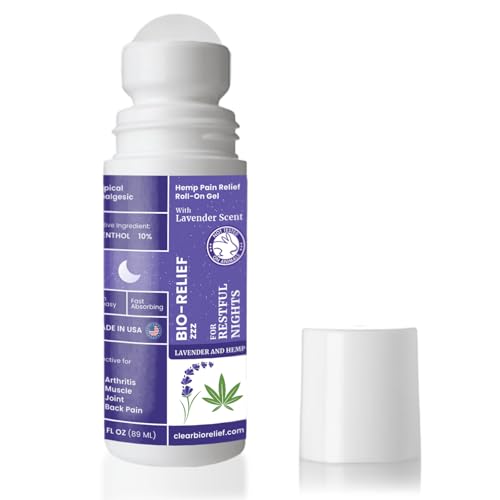
BioRelief Hemp Nighttime Roll-On is a nighttime muscle-and-joint roll-on rather than a Nervive nerve-pain formula. Its distinguishing listed active strength is menthol 10%, compared with the Nervive roll-on’s lidocaine 4% and menthol 1%; it also includes lavender oil according to its product name and features. The 3-ounce size is smaller than the Nervive roll-on. This may suit someone seeking a cooling bedtime topical, but it is not a like-for-like nerve relief option and does not list lidocaine as an active ingredient.
Bottom line: Choose this for a menthol-focused nighttime topical, not a Nervive substitute.
How to choose a nerve relief roll-on
Start with the active ingredients and application method: Nervive Pain Relieving Roll On uses lidocaine 4% plus menthol 1%, while A+Health Lidocaine Pain Relief Roll-On uses lidocaine 4% without listed menthol. Lidocaine is a local anesthetic; menthol produces a cooling sensation. A roll-on applies liquid to a small skin area, while a spray can be easier to direct where a roller ball cannot comfortably reach. A practical decision rule is to choose a roll-on when you can easily reach the target area and want applicator contact; choose a spray when reach is the obstacle. An oral supplement is a different product category and should not be treated as a topical substitute. Match the form to the intended use rather than assuming products with similar names work the same way.
Topical pain relievers compared by format
Topical analgesics come in applicator formats that affect where and how precisely the product can be applied. Roll-ons are suited to direct, localized application, while sprays can reduce the need to reach or touch the area. Tablets are taken by mouth and are not topical products. This comparison separates those forms and helps prevent a common mistake: treating a supplement claim as evidence of an immediate topical effect.
| Format | Typical use consideration | Examples here |
|---|---|---|
| Roll-on | Direct application to a reachable area | Nervive Pain Relieving Roll On, A+Health Lidocaine Pain Relief Roll-On, BioRelief Hemp Nighttime Roll-On |
| Spray | Application to hard-to-reach areas | Nervive Pain Relieving Spray |
| Tablet | Oral supplement format, not topical | Nervive Nerve Relief 60 Tablets |
Topical products are for skin application; keep them out of eyes and away from mucous membranes. Do not apply topical pain relievers to broken or irritated skin, and avoid combining them with heating pads unless the product directions specifically allow it.
Using a lidocaine topical safely
Apply topical lidocaine only as directed on its package, and use it on intact skin rather than cuts, rashes or irritated areas. Avoid covering the treated area tightly or adding external heat, because heat and occlusion can increase skin absorption. Wash hands after application unless the hands are the treated area, and keep the product away from the eyes and mouth. Stop use and seek medical advice for severe irritation or an unexpected reaction. Do not combine multiple lidocaine products on the same area without guidance from a clinician or pharmacist; similar active ingredients can add up across products. Children, pregnancy, chronic conditions and use over large areas call for extra care and professional advice.
When a supplement is not a roll-on alternative
An oral supplement and a skin-applied analgesic differ in route, ingredients and timing, so compare them as separate choices. Nervive Nerve Relief 60 Tablets is a tablet containing alpha lipoic acid, B vitamins, turmeric and ginger; its maker’s timing is as little as 7 days, not the minutes claimed for the topicals. A topical product is applied to skin for localized use, whereas a tablet is swallowed. If you are already taking medication or managing persistent, worsening or unexplained numbness or pain, ask a health professional before adding a supplement or relying on a topical product. Persistent nerve symptoms deserve evaluation rather than repeated self-treatment alone.
Frequently Asked Questions
Can a lidocaine roll-on go on broken skin?
No, use topical lidocaine on intact skin and avoid cuts, rashes or irritated areas. Keep it away from the eyes and mouth, and stop if significant irritation develops.
Can I use a heating pad with a pain roll-on?
Avoid adding external heat over a topical pain reliever unless its package specifically permits it. Heat can increase absorption through the skin, so do not combine a roll-on with a heating pad by default.
How is a spray different from a roll-on?
A spray can be easier to direct to hard-to-reach areas, while a roll-on makes direct contact with a reachable area. Choose based on access and application preference, not an assumption that the formats have different active strengths.
Is Nervive Nerve Relief a topical product?
Nervive Nerve Relief 60 Tablets is an oral supplement, not a topical product. The tablet option here has 60 tablets and includes alpha lipoic acid and B vitamins.
When should nerve pain get medical attention?
Seek medical advice for persistent or worsening pain, new weakness, or numbness that interferes with daily activity. Sudden weakness or symptoms affecting one side of the body need urgent evaluation.