
Best Chair Glides for Tile Floors: 5 Options Compared

For most wooden chair legs on tile, Ansible Square L Silicone Felt Caps is the most versatile pick because its silicone cap has a felt pad and fits square legs from 1-1/16 to 1-5/8 inches per side. Choose a PTFE slider instead if easy movement is the priority and the leg can take a nail or screw.
Measure each leg and check its shape before choosing; the square-leg cap will not suit round legs, while nail-on and screw-on glides require wooden furniture legs.
We earn a commission if you buy through links on this page. As an Amazon Associate I earn from qualifying purchases. Products are compared on manufacturer specifications, not hands-on testing.
- Best overall: Ansible Square L Silicone Felt Caps – The silicone cap with a felt pad is intended for hard floors including tile and fits square legs from 1-1/16 to 1-5/8 inches.
- Best for nail-on PTFE: Furnigear 1-Inch Nail-On PTFE Sliders – The 24-pack has 1-inch PTFE pads and is specified for tiled floors; pre-drilling is advised.
- Best for round legs: GorillaGlides 1-Inch Round Sliders – The 16-pack is intended for furniture feet 1 to 1-1/2 inches in diameter and hard-surface floors.
| Product | Best for | Attachment | Fit | Pack count | Shop |
|---|---|---|---|---|---|
| Ansible Square L Silicone Felt Caps | Square chair legs | Slip-on cap | Square sides: 1-1/16–1-5/8 in | 24 | Check Price on Amazon |
| Furnigear 1-Inch Nail-On PTFE Sliders | Nail-on movement | Nail-on | About 0.96 in diameter | 24 | Check Price on Amazon |
| GorillaGlides 1-Inch Round Sliders | Round furniture feet | Self-adhesive or screw-on | 1–1-1/2 in diameter | 16 | Check Price on Amazon |
| 24-Pack 1-Inch Screw-On PTFE Glides | Screw-on installation | Screw-on | 1 in diameter | 24 | Check Price on Amazon |
| X-PROTECTOR 1-Inch Nail-On Glides | Nail-on wooden legs | Nail-on | 1 in | 24 | Check Price on Amazon |
Chair Glides for Tile Floors
Match the glide to the chair-leg shape and attachment method before choosing a pack.
Ansible Square L Silicone Felt Caps

Unlike the flat PTFE sliders, these caps cover square legs and place a felt pad between the furniture and hard floor. The silicone cover is sized for square legs with sides from 1-1/16 to 1-5/8 inches, and the maker identifies tile, laminate, vinyl and hardwood as suitable surfaces. Measure the leg sides at the bottom; a loose cap may not stay secure, while a too-small cap will not fit. The maker also says these are not designed for carpet, so they suit hard-floor chairs rather than furniture that moves between carpeted rooms.
Bottom line: Choose these for square legs within the fit range and chairs used on hard floors.
Furnigear 1-Inch Nail-On PTFE Sliders
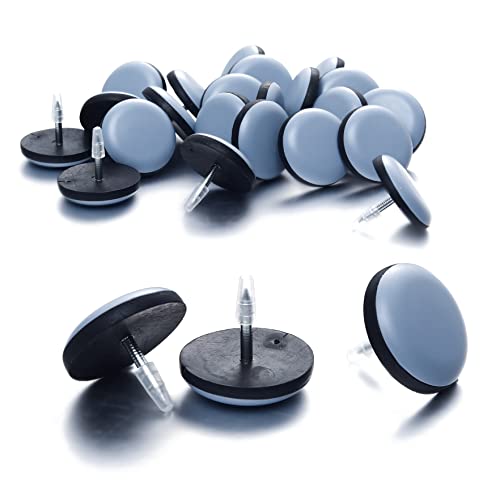
These are nail-on PTFE sliders for wooden furniture, with a 1-inch size and an actual pad size around 0.96 inch. The maker says the 5 mm pads are intended to reduce friction and protect tiled, laminate, vinyl and low-pile carpet floors. This is a flat glide rather than a leg-covering cap, so the pad does not wrap around the leg. Pre-drilling is advised, which makes installation a better fit for wooden legs than metal or hollow legs; check the pad position so it sits flat against the floor.
Bottom line: Pick these for wooden legs when a fixed, nail-on PTFE glide suits the chair.
GorillaGlides 1-Inch Round Sliders
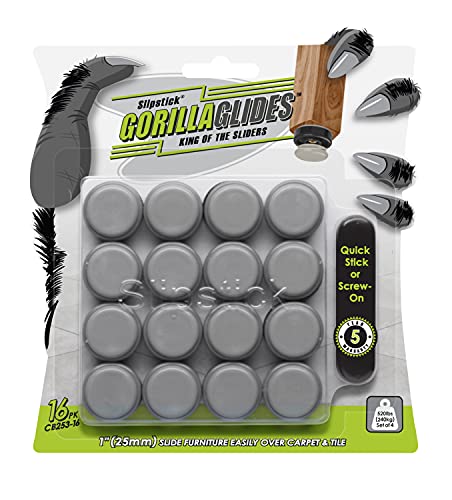
These round glides cover a wider stated leg-diameter range than the 1-inch-only options: furniture feet from 1 to 1-1/2 inches across. The 16-pack uses a low-friction bottom, and the maker identifies hard-surface floors and low-pile carpet as intended uses. The product can be self-adhesive or screw-on, so installation depends on the chosen attachment and the furniture leg. It is not intended for feet below 1 inch or above 1-1/2 inches; measure the foot at its base rather than guessing from the leg shaft.
Bottom line: Choose these for round feet that measure 1 to 1-1/2 inches across.
24-Pack 1-Inch Screw-On PTFE Glides

These screw-on PTFE glides differ from the nail-on alternatives by using a screw attachment, with a 1-inch diameter and 5 mm thick bottom. The maker says they are designed for tiled, wooden, laminate, vinyl and low-pile carpet floors, and for wooden furniture feet larger than 3/4 inch. The fixed 1-inch pad size is less adaptable than a cover sized to a range of leg widths, so confirm that the glide can sit flat on the leg base. The screw-on construction makes these a choice for wooden furniture where a screw attachment is appropriate.
Bottom line: Pick these when a 1-inch screw-on pad suits the wooden leg base.
X-PROTECTOR 1-Inch Nail-On Glides

These nail-on glides have a 1-inch size and a 24-piece pack, like the other nail-on option, but the product identifies this version as square. The maker says the Teflon glides are for wooden furniture and advises pre-drilling before nailing them into the leg. A fixed pad can work for chairs that slide over the same floor regularly, but it does not wrap over the leg or accommodate a range of leg shapes. Confirm that a 1-inch glide fits the leg base and that the wood can accept a nail.
Bottom line: Choose these for wooden legs that can take a nail and suit a 1-inch square glide.
How to choose chair glides for tile floors
Start with the leg shape and how much movement the chair needs: a cap wraps around the leg, while a flat glide attaches to its base. Measure the foot at floor level, not the narrower shaft above it; tapered legs can have very different widths at those points. Square caps need side-to-side measurements, while round pads need a diameter. For the square cap here, choose it only when each side measures 1-1/16 to 1-5/8 inches. For a flat 1-inch pad, make sure the leg base has enough flat area for the glide to sit evenly. A slip-on cap is useful when avoiding a nail or screw matters, but a fixed glide is a better fit when a cap cannot match the leg shape.
PTFE and felt glides on tile
PTFE glides are made for low-friction movement, while felt adds a softer contact surface between a leg and a hard floor. Tile varies: a smooth glazed surface, textured tile and uneven grout joints can affect how a chair moves. A low-friction glide may travel more readily than intended, especially on a smooth floor, so avoid using chair movement as a substitute for a locking mechanism. Felt can collect grit, and trapped grit can scratch a floor as furniture moves; inspect pads and sweep the contact area regularly. Choose a glide that sits flat and does not rock at the edge of the tile. For chairs that should stay put, prioritize a less slippery contact surface over easy sliding.
Installing and maintaining chair glides
Install glides on clean, dry leg bases and check that every chair foot contacts the floor evenly. Nail-on glides in this set advise pre-drilling; this reduces the chance of splitting wood, particularly near a narrow leg end. Screw-on options also require a suitable solid wooden base, rather than a hollow or metal leg. After installation, move the chair gently and confirm that the glide remains attached and does not catch at grout lines. Check pads periodically for wear, looseness or embedded debris, and replace a damaged glide before it exposes the leg to the tile. Do not drag furniture with a detached or uneven glide, since an exposed edge can scrape the floor or snag a grout joint.
Frequently Asked Questions
How do I measure chair legs for glides?
Measure the furniture foot where it meets the floor, across its widest point. Record side length for a square leg or diameter for a round one; the square cap here fits sides from 1-1/16 to 1-5/8 inches.
Can nail-on glides go on metal chair legs?
Nail-on glides are intended for wooden furniture legs, not metal legs. The nail-on products here advise pre-drilling, and a metal leg cannot provide the same wood base for a nail.
How often should chair glides be checked?
Inspect glides whenever they loosen, feel uneven, or begin catching on grout joints, and check them periodically during routine floor cleaning. Remove grit from felt or the floor contact area because trapped debris can scratch tile.
Why does a chair glide catch on grout lines?
A glide can catch when its edge meets an uneven grout joint or a tile height difference. Check that the pad sits flat and is securely attached, and avoid dragging a chair over a raised joint.