
Best Noseless Bike Seat: 5 Saddles Compared by Fit

For most riders seeking a broad noseless bike seat, BLUEWIND Noseless Oversized Saddle is the strongest starting point because its 10.2-inch width and 13-inch length suit several exercise and electric-bike setups. Choose Schwinn No Pressure Cruise Seat instead for upright cruising, or ISM PN 1.1 Tri Saddle for road and triathlon riding, since saddle shape and riding position affect fit.
Noseless saddles remove the traditional front nose; broad comfort saddles and narrow performance saddles serve different riding positions, so check the seat mount and bike fit before choosing.
We earn a commission if you buy through links on this page. As an Amazon Associate I earn from qualifying purchases. Products are compared on manufacturer specifications, not hands-on testing.
- Best overall: BLUEWIND Noseless Oversized Saddle – Its 10.2-inch width pairs with compatibility for electric and stationary bikes.
- Best for cruising: Schwinn No Pressure Cruise Seat – Its extra-wide noseless shape is designed for upright, casual riding.
- Best for road performance: ISM PN 1.1 Tri Saddle – Its 4.3-inch width and movement-focused shape target road, triathlon and time-trial riding.
| Product | Best for | Width | Length | Height | Shop |
|---|---|---|---|---|---|
| BLUEWIND Noseless Oversized Saddle | Broad everyday comfort | 10.2 in | 13 in | 4.5 in | Check Price on Amazon |
| Twomaples Super King Extra Large | Extra-wide cushion | 9 in | 13 in | 4.8 in | Check Price on Amazon |
| Schwinn No Pressure Cruise Seat | Upright cruising | 7.5 in | 9.85 in | 4.5 in | Check Price on Amazon |
| ISM PN 1.1 Tri Saddle | Road and triathlon | 4.3 in | 11 in | 2.5 in | Check Price on Amazon |
| X WING Winged Noseless Seat | Short wide shape | 12.7 in | 7.4 in | 5.3 in | Check Price on Amazon |
Noseless bike seats
Compare width, shape and intended riding position before selecting a noseless saddle.
BLUEWIND Noseless Oversized Saddle

With a 10.2-inch width and 13-inch length, this is the broadest everyday-style option among these saddles, and it is presented for electric and stationary bikes. The maker says its 7 cm foam is soft but supportive and that its nose-free shape reduces thigh friction. The microfiber artificial-leather surface is described as wear-resistant and non-slip. Consider the seat’s large footprint before choosing it for a narrow or performance-oriented riding position; broad padding is not a substitute for matching saddle shape to posture.
Bottom line: Choose this for a broad saddle on a compatible electric or stationary bike.
Twomaples Super King Extra Large

At 4.8 inches high, this cushion is the tallest of the broad comfort options here, while its 9-inch width is narrower than BLUEWIND Noseless Oversized Saddle’s. The maker says its shortened front and reduced thigh-contact area are intended to limit rubbing, and it lists use across exercise, cruiser, electric and other adult bikes. Its fit caveat matters: bikes with a rail post may require removal of the seat’s adaptor. Confirm the mounting arrangement before ordering, especially if your bike uses a rail-style attachment.
Bottom line: Choose this if you want a tall, broad cushion and its adaptor fits your bike.
Schwinn No Pressure Cruise Seat
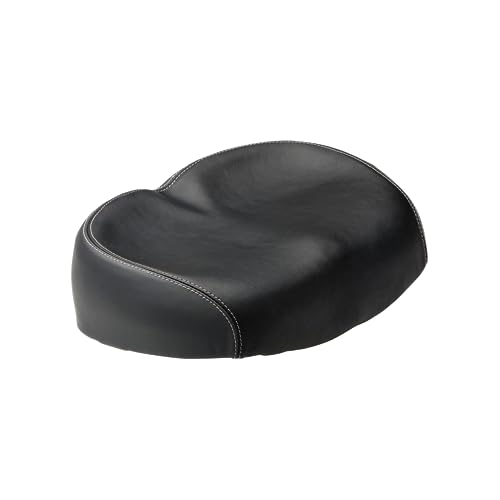
Unlike the oversized cushions, this 7.5-inch-wide seat is aimed at casual cruising in an upright position. Its soft foam padding and weather-resistant cover are intended for easy-clean, everyday use, and the package includes a seatpost clamp and mounting hardware. Schwinn says the noseless design is made to relieve pressure for longer rides. The narrower footprint may not suit riders specifically seeking the widest possible saddle, and compatibility is described for most standard seatposts rather than every mount style.
Bottom line: Choose this for casual, upright rides with a standard seatpost.
ISM PN 1.1 Tri Saddle

At 4.3 inches wide, this is the narrowest saddle in the group and the one specifically oriented toward road cycling, triathlons and time trials. Its PN1 shape is retained from the PN 1.0, while 40-Series foam and gel change the padding feel. ISM says the nose-free design removes the traditional saddle nose to reduce pressure on soft tissue. This compact performance shape differs substantially from broad comfort seats, so it is a poor match for shoppers who want a wide cushion for upright exercise-bike use.
Bottom line: Choose this for a narrow, movement-oriented road or triathlon saddle.
X WING Winged Noseless Seat

This saddle trades length for width: its 12.7-inch span is paired with a short 7.4-inch front-to-back dimension, unlike the longer broad seats here. The maker says its wing shape extends contact surfaces and is intended to reduce pressure; stated compatible bike types include city, electric, stationary, Peloton, mountain and road bikes. Its 5.3-inch height is the tallest in the group. The unusually short footprint may feel very different from a conventional saddle, so confirm that its rail mount fits the bike.
Bottom line: Choose this if you want a very wide, short saddle and compatible rails.
How to choose a noseless bike seat
Start with riding posture, then compare seat width and mount compatibility. Upright riders generally sit with more weight on the sit bones, while a forward-leaning road position shifts contact and favors a narrower saddle shape. Noseless saddles remove the front projection, but they still need to support the rider in the intended position. A practical rule: choose a broad comfort saddle for upright cruising or stationary riding, and consider a narrower performance shape for a forward road position. Measure the existing saddle’s length and width, then check that replacement dimensions will not interfere with legs, frame or bike controls.
Mount style matters as much as padding. Bike seats commonly attach by rails to a seatpost clamp, while some posts use an integrated clamp; a cushion’s included adaptor may also affect fit. Confirm the seatpost arrangement before replacing the saddle.
Noseless saddle width and fit
Saddle width is not a universal comfort score: a wider top can suit an upright posture, but an oversized seat can interfere with pedaling if its edges contact the thighs. Measure your current saddle at its widest point and compare it with the replacement; differences of an inch or more are noticeable in overall footprint. For a more tailored fit, sit-bone measurement is commonly used to guide saddle width, with riding posture influencing the final choice. Avoid selecting solely by “extra wide” wording.
The five options here range from 4.3 to 12.7 inches wide and from 7.4 to 13 inches long. Those figures use the dimensions supplied for each model, but length and height alone do not establish saddle fit. Check the seatpost clamp or rail attachment and ensure the saddle sits level and secure before riding.
Comfort saddles versus performance saddles
Broad comfort saddles and narrow performance saddles address different riding positions rather than a simple better-or-worse choice. A wide cushion is generally aimed at upright riding, including casual cruising or stationary exercise; a narrow saddle such as a road-oriented tri shape is designed around a more forward position and room for movement. A compact winged design is another distinct option, with more width and less length than a conventional saddle.
Use this decision guide to narrow the style before comparing padding:
| Riding need | Shape to consider | Fit check |
|---|---|---|
| Upright cruising | Broad comfort saddle | Clearance from thighs and frame |
| Indoor or electric bike | Broad or winged saddle | Seatpost or rail compatibility |
| Forward road position | Narrow performance saddle | Stable fit while pedaling |
Installing and adjusting a noseless bike seat
Keep the saddle centered and secure, then adjust its angle in small increments; a large tilt can make the rider slide forward or backward. Most bicycle saddle adjustments use a level starting position, with the final angle based on comfort and stable contact. Tighten the seatpost clamp to the bike maker’s torque specification, because overtightening can damage clamp parts and undertightening can let the saddle shift. Recheck the clamp after the first short ride.
Check that the saddle does not touch the rear tire, rack, fender or frame through the full range of seatpost adjustment. A seat that feels comfortable while stationary can still rub the rider’s thighs during pedaling, so verify clearance at a slow pace before a longer ride.
Frequently Asked Questions
Are noseless bike seats good for stationary bikes?
A noseless seat can suit a stationary bike when its mount fits and its width works with your riding posture. Measure the current saddle and compare the replacement’s width before installing it.
How wide should a noseless bike seat be?
There is no single correct width; these examples range from 4.3 to 12.7 inches. Use sit-bone fit and riding posture as guides, and avoid a seat whose edges interfere with thigh movement.
Do noseless bike seats fit every seatpost?
No, mount styles and clamps differ. Check whether the bike uses rails or a standard seatpost clamp, and confirm adaptor requirements before installing a replacement.
Should a bike saddle sit level or tilted?
A level position is a common starting point, followed by small angle adjustments to maintain stable contact. Large tilts can cause sliding, so test the setup at low speed and secure the clamp to the bike maker’s torque specification.
How can I tell if a bike seat is too wide?
A seat may be too wide if its edges rub your thighs or restrict pedaling. Compare its maximum width with your current saddle and check clearance during a short, easy ride.