
Best Elastic Cord for Bracelets: 4 Options Compared

LUSTEMBER 1 mm Elastic Cord, 4 Rolls is the best elastic cord for bracelets for most crafters because its 1 mm cord comes in four rolls and is designed to stretch and knot easily. Choose a thinner clear cord instead when small bead holes or a less visible string matter more; the right diameter depends on the hole size and bead weight.
We earn a commission if you buy through links on this page. As an Amazon Associate I earn from qualifying purchases. Products are compared on manufacturer specifications, not hands-on testing.
- Best overall: LUSTEMBER 1 mm Elastic Cord, 4 Rolls – Four 1 mm rolls in black and white give you color options for bracelet designs.
- Best for a long white spool: Paxcoo 1 mm Flat Elastic Cord – The 1 mm flat cord provides 100 m per roll for extended projects.
- Best for small bead holes: Stretch Magic Clear 0.5 mm Cord – The clear 0.5 mm polyurethane cord is the thinnest option here.
| Product | Best for | Cord diameter | Material | Length | Shop |
|---|---|---|---|---|---|
| LUSTEMBER 1 mm Elastic Cord, 4 Rolls | Color options | 1 mm | Nylon polyester, braided rubber | Four rolls; length not given | Check Price on Amazon |
| Paxcoo 1 mm Flat Elastic Cord | Long white spool | Approx. 1 mm wide; 0.7 mm thick | Polyester spandex | 100 m / 328 ft per roll | Check Price on Amazon |
| Stretch Magic Clear 0.5 mm Cord | Fine bead holes | 0.5 mm | Polyurethane; latex-free | 10 m / 32.8 ft | Check Price on Amazon |
| JULIMAIDONG Clear 0.8 mm Cord | Clear midweight cord | 0.8 mm | Polyester spandex | 60 m / 200 ft | Check Price on Amazon |
Elastic Cord for Bracelets Compared
Compare diameter, material and spool length against your beads and the look you want.
LUSTEMBER 1 mm Elastic Cord, 4 Rolls

Four rolls in black and white make this set the color-flexible choice among these bracelet cords. The 1 mm cord is made from nylon polyester fabric and braided rubber, and the maker says it is stretchy, easy to cut and knot, and intended to recover its length after stretching. It suits designs where opaque cord colors work with the beads or can be tucked away. The main limitation is that the roll length is unclear, so crafters planning a large batch should confirm the amount before ordering.
Bottom line: Pick this set when black and white cord options matter more than a total length.
Paxcoo 1 mm Flat Elastic Cord
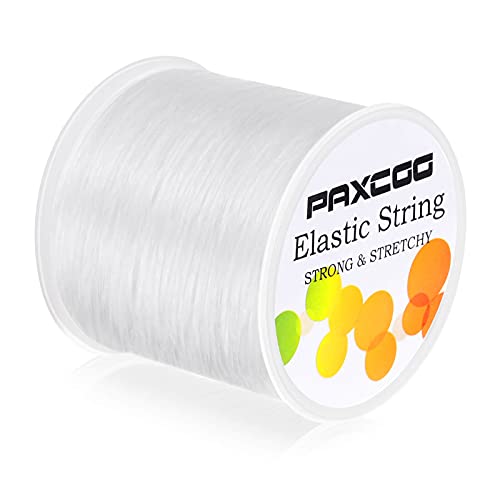
Paxcoo stands out for its long 100 m spool and flat profile: it measures about 1 mm wide and 0.7 mm thick. The white polyester-spandex cord is described as flexible for threading beads of different sizes and as easy to knot, with a small knot that can be hidden among beads. Its length suits makers working through repeated projects or keeping one neutral cord on hand. Because it is flat rather than round, check bead-hole clearance and how the ribbon-like profile sits with your particular beads.
Bottom line: Choose this for a long white supply and a flat cord profile.
Stretch Magic Clear 0.5 mm Cord

At 0.5 mm in diameter, this clear polyurethane cord is the thinnest option here, making it the natural candidate when bead holes are tight. The maker says the material is durable, non-fraying and elastic, with a consistent diameter; the cord is also latex-free. A 10 m spool is suited to smaller runs or designs where a finer, less visible string is useful. Its thinner profile may not be the right match for heavier beads or designs that need a thicker cord, so match it to the bead-hole size and intended load.
Bottom line: Choose this when slim, clear cord is needed to pass through smaller holes.
JULIMAIDONG Clear 0.8 mm Cord

JULIMAIDONG offers a middle diameter of 0.8 mm with a 60 m / 200 ft roll, bridging the finer clear cord and the 1 mm options. Its round, clear polyester-spandex cord is described as easy to tie and fine enough to hide knots while holding beads securely. That combination makes it a practical fit for projects needing a transparent string but more body than 0.5 mm. The cord’s fit still depends on bead-hole clearance; test a short piece through the smallest hole before starting a full bracelet.
Bottom line: Pick this for a clear, round cord in a midrange diameter and a longer roll.
How to choose bracelet elastic cord
Start with bead-hole clearance: choose a cord that passes through the smallest hole without forcing it, and leave enough room if the design needs multiple passes. Common jewelry elastic cord diameters run roughly 0.5 to 1 mm, with thinner cord fitting smaller holes and thicker cord offering more body. Match cord shape as well as diameter, since flat cord and round cord can sit differently in a bead hole. For beads with holes under 1 mm, test 0.5 mm first; if the design uses larger beads or a thicker look, compare 0.8 mm and 1 mm against the hole.
Round versus flat elastic string
Round cord is the familiar choice for standard bead holes, while flat cord presents a wider face and may be useful where beads have a slot-like opening. Width alone does not tell the full fit: the Paxcoo cord is about 1 mm wide but 0.7 mm thick, so its cross-section differs from a round 1 mm string. Use this comparison as a starting point, then test the cord with the actual beads.
| Cord profile | Measure to compare | Typical use |
|---|---|---|
| Round | Diameter | Regular bead holes |
| Flat | Width and thickness | Slot-like openings |
Do not assume equal nominal widths will thread the same way; orientation and hole shape matter.
How to knot elastic bracelet cord
A secure knot and a clean finish both matter because bracelet elastic is repeatedly stretched during wear. Use a surgeon’s knot or square knot, tighten it gradually, and avoid pulling so hard that the cord becomes visibly nicked or overstretched. A dab of jewelry adhesive can help secure a finished knot, but let it cure fully before stretching the bracelet. Keep the knot inside a bead when the hole is wide enough to conceal it; a small knot is easier to hide than a bulky one. Cut cord with a clean edge, not a frayed one, to make threading and knotting easier.
Bracelet cord care and safety
Elastic cord naturally fatigues with repeated stretching, sunlight, heat and contact with lotions or water, so remove bracelets before swimming, bathing or strenuous activity. Store finished elastic bracelets out of direct sun and avoid leaving them stretched around a display form for long periods. Inspect the cord and knot regularly, especially when the bracelet is worn often or carries heavy beads. Retie or restring when the elastic looks fuzzy, permanently stretched or cracked; a broken strand can scatter beads. Keep cut cord and small beads away from young children, since they can pose choking hazards.
Frequently Asked Questions
What elastic cord diameter fits most bracelet beads?
Many bracelet projects use cord around 0.5 to 1 mm, but the smallest bead hole sets the limit. For holes under 1 mm, test a 0.5 mm cord before choosing a thicker size.
Is round or flat elastic better for beads?
Round cord suits ordinary drilled bead holes, while flat cord can work with wider slot-like openings. Compare both width and thickness for flat string, because its profile differs from a round cord of similar width.
How do I stop an elastic bracelet knot from slipping?
A snug surgeon’s knot or square knot is a common starting point for elastic bracelets. Tighten it without cutting into the cord, and conceal the knot in a bead only if the hole allows it to pass through.
Can elastic bracelet cord get wet?
Repeated water exposure can shorten elastic’s useful life, especially when combined with soap, lotions or heat. Remove bracelets before swimming or bathing and let a damp bracelet dry before storing.
How often should I replace bracelet elastic?
Replace elastic when it becomes fuzzy, cracked or permanently stretched rather than waiting for a fixed interval. Frequent wear and heavy beads can make inspection more important than the calendar.