
FortiFlora for Cats: 3 Options Compared by Pack Size

For most cat owners, Purina FortiFlora Cat, 30 Count is the straightforward FortiFlora choice: its 30-count box is a cat-specific probiotic powder intended for daily digestive support. Choose a multi-box supply if you need more packets, or Purina FortiFlora Dog & Cat, 2-Pack if you also want a product labeled for dogs and cats.
FortiFlora is a powdered probiotic supplement sprinkled over food; it is not a complete diet. For diarrhea, especially in kittens or cats with other symptoms, contact a veterinarian rather than relying on a supplement alone.
We earn a commission if you buy through links on this page. As an Amazon Associate I earn from qualifying purchases. Products are compared on manufacturer specifications, not hands-on testing.
- Best overall: Purina FortiFlora Cat, 30 Count – A 30-count cat-specific powder intended for daily use.
- Best for a two-box supply: Purina FortiFlora Cat, 2-Pack – Provides two 30-count boxes for 60 packets total.
- Best for cats and dogs: Purina FortiFlora Dog & Cat, 2-Pack – Its label covers both species and the pack contains 60 servings.
| Product | Best for | Species | Packet count | Shop |
|---|---|---|---|---|
| Purina FortiFlora Cat, 30 Count | Single-cat supply | Cats | 30 packets | Check Price on Amazon |
| Purina FortiFlora Cat, 2-Pack | Larger packet supply | Cats | 60 packets | Check Price on Amazon |
| Purina FortiFlora Dog & Cat, 2-Pack | Multi-pet households | Dogs and cats | 60 servings | Check Price on Amazon |
FortiFlora for Cats Compared
Compare the cat-specific boxes and the dog-and-cat option by species coverage and packet count.
Purina FortiFlora Cat, 30 Count
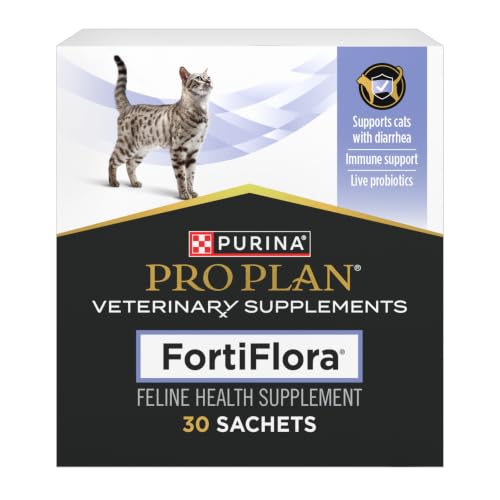
For a single 30-packet box labeled for cats, Purina FortiFlora Cat, 30 Count is the most direct match among these choices. The powder is intended for kittens and adult cats, and the maker says its probiotic supports intestinal health and balance; the formula also includes antioxidants. The packet format is meant to be sprinkled with food, which suits caregivers who want a daily powder rather than a chew or capsule. Its limitation is the single-box count: households wanting 60 packets will need a two-box option.
Bottom line: Choose this if you want one cat-specific 30-packet box.
Purina FortiFlora Cat, 2-Pack

Purina FortiFlora Cat, 2-Pack differs from the single-box choice by supplying two cat-specific 30-count boxes, or 60 packets altogether. The maker positions the powder for dietary management of kittens and adult cats with diarrhea and says the probiotic supports intestinal balance; antioxidants are also included. This format suits a household that prefers to keep a second box on hand, while the powder format still calls for mixing or sprinkling with food. The main tradeoff is the larger supply: someone who only needs 30 packets may prefer a single box.
Bottom line: Pick this for a 60-packet supply of cat-specific powder.
Purina FortiFlora Dog & Cat, 2-Pack

Unlike the cat-only choices, Purina FortiFlora Dog & Cat, 2-Pack is labeled for both dogs and cats and includes two 30-count boxes, giving 60 servings. Its powder is sprinkled over food, and the maker says it supports beneficial intestinal bacteria and digestive health. That broader species label can suit a home feeding both cats and dogs, but it is less specifically described for cats with diarrhea than the cat-focused options. Choose a cat-only format if that specific intended use is the priority; consult a veterinarian about persistent digestive symptoms.
Bottom line: Choose this when one labeled powder format is wanted for both cats and dogs.
How to choose a FortiFlora format
Choose by species label first, then by how many packets you need. A 30-count box supplies 30 daily packets; a two-box pack supplies 60, so the larger count makes sense when you expect to use one packet each day for about two months. Cat-only packaging is the more direct fit when the supplement is intended for a cat, while a dog-and-cat label is relevant to homes feeding both species. Probiotics are live microorganisms, and products can differ by strain and viable amount, so do not assume that all probiotic powders are interchangeable. For cats with ongoing diarrhea, vomiting, blood in stool, weakness, or poor appetite, seek veterinary guidance promptly instead of treating the packet count as a care plan.
What probiotic powders do for cats
Cat probiotic powders add beneficial microorganisms to food, with the goal of supporting the intestinal microbial community. Effects depend on the strain and dose; a label’s general probiotic claim does not establish that every strain works for every cause of diarrhea. A cat’s gut symptoms can also follow diet changes, parasites, infection, medication, or other illness, so persistent signs need assessment rather than repeated supplement trials. Introduce any new food topper gradually if the cat is sensitive to diet changes, and keep fresh water available. Never give a dog-labeled product or alter a veterinary treatment plan based only on a supplement’s broad digestive-support wording.
Using packets safely and consistently
Powder packets are generally mixed into or sprinkled over a meal, making intake easiest when the cat finishes the full portion. Follow the package directions for the amount and storage, because probiotic viability can be affected by heat and moisture. Do not mix a powder into hot food unless the package explicitly permits it; heat can reduce survival of live cultures. Keep packets sealed and stored as directed, and avoid using a damaged or damp packet. If a cat refuses food after a supplement is added, stop hiding it in the meal and ask a veterinarian about alternatives, especially for kittens or cats already eating poorly.
When diarrhea needs veterinary care
Diarrhea that lasts more than 24 hours, recurs, or occurs with vomiting, blood, lethargy, dehydration, or loss of appetite warrants veterinary advice; kittens and senior cats can become dehydrated faster. A probiotic powder may be an adjunct, but it cannot identify or treat the cause. Keep track of stool frequency, duration, diet changes, and any medications to share with the clinic. Avoid human anti-diarrheal medicines unless a veterinarian specifically directs their use, since some are unsafe for cats or can mask a serious problem. Ask the veterinarian whether a probiotic is appropriate alongside any prescribed diet or treatment.
Frequently Asked Questions
How many FortiFlora packets are in one box?
A single box in these options contains 30 packets. A two-box pack contains 60 packets total.
Can I sprinkle FortiFlora over cat food?
These options are powders intended to be sprinkled over food. Use the package directions for serving and storage, and avoid hot food unless the package permits it.
Is FortiFlora intended for kittens as well as cats?
The cat-specific options are described for kittens and adult cats. Ask a veterinarian before using a supplement for a kitten with diarrhea, since young cats can dehydrate quickly.
When should cat diarrhea prompt a vet visit?
Contact a veterinarian if diarrhea lasts more than 24 hours or comes with vomiting, blood, lethargy, dehydration, or appetite loss. Kittens and senior cats merit earlier advice because dehydration can develop quickly.
Can dogs and cats share one probiotic powder?
One option here is labeled for both dogs and cats, but species labeling does not mean every pet has the same dose or need. Confirm the appropriate amount with a veterinarian, particularly when either animal has a health condition.