
POP Sonic Fabric Shaver: 5 Models Compared by Features

The POP Sonic fabric shaver search brings up the POPCHOSE rechargeable model, which stands out for its 2,000 mAh battery and two speeds. Choose a different option if you need more speed settings, a larger specified shaving head, or a tool powered by AA batteries.
A fabric shaver trims pills and fuzz through a guarded blade head; keep the fabric flat and move gently to avoid snagging delicate material.
We earn a commission if you buy through links on this page. As an Amazon Associate I earn from qualifying purchases. Products are compared on manufacturer specifications, not hands-on testing.
- Best overall: POPCHOSE Rechargeable Fabric Shaver – Its 2,000 mAh rechargeable battery and two speeds make it a straightforward cordless choice.
- Best for speed control: Rechargeable Three-Speed LED Shaver – Three speeds and a digital LED display give more adjustment and visible battery monitoring.
- Best for large areas: Bymore 65 mm Fabric Shaver – Its 65 mm head is the largest specified shaving surface in this group.
| Product | Best for | Power | Speed settings | Head size | Shop |
|---|---|---|---|---|---|
| POPCHOSE Rechargeable Fabric Shaver | Cordless routine | Rechargeable, 2,000 mAh | 2 | — | Check Price on Amazon |
| Rechargeable Three-Speed LED Shaver | Visible controls | Rechargeable | 3 | — | Check Price on Amazon |
| Conair Battery Fabric Shaver | AA battery use | 2 AA batteries | 3 | 2 inches | Check Price on Amazon |
| Royal Blue Rechargeable Six-Blade Shaver | LED visibility | Rechargeable, 45 min | — | — | Check Price on Amazon |
| Bymore 65 mm Fabric Shaver | Broad surfaces | — | — | 2.56 inches | Check Price on Amazon |
POP Sonic Fabric Shavers and Alternatives
Compare power source, adjustment and head size to match a fabric shaver to your garments and household textiles.
POPCHOSE Rechargeable Fabric Shaver
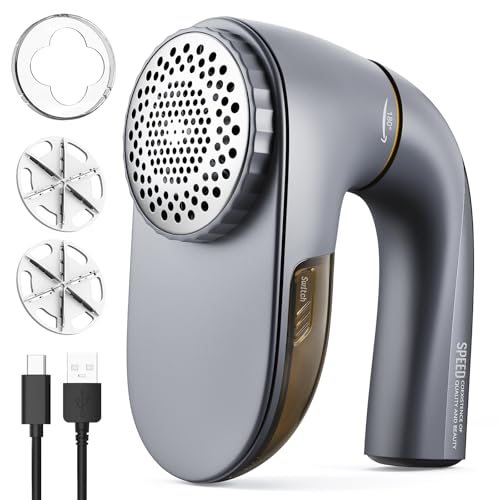
The POPCHOSE model is the only one here with a 2,000 mAh battery and 2–3 hours of runtime per charge. Its six-leaf blade system runs at 9,000 rotations per minute, and two speeds offer a simpler choice than the three-speed alternatives. A USB-C port supports charging from compatible power sources. This suits regular garment and furniture touch-ups when cord-free use matters. The two settings provide less adjustment than three-speed tools, so buyers handling a range of delicate and heavier textiles may prefer finer speed selection.
Bottom line: Pick this for rechargeable use and a multi-hour runtime.
Rechargeable Three-Speed LED Shaver

The rechargeable three-speed shaver adds a digital LED display, distinguishing it from the simpler two-speed option. It has six-leaf blades and is sized at 6.25 inches high by 2.5 inches long by 2.36 inches wide. The maker recommends laying garments flat on a hard surface during use, a useful setup for keeping fabric stable as the head passes over it. This is a fit for someone who values speed adjustment and a visible battery and speed readout. Its shaving-head diameter is not supplied, so head coverage cannot be compared directly with the 65 mm model.
Bottom line: Choose it for three speed choices and an LED readout.
Conair Battery Fabric Shaver

The Conair stands apart with a specified 2-inch shaving head and three depth settings rather than rechargeable speed modes. It runs on two AA batteries, which are not included, and its detachable lint catcher supports cleanup after use. The maker says it is safe on most household fabrics, including clothing and furniture. This model suits buyers who prefer replaceable batteries and want a head measurement. It is the only AA-powered option here, so shoppers seeking rechargeable operation should select one of the other models instead.
Bottom line: Pick it if you prefer AA power and a measured 2-inch head.
Royal Blue Rechargeable Six-Blade Shaver

Its maker gives 45 minutes of operation per charge and describes it as USB rechargeable for home or travel. The six-blade system and mesh cover are intended for use on fabrics and furniture. This model may suit occasional sessions where seeing the work area is useful.
Bottom line: Choose it for a built-in light and shorter occasional sessions.
Bymore 65 mm Fabric Shaver

The Bymore has the widest specified shaving head in this group at 2.56 inches, making its coverage the clearest differentiator for large garments or upholstery. Its six-leaf stainless-steel blades and protective mesh are paired with extra replacement blades. The maker positions it for sweaters, coats, blankets and couches, so it suits repeated care of larger fabric areas. Choose it primarily when a broad working head matters more than known battery performance.
Bottom line: Pick it when the 65 mm head is the deciding feature.
How to choose a fabric shaver
Choose by power, control and the size of the area you need to cover. Rechargeable models avoid disposable batteries, while an AA-powered shaver can be ready with replacement cells; runtime matters if a session covers several garments. Two speeds are a simple choice, and three settings allow another adjustment, but the setting count alone does not establish which tool is gentlest. Head width also affects how much fabric a pass covers: 65 mm is broader than a 2-inch head, while an unknown measurement cannot be ranked. For delicate knits, start at the lowest setting and test an inconspicuous area before treating a visible panel.
How to use a fabric shaver on clothing
Lay a garment flat on a firm surface before shaving, especially when removing pills from knitwear. Wrinkles and loose fabric can catch beneath the guard, so smooth the area and keep the shaver head level rather than pressing hard. Work in short, light passes and stop if threads pull or the textile surface changes. A fabric shaver cuts raised fuzz at the guard; it is not a lint roller, so loose dust and hair may need separate removal. Empty the lint catcher when full, since accumulated fibers can obstruct collection. Keep fingers, cords and loose edges away from the moving cutter, and switch the device off before clearing fibers near the head.
What fabrics can a fabric shaver handle
Fabric shavers are intended for raised pills and fuzz on textiles such as sweaters, blankets and upholstery, but fabric construction affects risk. Dense, stable knits tolerate careful passes better than open weaves, loose loops, embroidery or delicate fibers that can be drawn into the mesh. There is no universal speed or depth setting for every garment; fabric thickness and surface condition change the result. For items with loose threads, sequins, buttons or a brushed nap, avoid the affected area and check the care label before using a cutter. When uncertain, test a hidden seam first and stop if the guard catches or the weave begins to lift.
How to maintain a fabric shaver
Clear collected lint after each session and inspect the mesh and cutter for trapped fibers before storing the tool. Lint buildup can hinder collection and add drag, so never scrape around a powered head. Turn the shaver off before removing a lint catcher or opening a blade cover, and follow the device’s cleaning procedure for the cutter assembly. Do not rinse an electrical shaver unless its instructions explicitly allow washing; moisture can damage the motor or battery. Replace dull or damaged cutters rather than pressing harder against fabric. Store the tool with its guard in place, away from children, and keep loose fabric away from the blades during cleaning.
Frequently Asked Questions
Can a fabric shaver damage a sweater?
Yes, a fabric shaver can snag loose or delicate knitwear if the guard catches the yarn. Smooth the sweater flat, begin on the lowest setting, and test a hidden area before working across a visible panel.
Should clothing be wet or dry before shaving?
Use a dry garment unless the shaver instructions explicitly allow another condition. Damp fibers can cling to the mesh and make snags harder to spot, so let washed clothing dry fully before trimming pills.
How often should I empty a lint shaver?
Empty the catcher whenever lint reaches its fill line or begins to interfere with collection. For a heavily pilled sweater, pause during the job rather than allowing packed fibers to crowd the cutter.
Can I use a fabric shaver on a couch?
Many fabric shavers are intended for upholstery, but a couch’s weave and pile determine whether the guard can pass safely. Test a concealed section first and avoid loose loops, seams and decorative trim.
What is the difference between speed and depth settings?
Speed settings change how quickly the cutter turns, while depth settings adjust the cutter’s reach relative to its guard. A higher setting is not automatically safer or more effective; use the gentlest adjustment that removes pills without catching fibers.