
Square Aluminum Cake Molds Compared by Size and Fit

For a square aluminum cake mold with room for tall layers, choose HERCHR Removable Square Cake Pan, 8.7-Inch for its 8.7-inch interior and 3-inch depth; smaller recipes fit the 6-inch or 4-inch pans. A removable bottom suits delicate cakes that are difficult to lift from a fixed pan.
Choose a different size when your oven, air fryer or pressure cooker has a tight interior: compare the pan’s outside dimensions with the available space before baking.
We earn a commission if you buy through links on this page. As an Amazon Associate I earn from qualifying purchases. Products are compared on manufacturer specifications, not hands-on testing.
- Best overall: HERCHR Removable Square Cake Pan, 8.7-Inch – The 8.7-inch interior and 3-inch depth offer the largest baking area among these square molds.
- Best for compact cakes: 6-Inch Anodized Aluminum Square Pan – Its 6-inch square interior and removable bottom suit smaller cheesecakes and chiffon cakes.
- Best for air fryers: Fat Daddio’s 6-Inch Square Cake Pan – The 6-inch interior pan is sized to fit 5.3- and 10-quart air fryers.
- Best for small batches: Fat Daddio’s PSQ-442, 4-Inch Square Pan – Its 4-inch interior and 1 1/8-cup capacity suit a compact cake or small batch of bars.
| Product | Best for | Interior size | Depth | Capacity | Shop |
|---|---|---|---|---|---|
| HERCHR Removable Square Cake Pan, 8.7-Inch | Tall layered cakes | 8.7 × 8.7 in | 3 in | — | Check Price on Amazon |
| 6-Inch Anodized Aluminum Square Pan | Small cheesecakes | 6 × 6 in | 3 in | — | Check Price on Amazon |
| Fat Daddio’s 6-Inch Square Cake Pan | Air fryer cakes | 6 × 6 in | 2 in | 3 cups | Check Price on Amazon |
| Fat Daddio’s PSQ-442, 4-Inch Square Pan | Tiny cake batches | 4 × 4 in | 2 in | 1 1/8 cups | Check Price on Amazon |
Square Aluminum Cake Molds
Compare the usable pan dimensions and design before choosing a mold for your recipe or appliance.
HERCHR Removable Square Cake Pan, 8.7-Inch

Among these molds, this one has the widest interior and deepest walls, making it the fit for larger square cakes or taller fillings. The interior measures 8.7 × 8.7 inches, and the removable bottom is designed for releasing cakes such as mousse cakes and brownies. At 14.5 ounces, the pan is lightweight. The brand says its anodized aluminum heats and cools faster than glass or steel and distributes heat evenly. Its 3-inch depth is useful for a taller build, but the larger footprint may not suit a small appliance; measure the cooking space before choosing it.
Bottom line: Choose it for a larger square bake or a tall cake with a removable base.
6-Inch Anodized Aluminum Square Pan

This 6-inch mold pairs a compact footprint with 3-inch walls and a removable bottom, unlike the shallower 6-inch Fat Daddio’s pan. It is intended for cheesecakes and chiffon cakes, where release from the base can matter. The maker says the anodized aluminum heats and cools quickly and is dishwasher safe, while also recommending hand washing. It weighs 0.45 pounds. The dimensions give the square size and depth but not whether those measurements are interior or exterior, so confirm fit if an appliance clearance is close.
Bottom line: Pick it for a compact cake that benefits from a removable base and deeper walls.
Fat Daddio’s 6-Inch Square Cake Pan
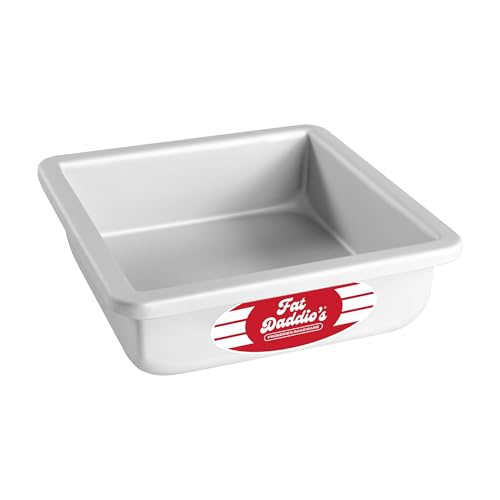
Unlike the deeper removable-bottom pans, this fixed-base 6-inch pan is 2 inches deep and holds 3 cups. Its 6 × 6-inch interior and 7 × 7-inch outside dimensions help distinguish baking space from the room the pan needs. The maker says it fits 5.3- and 10-quart air fryers, is made from 14-gauge anodized aluminum, and is rated to 550°F; hand washing is recommended. Its shorter depth is suited to smaller cakes, brownies or bars, but it is not the choice for a 3-inch-tall cake build.
Bottom line: Choose it for a 6-inch cake or bar bake when a 2-inch pan depth is enough.
Fat Daddio’s PSQ-442, 4-Inch Square Pan

This is the smallest mold here, with a 4 × 4-inch interior and 1 1/8-cup capacity, so it uses far less batter than the 6-inch pans. Its 2-inch depth suits compact cakes, brownies or bar cookies. The maker says it fits 3-, 6- and 8-quart pressure cookers plus 3.4-, 4-, 5.3- and 10-quart air fryers, and rates it to 550°F. The outside measures 5 × 5 inches. That small capacity is a limitation for family-sized recipes; scale the recipe down rather than filling beyond the pan’s safe working space.
Bottom line: Pick it for a small-batch bake when its 1 1/8-cup capacity is sufficient.
How to choose a square cake mold
Choose by the cake’s footprint, batter volume and release needs, not just the pan’s outside width. The 6-inch Fat Daddio’s mold holds 3 cups, while its 4-inch PSQ-442 holds 1 1/8 cups; those capacities show how sharply volume changes with width. A 3-inch-deep removable-bottom pan suits taller builds, while a 2-inch pan is better matched to smaller, shallower bakes. Anodized aluminum pans conduct heat differently from glass, so a recipe written for another material may need a timing adjustment. For any recipe, keep batter below the rim and allow space for rising. If the recipe’s volume exceeds the pan capacity, use a larger mold or bake in batches rather than overfilling.
Pan dimensions and appliance fit
Measure the cooking cavity before choosing a square pan: outside dimensions, including any rim, determine whether it fits, while interior dimensions determine the baking area. For example, the 6-inch Fat Daddio’s pan has a 7 × 7-inch exterior, and the 4-inch version has a 5 × 5-inch exterior. Leave clearance around the pan so air can circulate in an air fryer; do not force a pan into a tight basket or cooker. A practical rule is to choose the 4-inch pan when a 5-inch outside footprint is the largest that clears the appliance; otherwise verify the larger pan’s outside measurements. Check both width and height, including room for the appliance to close.
Removable bottoms and fixed-base pans
A removable-bottom mold lets a delicate cake release without being inverted, while a fixed-base pan has a continuous bottom and is straightforward for batters that can be turned out or cut in the pan. Removable bases can let thin batter seep at the seam, so use them with thick batters or set them on a rimmed baking sheet if leakage would be a problem. Cheesecake and mousse-style builds often benefit from side release; brownies and bar cookies can bake well in fixed-base square pans. Choose a removable base for release-sensitive cakes, not simply because it is deeper. Follow the recipe’s lining and chilling steps, since pan construction alone does not guarantee clean release.
Using and caring for aluminum bakeware
Use aluminum cake pans in an oven or appliance only within that appliance’s limits, and use oven mitts when handling them; metal pans become hot and stay hot after removal. The Fat Daddio’s pans are maker-rated to 550°F, but an appliance’s maximum temperature still governs. Greasing the pan or lining its base with parchment can ease release; keep parchment flat and away from exposed heating elements. Hand washing is a practical care choice for anodized bakeware, and the Fat Daddio’s maker recommends it. Avoid cutting directly inside a pan, which can scratch the surface. Let the pan cool before washing to reduce thermal shock and make handling safer.
Frequently Asked Questions
How much batter should go in a square cake pan?
Keep batter below the rim and leave room for the cake to rise; the exact fill level depends on the recipe. For the 4-inch Fat Daddio’s mold, the capacity is 1 1/8 cups, so a larger recipe should be divided or baked in a larger pan.
Can a removable-bottom pan leak cake batter?
Yes, thin batter can escape through the seam between the base and sides. Use a thicker batter or place the pan on a rimmed baking sheet if leakage would create a mess.
Do square aluminum pans need parchment paper?
Parchment is optional but can make releasing a cake easier, especially from a fixed-base pan. Cut it to fit the base and keep it clear of exposed heating elements.
Can aluminum cake pans go in an air fryer?
A metal pan can be used only if the air fryer permits it and the pan fits without blocking circulation or touching the heating element. The Fat Daddio’s 6-inch model is maker-specified to fit 5.3- and 10-quart air fryers, but confirm your appliance’s internal clearance.
How should I adjust baking time for a different pan size?
A wider or shallower pan spreads batter into a thinner layer and can bake sooner than a deeper pan. Start checking before the recipe’s finish time and use the recipe’s doneness cue, such as a clean tester for cakes.