
Glue for Laminate Flooring: 3 Adhesives Compared

Titebond 2104 Tongue and Groove Glue is the clearest match for glue-together laminate and floating floors because it is recommended for both; CalFlor Eurobond D3 Floating Floor Glue is another floor-specific choice that also supports click systems. Most modern click-lock laminate floors are installed as floating floors without glue, so choose a different adhesive only when the floor maker calls for it or the job is actually subfloor bonding.
We earn a commission if you buy through links on this page. As an Amazon Associate I earn from qualifying purchases. Products are compared on manufacturer specifications, not hands-on testing.
- Best overall: Titebond 2104 Tongue and Groove Glue – Recommended for laminate and floating floors, including over radiant heat systems.
- Best for wet areas: CalFlor Eurobond D3 Floating Floor Glue – Floor glue for laminate and click systems with a D3/Type II water-resistance rating.
- Best for subfloors: Loctite PL Premium Polyurethane Adhesive – A construction adhesive made for subfloor installations and common building materials.
| Product | Best for | Intended use | Container size | Water resistance | Shop |
|---|---|---|---|---|---|
| Titebond 2104 Tongue and Groove Glue | Laminate joints | Laminate and floating floors | 16 oz | Resists water when dry | Check Price on Amazon |
| CalFlor Eurobond D3 Floating Floor Glue | Wet-area joints | Laminate, click, and T&G floors | 16 fl oz | D3/Type II water-resistant | Check Price on Amazon |
| Loctite PL Premium Polyurethane Adhesive | Subfloor bonding | Subfloor installations | 10 fl oz | Waterproof | Check Price on Amazon |
Glue for laminate flooring
Match the adhesive to the floor joint or subfloor task before choosing by bottle size or water resistance.
Titebond 2104 Tongue and Groove Glue

Titebond 2104 Tongue and Groove Glue is specifically recommended for laminate and floating floors, making it the most direct match here for glue-together joints. The maker says it can also be used over radiant heat systems and resists water and solvents when dry. Its 16-ounce bottle is a straightforward option for a flooring job where the floor instructions call for adhesive. It is not a universal substitute for installation guidance: many click-lock floors are designed to float without glue, so buyers of those floors should confirm the required joint method before applying adhesive.
Bottom line: Choose this for laminate or floating floor joints when the floor maker calls for glue.
CalFlor Eurobond D3 Floating Floor Glue
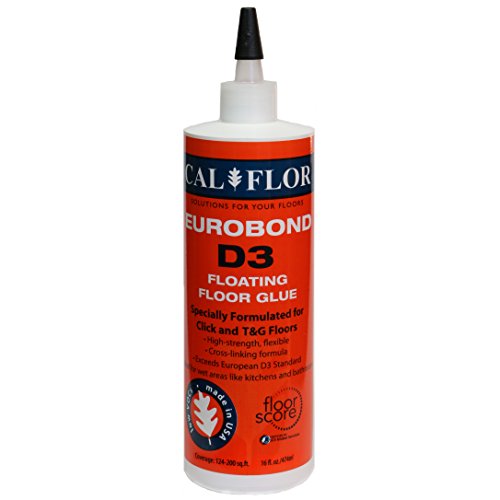
CalFlor Eurobond D3 Floating Floor Glue stands out for combining laminate joint use with compatibility for click systems, cork, engineered wood, and pre-finished floating floors. The maker says its 16-ounce bottle covers 124 to 200 linear feet, depending on the application, and calls for a 1/16-inch bead on laminate. Its D3/Type II water-resistance rating and stated suitability for kitchens and baths make it a useful match where moisture exposure matters. The broad floor compatibility is not a reason to glue every click-lock joint; check that the flooring’s own installation method permits adhesive.
Bottom line: Choose this when a compatible floor calls for a water-resistant joint adhesive.
Loctite PL Premium Polyurethane Adhesive
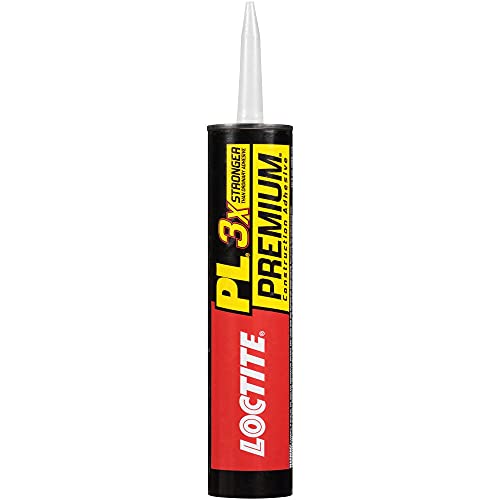
Loctite PL Premium Polyurethane Adhesive is a construction adhesive rather than a floor-joint glue, and its relevant role is bonding subfloor materials. The maker says it bonds common building materials, including wood and OSB, is waterproof, sets in 30 minutes, and fully cures in 24 hours. A 10-fluid-ounce cartridge suits bead application in construction work. It is not the right choice for sealing laminate tongue-and-groove joints or for attaching a floating laminate floor to the subfloor; those methods can interfere with the floor’s intended movement and installation system.
Bottom line: Choose this for an appropriate subfloor bond, not for laminate panel joints.
How to choose glue for laminate flooring
Start by identifying whether the floor uses glue-together joints or a click-lock floating system. Many current laminate floors click together and float over an underlayment; gluing their joints or fastening the floor to the subfloor can defeat the designed movement. For glue-together tongue-and-groove flooring, use an adhesive intended for flooring joints and follow the floor maker’s specified bead placement. A floor-joint adhesive and a construction adhesive do different jobs: the former bonds panel edges, while the latter is generally used to bond building materials such as a subfloor. If you have less than 1/4 inch of expansion space at the room perimeter, correct the clearance before installation rather than trying to hold the floor down with adhesive.
Click-lock and glue-together laminate compared
Click-lock laminate usually needs no adhesive at its joints, while glue-together laminate uses adhesive where the floor instructions direct. Expansion space matters because laminate can change dimension with temperature and humidity; many installations use about 1/4 inch around the perimeter, but the flooring instructions control the required gap. The table separates joint glue from subfloor adhesive so the job does not get matched to the wrong product type.
| Installation task | Adhesive choice | Key check |
|---|---|---|
| Glue-together laminate joints | Flooring joint glue | Joint method and bead location |
| Click-lock floating floor | Usually no joint glue | Floor maker’s installation method |
| Bonding subfloor materials | Construction adhesive | Substrate and adhesive compatibility |
Using adhesive near moisture or radiant heat
Moisture resistance ratings describe adhesive performance, not permission to install laminate in every wet location. D3/Type II is a water-resistance classification used for adhesive applications; it does not make a floor waterproof or remove the need to protect seams and edges. Radiant heat also requires attention to the flooring system’s limits: heat can affect materials and floor movement, so use only a joint adhesive and installation method approved for that floor. Keep adhesive out of expansion gaps, and avoid bonding a floating floor to the subfloor unless the floor maker explicitly requires it. For kitchens and baths, verify the floor’s room suitability as well as the adhesive’s water resistance.
Frequently Asked Questions
Do click-lock laminate floors need glue?
Most click-lock laminate floors are installed without glue and float over the underlayment. Glue only when the flooring maker specifies it for that particular system.
How much expansion gap does laminate need?
Many laminate installations leave about 1/4 inch around the room perimeter. Larger rooms, climate conditions, and the floor manufacturer’s instructions can change the required clearance.
Can construction adhesive attach laminate flooring?
Construction adhesive can be intended for bonding subfloor materials, but that does not make it suitable for laminate joints or fastening a floating floor. Use the floor’s specified installation method to preserve movement.
Is D3 glue waterproof for laminate flooring?
D3/Type II indicates water resistance for the adhesive, not a waterproof laminate floor installation. Check the floor’s room-use rating and protect seams and edges where moisture may collect.
Can laminate floor glue be used over radiant heat?
Some adhesives are recommended for floors over radiant heat, but compatibility must include the flooring system too. Confirm the floor maker’s heat limits and glue requirements before installation.