
Best Wood Filler for Laminate Floors: 3 Options Compared

For most laminate floor gap touch-ups, Oak Wood Floor Gap Filler is the strongest fit because it is explicitly made for laminate and narrow gaps. Choose a color-matching wax or resin kit instead for surface scratches and chips; those products are not the same as a gap-filling compound.
We earn a commission if you buy through links on this page. As an Amazon Associate I earn from qualifying purchases. Products are compared on manufacturer specifications, not hands-on testing.
- Best overall: Oak Wood Floor Gap Filler – Oak-colored filler is made for laminate floors and narrow gaps.
- Best for color range: 18-Color Resin Floor Repair Kit – The 31-piece set includes 18 colors of resin filler.
- Best for wax repairs: Hard Wax Laminate Repair Kit – The kit pairs hard wax sticks with markers for surface touch-ups.
| Product | Best for | Repair type | Color options | Included pieces | Shop |
|---|---|---|---|---|---|
| Oak Wood Floor Gap Filler | Narrow floor gaps | Flexible gap filler | Oak | — | Check Price on Amazon |
| 18-Color Resin Floor Repair Kit | Color-matched touch-ups | Resin filler kit | 18 | 31-piece set | Check Price on Amazon |
| Hard Wax Laminate Repair Kit | Wax surface repairs | Hard-wax kit | 11 | 11 wax sticks, 8 markers | Check Price on Amazon |
Wood Filler for Laminate Floors
Match the repair material to the damage: narrow seams call for gap filler, while shallow scratches may suit a wax or resin repair kit.
Oak Wood Floor Gap Filler

For narrow laminate floor gaps, Oak Wood Floor Gap Filler is the only option here explicitly described for that flooring type and repair. The oak-colored filler is paintable or recoatable after drying, and its maker says it is shrink-resistant and sink-resistant. It is aimed at seams, edges, transitions, and similar floor openings rather than broad color restoration. The key limitation is its single stated oak color, so it may not blend with non-oak patterns; test color on an inconspicuous spot before filling a visible seam.
Bottom line: Choose this for narrow gaps in oak-toned laminate.
18-Color Resin Floor Repair Kit
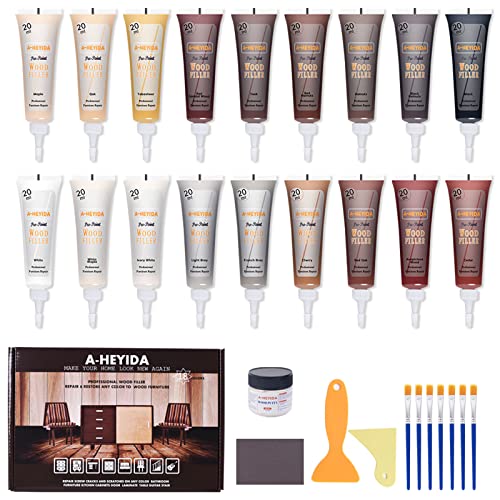
For a wider color palette, 18-Color Resin Floor Repair Kit supplies 18 resin filler colors in a 31-piece set, along with putty, brushes, scrapers, sandpaper, and a glove. Its maker describes the kit for scratches, stains, or cracks on laminate as well as other flooring and furniture. That versatility suits small surface touch-ups where matching the floor tone matters more than filling a long joint. The limitation is that the facts do not establish a dedicated flexible gap-filling compound, so do not treat it as a substitute for a floor expansion joint.
Bottom line: Choose this for small surface repairs needing more color choices.
Hard Wax Laminate Repair Kit

For hard wax repairs, Hard Wax Laminate Repair Kit combines 11 wax sticks with 8 markers and a USB-rechargeable heating pen. Its maker gives three temperature settings—626°F, 698°F, and 842°F—and describes use on laminate floors, furniture, countertops, and tile. The marker has fine and broad tips for different touch-up areas. This is a surface-repair approach, not a flexible seam filler, and the heating tool reaches very high temperatures; keep the hot tip away from skin, flooring beyond the repair, and flammable materials.
Bottom line: Choose this for chips or scratches suited to hard wax and marker touch-up.
Choose Filler by the Laminate Damage
Use gap filler for a narrow seam and a repair kit for a localized scratch or chip. Laminate planks usually form a floating floor, so the perimeter gap is intentional room for expansion; filling that joint can restrict movement and cause buckling. Small seam fillers are for cosmetic repair, not a replacement for a missing plank or a correction to a damaged locking joint. Before selecting a color, compare it with the plank in daylight and test the product in a hidden spot. The repair should stay within the damaged area rather than bridge moving joints or cover a large section of printed grain.
A practical rule is to avoid filling any gap that changes width as the floor moves or that is at the room edge; reserve filler for a stable, narrow blemish.
Gap Filler, Wax, and Resin Kits Compared
Gap filler, hard wax, and resin kits address different damage, even when each is advertised for floors. A flexible filler is shaped for a narrow joint; hard wax is melted and placed into a shallow gouge or chip; resin fillers and markers offer color options for small touch-ups. A kit’s number of colors does not establish that it will match a particular laminate print. Choose based on the repair shape and whether the product is meant to bridge a gap or restore a surface mark.
The table separates the methods by typical repair use; follow the product’s compatible surfaces.
| Repair need | Usual method | Key fit rule |
|---|---|---|
| Narrow, stable seam | Flexible gap filler | Do not fill a moving perimeter joint |
| Small chip or gouge | Hard wax | Use controlled heat on the damaged spot only |
| Scratch or color blemish | Resin filler or marker | Test color in a hidden area |
Prepare the Floor and Match the Color
Color matching is easiest when the sample is viewed beside the floor under the room’s normal lighting, since a wood-look laminate has both a base color and a printed grain pattern. Clean and dry the repair area before applying filler; dust and surface residue can interfere with adhesion. Use a small amount first, then level it without spreading material over the surrounding finish. On a patterned plank, a single flat color may hide a chip but will not reproduce grain. For a visible mark, a fine marker or layered color can better follow the pattern than a broad patch.
Keep all repairs small and localized; if the plank is loose, swollen, or separating at its lock, repair the underlying flooring issue rather than filling over it.
Use Heat Tools Safely on Laminate
Wax repair pens can reach temperatures that burn skin and damage nearby flooring, so keep the heated tip on the wax and away from the laminate’s undamaged surface. Work in short, controlled applications and let the repair cool before touching or smoothing it. Never leave a hot tool unattended or set it on a finished floor; use a stable heat-resistant rest and keep it away from children and flammable materials. Laminate surfaces can be heat-sensitive, and excessive localized heat may discolor or deform the wear layer. Choose a non-heated filler instead when you cannot keep the tool precisely confined to a small chip.
Frequently Asked Questions
Can wood filler repair a laminate floor gap?
A flexible floor gap filler can suit a narrow, stable cosmetic seam if its compatible surfaces include laminate. Do not fill the expansion gap around a room’s perimeter, which allows a floating floor to move.
Should laminate expansion gaps be filled?
No; perimeter expansion gaps should remain able to accommodate floor movement. Many floating laminate installations leave roughly 1/4 to 3/8 inch at room edges, but the required clearance depends on the flooring system and installation conditions.
Is hard wax or filler better for laminate scratches?
Hard wax is generally suited to a small chip or gouge, while a marker or resin filler can address a shallow color blemish. Match the repair method to the depth and test the color in a hidden spot first.
Can a heat pen damage laminate flooring?
Yes; concentrated heat can discolor or deform a laminate wear layer. Keep the tip confined to the repair material, use short applications, and never leave a hot pen unattended.
How do you match filler to wood-look laminate?
Compare the repair color with the plank under its usual room lighting and test it in an inconspicuous area. Printed grain and mixed tones mean a single filler color may not disappear into the pattern.