
Sonic Pest Repellers: 3 Models Compared by Use

For most indoor rooms, Fooxem 3-Mode Ultrasonic Repeller, 7 Pack is the most flexible choice because it offers three adjustable modes and gives a specific outlet-placement range. Choose 3-Mode Ultrasonic Repeller, 6 Pack for a six-unit pack or CORE 29 3-Mode Ultrasonic Repeller, 3 Pack if its claimed open-area coverage fits your setup; sonic devices should not replace sealing entry points or addressing an active infestation.
We earn a commission if you buy through links on this page. As an Amazon Associate I earn from qualifying purchases. Products are compared on manufacturer specifications, not hands-on testing.
- Best overall: Fooxem 3-Mode Ultrasonic Repeller, 7 Pack – Three modes and a suggested placement height make room setup more adaptable.
- Best for a six-unit setup: 3-Mode Ultrasonic Repeller, 6 Pack – The pack contains six units and uses a 10–65 kHz frequency range.
- Best for open areas: CORE 29 3-Mode Ultrasonic Repeller, 3 Pack – The maker claims up to 1,600 sq. ft. of coverage per unit in open areas.
| Product | Best for | Frequency | Pack size | Shop |
|---|---|---|---|---|
| Fooxem 3-Mode Ultrasonic Repeller, 7 Pack | Adjustable room setup | — | 7 units | Check Price on Amazon |
| 3-Mode Ultrasonic Repeller, 6 Pack | Six-room coverage | 10–65 kHz | 6 units | Check Price on Amazon |
| CORE 29 3-Mode Ultrasonic Repeller, 3 Pack | Open-area placement | 20–65 kHz | 3 units | Check Price on Amazon |
Sonic Pest Repellers Compared
Compare the operating modes, frequency information and unit count before choosing a device for indoor use.
Fooxem 3-Mode Ultrasonic Repeller, 7 Pack

Three selectable modes distinguish this seven-unit set: Enhanced, Medium and Silent. The maker recommends plugging each unit directly into an unobstructed wall outlet about 10–50 inches above the floor, which gives buyers a practical starting point for placement. The units are intended for indoor areas such as kitchens, basements and garages. This set suits households that want to adjust a setting by room and distribute several devices. Its main limitation is that the maker gives no frequency range, so buyers cannot compare its operating band with devices that specify one.
Bottom line: Choose this set if adjustable modes and a placement range matter most.
3-Mode Ultrasonic Repeller, 6 Pack
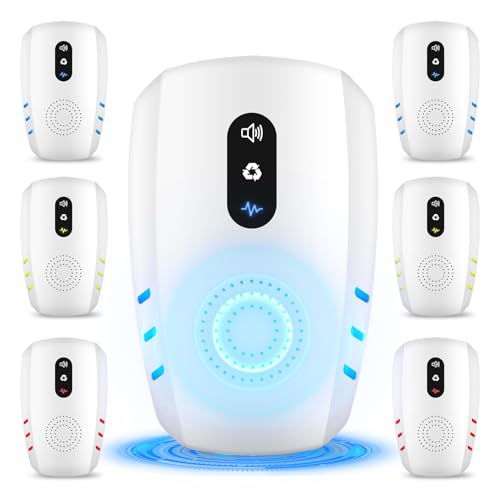
A specified 10–65 kHz range and six-unit pack set this option apart. The maker says the multi-frequency ultrasonic waves are intended to create an uncomfortable environment for common indoor pests, including rodents and insects. The compact units measure 3.23 inches high, 2.05 inches long and 1.38 inches wide. This pack may suit buyers planning to place one device in several rooms. The product name mentions three modes, but the maker does not explain how those settings differ, so it is a less clear fit for anyone choosing between mode behaviors.
Bottom line: Choose it for a six-unit pack with a ultrasonic frequency range.
CORE 29 3-Mode Ultrasonic Repeller, 3 Pack

The maker claims up to 1,600 sq. ft. of coverage per unit in open areas and recommends using one per room, with two or more for heavy activity. This three-pack also specifies a 20–65 kHz range and a low 1–3 W power draw. The maker says the units automatically cycle sound waves and include a soft night light. That combination may suit someone planning devices for separate rooms or an open area. The coverage claim is specifically for open areas, so room partitions and furniture make it a poor basis for assuming the same reach throughout a divided home.
Bottom line: Choose it when the open-area coverage and three-unit pack suit the layout.
How to Choose a Sonic Pest Repeller
Choose by room layout and use as well as by frequency range: sound-based devices work best with an unobstructed path, while walls and large furnishings can block or weaken sound. Ultrasonic sound is above the usual human hearing range, which starts around 20 kHz, but some pets may hear high-frequency sounds; place devices away from animals and observe their response. For an active pest problem, do not rely on a repeller alone: close gaps around pipes and doors, remove food sources, and use pest-specific control. A device’s coverage is not a guarantee that every corner or adjoining room is reached.
Where to Place Sonic Pest Repellers
Place an ultrasonic unit in an open outlet rather than behind furniture or curtains; the maker of Fooxem 3-Mode Ultrasonic Repeller, 7 Pack suggests about 10–50 inches above the floor. Sound does not pass freely through solid walls, so a single unit in a hallway is not a substitute for one in a separated room. Keep the speaker face unobstructed and avoid outlets hidden behind appliances. A useful rule is to plan at least one device for each enclosed room you want to address, then assess the layout rather than multiplying a claimed open-area figure across rooms.
Ultrasonic and Other Sound-Based Repellers
Ultrasonic devices emit high-frequency sound, while electromagnetic plug-ins use a home’s wiring to generate pulses; these are different technologies and should not be judged by the same placement assumptions. Frequency range alone does not establish how well a device controls pests, and a coverage figure for an open area does not describe a divided floor plan. This comparison focuses on ultrasonic devices, which vary here by specified frequency band, modes, and pack size. Use those specifications to compare setup, not as proof that a device will resolve an infestation.
The table summarizes the main practical differences among these ultrasonic options.
| Need | Compare |
|---|---|
| More adjustable settings | Three modes; one option specifies what the modes are |
| Plan by frequency range | Two options provide a frequency range |
| Place across several rooms | Compare packs of 3, 6, or 7 units |
| Open-area planning | One maker claims up to 1,600 sq. ft. per unit in open areas |
What Sonic Repellers Can and Cannot Do
Sonic repellers are plug-in devices, not physical barriers or traps, so they do not close entry points or remove food and nesting materials. A device may be one part of a broader approach, but persistent signs such as droppings, gnawing or repeated insect sightings call for direct pest control steps. Avoid assuming that a silent setting means every animal in the home is unaffected; pets can hear frequencies people do not. Keep the unit accessible for inspection, and follow applicable electrical safety practices, including not using a damaged outlet or plug.
Frequently Asked Questions
Do ultrasonic pest repellers work through walls?
No, solid walls and closed doors block or weaken ultrasonic sound, so plan for each enclosed room rather than expecting a hallway device to cover the home. Furniture and appliances can also obstruct the path.
Can pets hear ultrasonic pest repellers?
Some pets may hear high-frequency sound that people cannot, since typical human hearing tops out around 20 kHz and animals have different hearing ranges. Keep devices away from pet resting areas and watch for signs of discomfort.
How many sonic pest repellers should I use in a home?
Plan around enclosed rooms, not just total floor area, because ultrasonic sound does not pass freely through walls. One unit per room is a practical starting point when the goal is to cover separate spaces.
Should a pest repeller replace traps or sealing gaps?
No, a plug-in sound device does not physically seal entry points or capture pests. Close openings, secure food, and use appropriate direct control methods when pest activity continues.