
Abib Airy Sunscreen Stick: 3 Formats Compared

Choose Abib Quick Sunstick Protection Bar instead for a glowy finish aimed at dry or sensitive skin, or Abib Airy & Quick Sunstick Duo if you want two sticks with different finishes.
The Airy Clear Gel is a related sunscreen, not a stick, so it suits shoppers who prefer a gel format.
We earn a commission if you buy through links on this page. As an Amazon Associate I earn from qualifying purchases. Products are compared on manufacturer specifications, not hands-on testing.
- Best overall: Abib Airy Sunstick Protection Bar – A single 23 g semi-matte SPF 50+ stick is aimed at oily and combination skin.
- Best for finish variety: Abib Airy & Quick Sunstick Duo – The duo pairs semi-matte and quick-glowy sticks in a two-count pack.
- Best for dry skin: Abib Quick Sunstick Protection Bar – Its glowy finish and centella-and-aloe formula are aimed at dry or sensitive skin.
| Product | Best for | Format | Finish | Size | Shop |
|---|---|---|---|---|---|
| Abib Airy Sunstick Protection Bar | Oily combination skin | Stick | Semi-matte | 23 g | Check Price on Amazon |
| Abib Airy & Quick Sunstick Duo | Two-finish routine | Two-stick set | Semi-matte and glowy | 2 count; 0.79 oz | Check Price on Amazon |
| Abib Quick Sunstick Protection Bar | Dry sensitive skin | Stick | Glowy | 22 g | Check Price on Amazon |
Abib Airy Sunscreen Sticks
Compare the stick options by finish, skin type and package format.
Abib Airy Sunstick Protection Bar
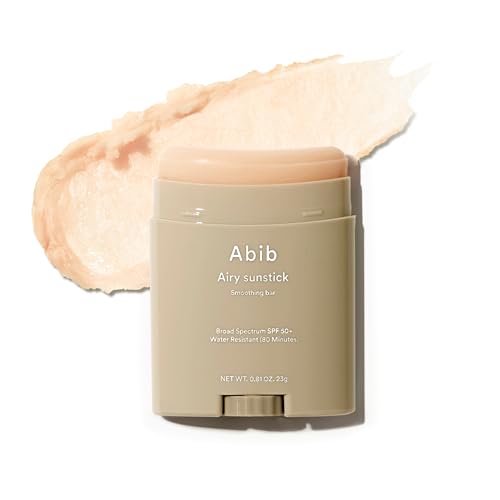
Abib Airy Sunstick Protection Bar is the single-stick semi-matte option for oily and combination skin, distinguishing it from the glowy bar and mixed-finish duo. Ectoin, allantoin and sunflower seed oil are among its featured ingredients. The finish focus may not suit someone who wants a dewy look; the glowy format is the closer match for that preference.
Bottom line: Choose this if you want one semi-matte stick for oily or combination skin.
Abib Airy & Quick Sunstick Duo

Abib Airy & Quick Sunstick Duo is the only option that combines two finish styles in one set: semi-matte and soft glowy. The two-count format is useful if finish preference changes across routines or users. Its tradeoff is that it is a set rather than a single bar, so buyers who want only one stick may prefer a standalone option.
Bottom line: Pick this when you want both semi-matte and glowy sticks in a set.
Abib Quick Sunstick Protection Bar

Abib Quick Sunstick Protection Bar stands apart with a glowy finish tailored to dry and sensitive skin, rather than the semi-matte focus of Abib Airy Sunstick Protection Bar. This is a single-bar choice for shoppers who prefer a natural glow. The glowy finish may feel less suitable for someone specifically seeking an oil-controlling, shine-free look.
Bottom line: Choose this for a single glowy stick aimed at dry or sensitive skin.
How to choose an Abib Airy sunscreen stick
Choose by finish first: semi-matte bars target a less shiny look, while a glowy bar favors a natural sheen. Apply sunscreen generously and evenly to exposed skin, and reapply at least every two hours outdoors, sooner after swimming or sweating. A stick can be convenient for touch-ups, but swipe it thoroughly over each area rather than assuming a quick pass deposits enough product.
Stick versus gel sunscreen formats
A stick is a solid, portable format that avoids squeezing out a liquid, while a gel spreads as a conventional topical layer. For dependable protection, use enough product to create an even film; stick application can require multiple passes over each area. A common sunscreen measure is about 1 ounce for exposed adult body skin, while the face typically needs about a nickel-sized amount.
The table separates the choices by the practical differences that matter most.
| Need | Format | Finish |
|---|---|---|
| Single semi-matte bar | Stick | Semi-matte |
| Two finish choices | Two sticks | Semi-matte and glowy |
| Single glowy bar | Stick | Glowy |
| Gel instead of stick | Gel | Semi-matte |
Applying sunscreen sticks evenly
Apply a stick in repeated, overlapping strokes across every exposed area, then spread any uneven edges with clean fingers if needed. Sunscreen protection depends on adequate coverage; a single light swipe is not a reliable substitute for a full application. For the face and neck, cover forehead, cheeks, nose, ears, jawline and hairline, taking care around the eyes. Reapply every two hours when outdoors and after swimming, sweating or towel drying. Water resistance is a labeled time limit, commonly 40 or 80 minutes, not all-day protection; verify the duration on the package before relying on it during water activities.
Sun protection beyond a stick
Sunscreen is one part of UV protection, not a replacement for shade or clothing. Seek shade when UV exposure is strongest, typically around midday, and use a broad-brimmed hat and sunglasses for additional coverage. No sunscreen blocks all UV rays, and water-resistant formulas still need reapplication after their water-resistance interval. Avoid applying sunscreen to broken or irritated skin unless the package specifically allows it.
Frequently Asked Questions
How often should I reapply sunscreen outdoors?
Reapply at least every two hours outdoors, and sooner after swimming, sweating or towel drying. Water-resistant labeling commonly specifies 40 or 80 minutes; it does not mean all-day protection.
How many passes should a sunscreen stick get?
Use multiple overlapping passes over each exposed area to leave an even layer; one quick swipe can under-apply sunscreen. Reapply the layer at least every two hours outdoors.
Can I apply sunscreen stick over makeup?
A stick can be applied over makeup, but repeated passes may disturb the makeup and a light swipe may leave gaps. Reapplication still needs an even, adequate layer on exposed skin.
Does water-resistant sunscreen last all day?
No; water-resistant products are generally labeled for 40 or 80 minutes during swimming or sweating. Reapply after that interval, after towel drying, and at least every two hours outdoors.