
20 HP Horizontal Shaft Engine Options Compared

The DuroMax XP20HP is the closest match for a 20 hp horizontal shaft engine, with a 500cc four-stroke OHV design and recoil start. Choose a different option if you need electric starting, a particular replacement-engine specification or more horsepower.
Horizontal shaft engines transfer power through a shaft mounted parallel to the ground, so matching shaft dimensions and mounting points matters as much as horsepower when replacing an engine.
We earn a commission if you buy through links on this page. As an Amazon Associate I earn from qualifying purchases. Products are compared on manufacturer specifications, not hands-on testing.
- Best overall: DuroMax XP20HP 500cc – Its 500cc displacement, 20 hp rating and recoil start make it the direct match.
- Best for electric start: GENMAX GM420E 15HP 420cc – It pairs a 15 hp rating with electric start and backup recoil.
- Best for twin-cylinder power: BILT HARD 23HP 713cc Twin Cylinder – It has a 713cc twin cylinder design and a 23 hp rating.
| Product | Best for | Horsepower | Displacement | Starting method | Shop |
|---|---|---|---|---|---|
| DuroMax XP20HP 500cc | Direct 20 hp match | 20 hp | 500cc | Recoil | Check Price on Amazon |
| BILT HARD 23HP 713cc Twin Cylinder | Higher output | 23 hp | 713cc | Electric | Check Price on Amazon |
| GENMAX GM420E 15HP 420cc | Electric start backup | 15 hp | 420cc | Electric and recoil | Check Price on Amazon |
| Briggs & Stratton Vanguard 23HP 627cc | Vanguard replacement | 23 hp | 627cc | — | Check Price on Amazon |
| Briggs & Stratton Vanguard 35HP 993cc | High-power equipment | 35 hp | 993cc | — | Check Price on Amazon |
20 HP Horizontal Shaft Engine Options
Compare these engines by output, displacement and starting method, then verify physical compatibility for replacement use.
DuroMax XP20HP 500cc

The DuroMax XP20HP is the only option rated at 20 hp, with a 500cc, four-stroke OHV engine and a 1-inch horizontal shaft. It has recoil starting, a 1.35-gallon fuel tank and uses standard 87-octane gasoline. The maker says it is EPA- and CARB-approved and identifies go-karts, pressure washers, log splitters, tillers and water or trash transfer pumps as applications. This is the clearest match when the target is 20 hp. Its recoil start may matter if the equipment operator needs a key-operated electric start.
Bottom line: Choose this when you need the 20 hp rating and can use recoil starting.
BILT HARD 23HP 713cc Twin Cylinder

The BILT HARD is a higher-output alternative, rated at 23 hp with a 713cc twin cylinder, four-stroke engine. Its maker identifies electric start, and the maker gives maximum speed as 3,750 ± 50 rpm and torque as 33.2 ft-lb at 2,600 rpm. The maker positions it for varied lawn, garden, agricultural and construction equipment, including log splitters, pressure washers and water pumps. Consider it when the equipment can accept more than 20 hp and its mounting and shaft dimensions match. Those dimensions are not included in the specifications, so they need confirming for a replacement.
Bottom line: Choose this if your equipment accepts 23 hp and you want electric starting.
GENMAX GM420E 15HP 420cc
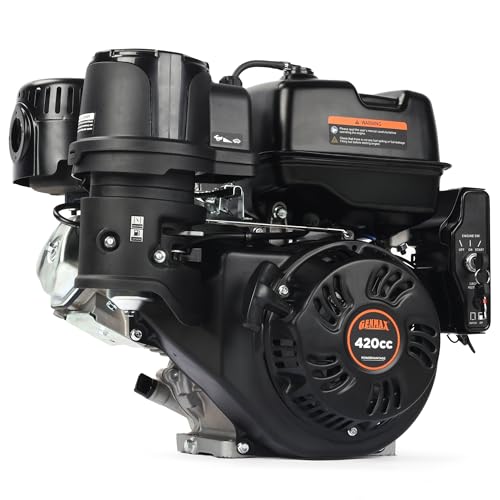
The GENMAX GM420E offers an electric starter plus a backup recoil starter, but its 15 hp rating is below the requested 20 hp. Its 420cc, four-stroke OHV engine has a 1-inch shaft measuring 3.48 inches long, a 1/4-inch keyway and a 3/8-24 UNF thread. The maker says it is designed as a replacement for many 15 hp horizontal shaft engines and names log splitters, generators, pressure washers and cultivators as applications. The detailed shaft measurements help when checking fit, but the lower rating makes it unsuitable where 20 hp is a firm requirement.
Bottom line: Choose this for a compatible 15 hp replacement where dual starting is useful.
Briggs & Stratton Vanguard 23HP 627cc

The Vanguard 386447-0444-G1 is a 23 hp, 627cc horizontal shaft engine, so it is an alternative for equipment configured for more power than 20 hp. Its features include an overhead-valve design, a float carburetor and a dual-clean air cleaner with a paper filter and foam pre-cleaner. The maker says replacement engines are specific to the original model number and advises checking that model before choosing a replacement. That makes this option particularly relevant when the existing engine is the matching Vanguard model. Its 23 hp rating is the main mismatch for a machine requiring exactly 20 hp.
Bottom line: Choose this when replacing a compatible Vanguard engine and 23 hp suits the equipment.
Briggs & Stratton Vanguard 35HP 993cc
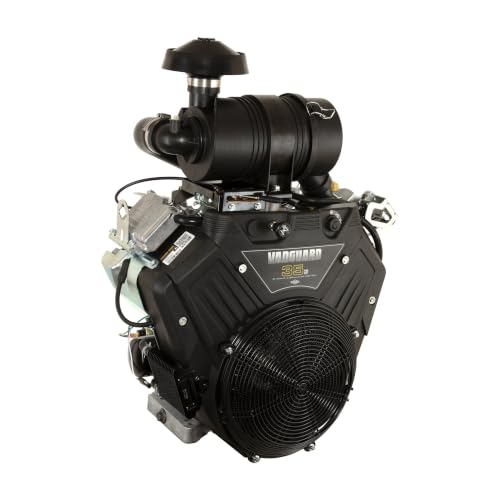
The 35 hp Vanguard is the largest-output option here, with a 993cc horizontal shaft engine. Its features include a cast-iron cylinder sleeve, full-pressure lubrication with a spin-on oil filter and debris management. The maker notes that replacement engines are specific to the original model number, so this is better considered for equipment built around the matching engine rather than as a 20 hp substitute. The 35 hp rating is substantially above the target; choose it only when the equipment manufacturer allows that output and the mounting and shaft arrangement fit.
Bottom line: Choose this only for equipment designed for a compatible 35 hp engine.
How to choose a 20 hp horizontal shaft engine
Start with the equipment’s required horsepower and engine interface; a nominally similar engine can still fail to fit. A horizontal shaft runs parallel to the mounting surface, and power transfer typically depends on shaft diameter, usable length, keyway and threaded end matching the driven pulley or coupling. For a replacement, compare the old engine’s model number and mounting-hole pattern before comparing displacement. Horsepower alone does not establish that a machine can safely use a higher-output engine: the frame, clutch, belt, pump or other driven component must also be rated for it. If the equipment requires 20 hp, prefer a 20 hp-rated option rather than assuming a 23 hp engine is interchangeable.
Check shaft and mounting fit before replacing an engine
Confirm shaft diameter, shaft length, keyway width and thread size against the existing engine or equipment specification before ordering a replacement. A shaft that is too short can prevent proper pulley engagement, while a different keyway or thread can make the original coupling unusable. Mounting-hole spacing and crankshaft height also affect belt alignment. As a practical rule, do not proceed with a replacement unless the shaft dimensions and mounting pattern match the equipment requirements or an approved adapter is available. A 1-inch shaft by itself is not enough to establish compatibility; the shaft length and end details matter too.
The table separates nominal power from the physical-fit checks that determine whether an engine can serve as a replacement.
| Replacement check | What to match | Why it matters |
|---|---|---|
| Power | Required horsepower | Equipment and driven parts must support the engine output |
| Shaft | Diameter, length, keyway, thread | Enables proper coupling or pulley fit |
| Mounting | Hole pattern and shaft height | Preserves secure installation and alignment |
Understand horsepower, displacement and engine type
Horsepower and displacement describe different things: horsepower is an output rating, while displacement is the swept volume of the cylinders. A larger cc figure does not by itself prove that an engine will suit a particular machine or produce the exact output required. Four-stroke engines complete a power cycle over four piston strokes, and OHV means the valves are positioned above the combustion chamber. Single-cylinder and twin cylinder designs can differ in size and operation, but the product’s rating and physical interface remain the useful comparison points for replacement decisions. Compare manufacturer requirements rather than choosing by displacement alone.
Use gasoline engines with ventilation and fuel precautions
Operate gasoline engines outdoors or in a well-ventilated area because exhaust contains carbon monoxide, an odorless gas that can be fatal. Never run a portable engine in a home, garage or other enclosed space, even with a door open. Keep fuel away from ignition sources and let a hot engine cool before refueling; gasoline vapor can ignite. Use the fuel grade specified for the engine, and keep hands and loose clothing away from hot surfaces and moving parts. Before maintenance, shut the engine down and prevent accidental starting. These precautions apply regardless of horsepower or whether starting is by recoil or electric switch.
Frequently Asked Questions
Does a 23 hp engine work in place of a 20 hp engine?
Only if the equipment maker permits the higher output and the engine’s shaft and mounting fit. A three-horsepower difference does not establish that the belt, clutch, pump or frame can handle the change.
What shaft measurements matter for a replacement engine?
Match shaft diameter, usable length, keyway and thread, along with mounting-hole spacing. For example, a 1-inch shaft alone does not confirm that a pulley will engage correctly.
What does a horizontal shaft mean on an engine?
The crankshaft extends parallel to the mounting surface, allowing it to drive equipment through a pulley, coupling or similar connection. The shaft end must match that driven component.
Can a gasoline engine run safely inside a garage?
No; run it outdoors because exhaust can contain fatal carbon monoxide. An open garage door does not make indoor operation safe.
Is engine displacement the same as horsepower?
No; displacement measures cylinder volume, while horsepower is an output rating. Use the equipment’s required horsepower and physical-fit specifications rather than treating cc as a substitute.