
Ankle Support for Sleeping: 5 Options Compared

For ankle support while sleeping, the CHJOD night splint sock is the most sleep-oriented choice here because it is made to be worn at night and uses adjustable ankle and calf straps. Choose a different style if you need a firmer splint with an adjustable stretch angle, or a flexible wrap for activity rather than overnight positioning.
We earn a commission if you buy through links on this page. As an Amazon Associate I earn from qualifying purchases. Products are compared on manufacturer specifications, not hands-on testing.
- Best overall: CHJOD Plantar Fasciitis Night Splint Sock – A night-splint sock with adjustable ankle and calf straps, designed for sleeping.
- Best for a set stretch angle: KOVELYSSE Night Splint and Massage Ball – The maker says its splint holds the foot at an 85–90-degree angle and includes a massage ball.
- Best for adjustable flexion: United Ortho Plantar Fasciitis Leg Support – Its flexion straps adjust from 10 to 90 degrees, and the large size covers specified men’s and women’s shoe sizes.
| Product | Best for | Type | Fit | Adjustment | Shop |
|---|---|---|---|---|---|
| CHJOD Plantar Fasciitis Night Splint Sock | Soft night-splint style | Splint sock | One size; both feet | Adjustable calf and ankle straps | Check Price on Amazon |
| KOVELYSSE Night Splint and Massage Ball | Splint plus massage ball | Night splint kit | One size | Maker says 85–90° foot angle | Check Price on Amazon |
| United Ortho Plantar Fasciitis Leg Support | Wide angle adjustment | Adjustable leg brace | Large; men’s 9.5–11.5, women’s 10–12.5 | 10–90° dorsiflexion | Check Price on Amazon |
| BraceUP Adjustable Ankle Brace | Adjustable ankle stability | Low-profile ankle brace | One size | Adjustable side straps | Check Price on Amazon |
| Bodyprox Adjustable Ankle Support Brace | Flexible compression wrap | Open-heel wrap | 7.8–11 in. arch circumference | Adjustable wrap | Check Price on Amazon |
Ankle Support for Sleeping
Night splints, socks, and activity braces differ in how they hold or support the foot, so match the style to your intended use.
CHJOD Plantar Fasciitis Night Splint Sock

Unlike the activity braces in this group, the CHJOD is a night-splint sock intended for sleeping. Its maker says it has a forefoot support plate and adjustable non-slip ankle strap; the sock also uses a calf strap and is designed for either foot. The one-size approach may suit someone who wants a sock-style splint rather than a separate rigid brace. It does not provide an adjustable stretch-angle range, so choose another option if selecting a specific angle is important to you.
Bottom line: Choose this if you want a night-splint sock with adjustable straps.
KOVELYSSE Night Splint and Massage Ball

The KOVELYSSE combines an overnight splint with a massage ball, a pairing the other options here do not offer. The maker says adjustable dorsal straps hold the foot at an 85–90-degree angle. Its one-size format is intended for women and men, and the compact splint measures 11 inches long. The fixed angle range may not suit someone seeking a wider adjustment span; the United Ortho brace, for example, has a 10–90-degree range.
Bottom line: Choose this if the bundled massage ball and 85–90-degree angle suit your needs.
United Ortho Plantar Fasciitis Leg Support
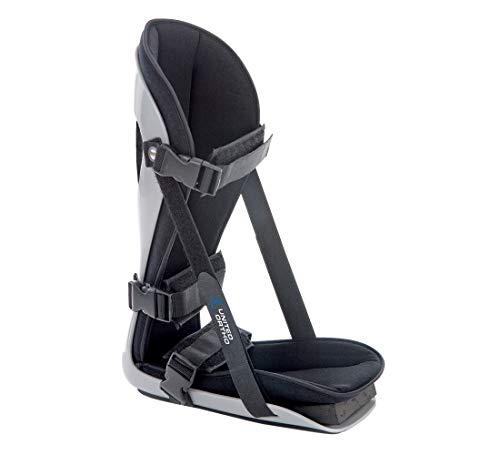
The United Ortho brace differs from the sock-style night splints with its broad 10–90-degree dorsiflexion adjustment range. Flexion straps provide a gentle stretch to the plantar fascia and Achilles tendon, while padded calf and ankle straps and a cool foam liner add padding. The large size fits men’s shoe sizes 9.5–11.5 and women’s 10–12.5; the maker advises measuring the foot for fit. This is a leg support brace, not explicitly a sleep-specific sock, so it may be less appealing if you want a soft, sock-like design.
Bottom line: Choose this if you want a leg brace with a broad stated flexion range.
BraceUP Adjustable Ankle Brace

The BraceUP is a low-profile ankle brace for stability rather than a dedicated night splint. Its maker says reinforced stabilizers on both sides limit lateral motion, and side straps let the wearer adjust compression gradually. The brace is described as breathable and intended for mild-to-moderate support, not rigid immobilization or post-surgery recovery. Its activity-oriented support may suit someone who also wants an ankle brace beyond sleep, but it does not offer the overnight stretch-angle adjustment found on the splints.
Bottom line: Choose this for adjustable side support, not a dedicated overnight stretch.
Bodyprox Adjustable Ankle Support Brace
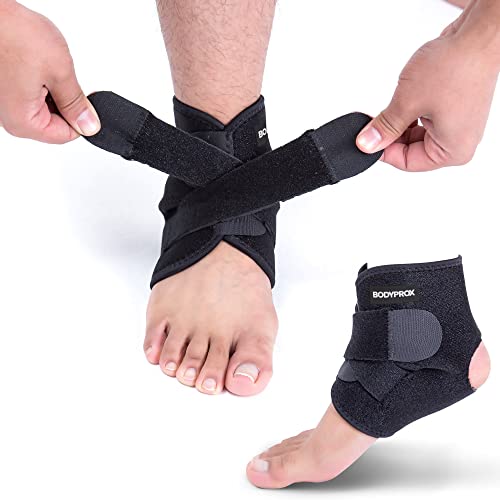
The Bodyprox is an open-heel compression wrap for activity, unlike the sleep-specific splints. Its one-size fit covers a foot-arch circumference of 7.8–11 inches, and the open heel allows a wide range of motion. The maker says its breathable neoprene retains heat and that the wrap is washable. That flexible, activity-oriented construction may suit buyers who want support while moving, but it does not hold the foot at an overnight stretch angle. Measure around the arch before choosing this one-size brace.
Bottom line: Choose this for a flexible wrap when movement matters more than overnight positioning.
How to choose ankle support for sleeping
Choose a night splint when you want a brace designed to hold the foot in a position during sleep; a compression wrap is built for a different job. Night splints commonly hold the ankle near a right angle, while adjustable models may allow more or less dorsiflexion. A range matters: a 10–90-degree adjustment offers more choice than a brace with a narrow angle range. Start by checking whether you want a sock-style design, padded straps, or a firmer brace, then compare fit and adjustability. Do not assume a sports ankle wrap is a night splint just because it supports the ankle.
Night splint fit and safe wear
A night splint should feel secure without creating pressure, and straps should not leave numbness, tingling, or skin color changes. Check your skin after first wearing the brace and again if you adjust the straps; loosen or remove it if pressure symptoms occur. A sleep splint can feel unfamiliar, so use the maker’s adjustment directions rather than pulling straps as tight as possible. People with reduced sensation, circulation problems, or diabetes should ask a clinician before using a brace overnight, since they may not notice excessive pressure promptly. Confirm sizing against the maker’s foot range before choosing a brace with a fixed size.
Night splints compared with ankle wraps
Night splints and ankle wraps serve different purposes: splints position the foot, while flexible wraps compress and support during movement. A plantar fasciitis splint may use straps or a brace structure to hold the ankle in dorsiflexion; an open-heel wrap leaves more motion available. Use this quick comparison to match construction to intended use, not to assume that a more rigid brace is automatically better.
| Style | Typical purpose | Choose when |
|---|---|---|
| Night-splint sock | Overnight foot positioning | You prefer a sock-like design |
| Adjustable leg splint | Controlled dorsiflexion range | You want an angle range |
| Open-heel ankle wrap | Flexible support while moving | Range of motion matters |
For sleeping, prioritize a design intended for overnight use and a fit that stays comfortable without excessive strap pressure.
Common mistakes with sleep ankle braces
A common mistake is choosing by the word “ankle” alone: a sports brace may support movement but not position the foot during sleep. Another is tightening a night splint until it feels rigid; secure fit should not cause numbness, tingling, or skin changes. Do not force the ankle into an angle beyond the brace’s adjustment range, and do not assume one size fits every foot. Compare the angle, shoe-size range, or arch circumference where provided, and measure before selecting a size-specific brace. If a brace causes persistent discomfort or pressure marks, stop using it and get clinical guidance.
Frequently Asked Questions
What angle should a night splint hold my foot?
Many night splints aim to keep the foot near a right angle, but adjustable models differ in their range. Use only an angle the brace permits and that you can tolerate comfortably.
Can I wear an ankle compression wrap to sleep?
A flexible wrap is not the same as a sleep splint: wraps support movement, while splints position the foot. Avoid sleeping in a tight wrap, especially if it causes numbness, tingling, or skin color changes.
How tight should a night splint feel?
A night splint should feel secure, not constricting. Loosen or remove it if you notice numbness, tingling, increasing pain, or color changes in the foot.
How do I choose the right night splint size?
Match the brace to its shoe-size or foot-measurement range rather than relying on a one-size label alone. For example, the United Ortho large size gives separate men’s and women’s shoe-size ranges and advises measuring the foot.
Can I use a night splint if I have diabetes?
Ask a clinician before overnight brace use if you have diabetes, reduced sensation, or circulation problems. Reduced sensation can make it harder to notice pressure or skin irritation early.