
Knee Pads for Exercise: 4 Options Compared by Fit

For most exercise routines that involve moving between standing and floor work, Bodyprox Protective Knee Pads is the best fit because its lightweight sleeves are designed to stay on the knees during activity. Choose a cushion or mat instead if your workout keeps you kneeling in one spot; those formats do not wrap around the knee.
Exercise knee protection ranges from wearable sleeves to loose foam pads, so match the format to your movement and floor contact.
We earn a commission if you buy through links on this page. As an Amazon Associate I earn from qualifying purchases. Products are compared on manufacturer specifications, not hands-on testing.
- Best overall: Bodyprox Protective Knee Pads – Wearable high-density foam sleeves are designed for movement and have a non-slip fit.
- Best for dance and stretching: HUEGLO Dance Volleyball Knee Pads – Flexible EPE foam padding and a fold line support bending during light activities.
- Best for stationary floor work: MBKHFLL Yoga Knee Pad Cushion – The 7.8-inch square cushion can be placed under knees, elbows, wrists, or hands.
| Product | Best for | Design | Size | Pack | Shop |
|---|---|---|---|---|---|
| Bodyprox Protective Knee Pads | Moving workouts | Wearable sleeves | Small/Medium | 1 pair | Check Price on Amazon |
| HUEGLO Dance Volleyball Knee Pads | Dance practice | Wearable pads | Medium | 1 pair | Check Price on Amazon |
| MBKHFLL Yoga Knee Pad Cushion | Floor exercises | Loose foam cushion | 7.8 × 7.8 in | 2 pads | Check Price on Amazon |
| WORKPRO NBR Kneeling Pad | Stationary kneeling | Loose foam mat | 17.3 × 11 in | 1 mat | Check Price on Amazon |
Knee pads for exercise
Compare wearable pads with loose cushions and mats, then choose based on how much your workout involves kneeling in place.
Bodyprox Protective Knee Pads
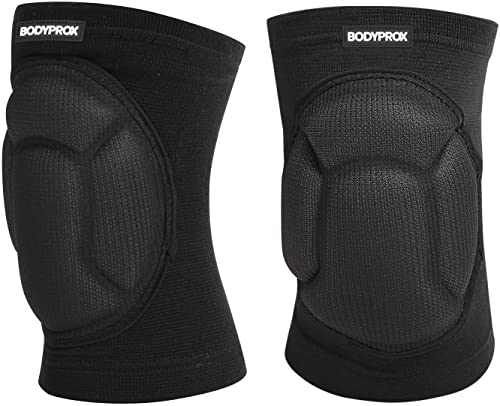
For exercise that includes frequent movement, these wearable sleeves differ from the loose cushions and mats in this group. The unisex pair uses high-density foam and breathable fabric, with an ergonomic shape intended to move with the knee. Bodyprox says the non-slip design hugs the knee to reduce readjustment during use. The tradeoff is limited coverage compared with a broad foam mat, so these are a less suitable choice for long stretches of stationary kneeling or when cushioning a larger floor area is the priority.
Bottom line: Choose these for workouts where knee coverage needs to move with you.
HUEGLO Dance Volleyball Knee Pads

For bending and low-impact movement, these wearable pads use soft EPE foam and a built-in flexible fold line, unlike the flat cushions in this group. The maker describes them for light to moderate activities such as yoga, stretching, and dance; the flexible padding is intended to move with the body. The size is Medium, and the product name specifies adjustable straps. They are less suited to workouts requiring broad under-knee coverage or prolonged kneeling on a hard floor, where a separate cushion can spread contact over a larger area.
Bottom line: Pick these for dance or stretching when a bend-friendly wearable pad suits your movement.
MBKHFLL Yoga Knee Pad Cushion

Unlike wearable sleeves, these two loose cushions can be repositioned beneath knees, elbows, wrists, hands, hips, or ankles during floor exercise. Each pad measures 7.8 by 7.8 inches and is made from high-density foam. The maker says the surface resists absorbing sweat or liquid and can be cleaned with soapy water or a damp cloth. This format is useful for yoga, Pilates, planks, and stretching when extra padding is needed at a particular contact point. It does not stay attached to the knee, so it is a poor match for exercises that move quickly across the floor.
Bottom line: Choose these for floor routines where you can reposition a cushion as needed.
WORKPRO NBR Kneeling Pad

For longer kneeling intervals, this broad mat provides a different kind of coverage than wearable pads or small yoga cushions. The NBR foam mat measures about 17.3 by 11 inches and is 1.5 inches thick. WORKPRO says its foam provides 70% shock absorbency; the maker also describes it as water-resistant and dirt-resistant, with minimal water absorption for easier cleaning and drying. The larger surface suits exercise or chores performed in one spot. Its limitation is portability during movement: the mat must be carried or repositioned rather than worn on the knees.
Bottom line: Pick this mat for stationary kneeling that benefits from a wider cushioned area.
How to choose knee pads for exercise
Choose wearable sleeves for exercises that keep you moving, and loose foam pads when your knees stay on the floor. Sleeves wrap the knee and travel with you; cushions and mats need repositioning as your posture changes. A useful decision rule is to use a wearable design for repeated transitions or lateral movement, and a loose pad for a set that keeps your knees planted in one place. Small cushions work for targeted support, while a larger mat covers more floor contact. Check that a sleeve stays secure without pinching: numbness, tingling, or a change in skin color means remove it and reassess the fit.
Wearable sleeves versus foam cushions
Wearable knee pads and loose exercise cushions solve different contact problems. Sleeves suit movement because the cushioning stays over the knee, while cushions provide a stationary layer between the knee and floor. Foam thickness, pad area, and how firmly a sleeve fits affect comfort; thicker is not automatically better if it shifts or interferes with bending. Use this guide to match the format to the workout rather than treating every knee pad as interchangeable.
| Workout need | Format to consider | Why it fits |
|---|---|---|
| Movement and transitions | Wearable sleeves | Padding moves with the knee |
| Targeted floor support | Small cushion | Easy to place under a contact point |
| Kneeling in one spot | Wide mat | Covers a larger floor area |
For a routine that alternates between standing and kneeling, choose based on which phase creates more knee contact and whether stopping to reposition a pad is practical.
Fit and sizing for exercise knee pads
Wearable knee pads should sit over the kneecap and remain in place through a comfortable bend; a sleeve that slides down or cuts into the back of the knee is a poor fit. Use the maker’s size chart and measure as directed, since size labels such as Medium are not interchangeable across brands. Loose pads have a different fit rule: check that the cushion covers the area contacting the floor, then test whether it stays put on the surface you use. A compact cushion can be moved between knees and elbows, but it covers less area than a large mat. Confirm your preferred sleeve size before ordering when the size range may not match your measurements.
Frequently Asked Questions
Can I use knee pads for exercise on a hard floor?
Yes, but wearable sleeves and loose cushions work differently on hard floors. For stationary kneeling, a thicker or wider foam pad can provide more separation from the floor; for moving exercises, make sure sleeves stay in place without restricting bending.
Are knee sleeves or yoga knee cushions better for Pilates?
Wearable sleeves are a better match for Pilates sequences with frequent transitions, while a loose cushion suits a position held on the floor. A small cushion measures 7.8 inches square in one option here, so check that the contact area fits your posture.
How tight should exercise knee sleeves feel?
A sleeve should stay over the kneecap while allowing a comfortable bend, without numbness, tingling, or pinching. Remove it if circulation symptoms or skin-color changes occur, and reassess the size or fit.
Can knee pads be used for exercises besides kneeling?
Yes. Loose foam cushions can be placed beneath elbows, wrists, hands, hips, or ankles during floor exercises, while wearable sleeves are intended to remain on the knees as you move. Choose based on the body area that contacts the floor.