
Pink Himalayan Salt: 4 Grains and Sizes Compared

For a versatile pantry supply, choose Himalayan Chef Fine Grain, 5 lb if you want fine pink Himalayan salt in a 5-pound jar; choose a coarse grain for a grinder refill instead. These are pink rock salts, and grain size—not an independent rating—provides the clearest basis for comparing them.
Pick The Spice Lab Coarse, 2.2 lb for a smaller coarse package, or Soeos Fine Grain, 2.4 lb for a smaller fine grain option. For grinder use, check that the crystals fit your mill before buying.
We earn a commission if you buy through links on this page. As an Amazon Associate I earn from qualifying purchases. Products are compared on manufacturer specifications, not hands-on testing.
- Best overall: Himalayan Chef Fine Grain, 5 lb – Fine grain and a 5-pound jar suit everyday cooking, seasoning, and baking.
- Best for smaller grinder refills: The Spice Lab Coarse, 2.2 lb – Coarse crystals come in a 2.2-pound package.
- Best for bulk coarse salt: Himalayan Chef Coarse Grain, 5 lb – The 5-pound coarse grain jar is intended for grinder refills and cooking.
- Best for compact fine salt: Soeos Fine Grain, 2.4 lb – Fine grain in a 2.4-pound package is suited to seasoning and cooking.
| Product | Best for | Grain | Package weight | Container | Shop |
|---|---|---|---|---|---|
| Himalayan Chef Fine Grain, 5 lb | Everyday fine seasoning | Fine | 5 lb | Plastic jar | Check Price on Amazon |
| The Spice Lab Coarse, 2.2 lb | Smaller grinder refill | Coarse | 2.2 lb | — | Check Price on Amazon |
| Himalayan Chef Coarse Grain, 5 lb | Bulk coarse crystals | Coarse | 5 lb | Plastic jar | Check Price on Amazon |
| Soeos Fine Grain, 2.4 lb | Compact fine seasoning | Fine | 2.4 lb | — | Check Price on Amazon |
Pink Himalayan Salt by Grain and Package Size
Match the crystal size to how you cook and the package volume to how much salt you keep on hand.
Himalayan Chef Fine Grain, 5 lb

Among these choices, this one pairs fine grains with the largest package, making it a practical fit for frequent seasoning and baking. The 5-pound jar holds salt hand-chipped in Pakistan’s Punjab region, and the maker describes it as unrefined and naturally pink. Fine crystals are easy to distribute directly into recipes without grinding. Its larger quantity takes more pantry space than the smaller options, so it suits cooks who use salt regularly rather than those seeking a compact supply.
Bottom line: Choose this if you want a larger jar of fine salt for regular kitchen use.
The Spice Lab Coarse, 2.2 lb
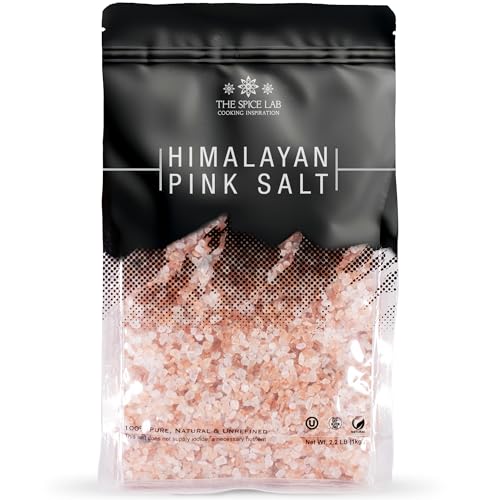
This coarse option is the smallest package here, useful when you want crystals for a mill without committing to 5 pounds. The Spice Lab says the salt is natural and mined in the Himalayan Mountains, and suggests using it in salt mills, grinders, and as a cooking or finishing salt. Its 2.2-pound amount is easier to store than the larger coarse jar. The coarse grain is less suited to recipes that call for fine salt to be measured and stirred in directly.
Bottom line: Pick this for a smaller supply of coarse crystals for a grinder or finishing.
Himalayan Chef Coarse Grain, 5 lb

This is the larger coarse grain choice, with 5 pounds in a plastic jar for cooks who refill grinders often or use coarse salt in cooking. Himalayan Chef says its salt comes from the Himalayan Mountains and is unrefined; the maker also suggests it for bath use. Coarse crystals work well when the recipe or mill can handle larger grains. The full-size jar is less convenient if storage space is limited or you only need a small amount for occasional grinding.
Bottom line: Choose this if you want a bulk jar of coarse crystals for repeated grinder refills.
Soeos Fine Grain, 2.4 lb

This fine grain option offers a smaller package than the 5-pound jar, while retaining the direct-use format that suits seasoning, cooking, and preservation recipes. Soeos says its pink salt is mined in Pakistan and has no additives, dyes, or preservatives. Fine grains are convenient when a recipe calls for salt to dissolve or distribute quickly. Its 2.4-pound amount is less suited to households that want a large pantry supply and would rather replenish less often.
Bottom line: Pick this if you want fine pink salt in a more compact package.
How to Choose Pink Himalayan Salt
Choose fine grain for direct seasoning and coarse grain when you want to grind crystals at the table or during cooking. Grain size affects how quickly salt dissolves and how much fits in a spoon, so avoid swapping volume measurements one-for-one in baking. Salt crystals also vary in shape and density, making weight the more consistent way to compare quantities. For a household that uses salt daily, a 5-pound jar is a larger pantry commitment; for occasional use, a package around 2 to 2.4 pounds takes less storage space. The pink color comes from naturally occurring mineral content, but color alone does not establish a particular flavor or mineral benefit.
Fine and Coarse Salt Compared
Fine salt is ready to blend into recipes, while coarse grains are suited to mills or recipes that call for larger crystals. A grinder can only handle crystals that fit its mechanism, so check mill guidance if the opening is narrow or the grind setting is fixed. Coarse salt can also be crushed with a mortar and pestle when a finer texture is needed. Use the table to match the format to the intended task, then adjust recipe measurements rather than assuming spoonfuls contain equal amounts.
| Need | Grain to choose | Reason |
|---|---|---|
| Seasoning or baking | Fine | Blends and dissolves readily |
| Mill refill | Coarse | Made for grinding |
| Finishing texture | Coarse | Leaves larger crystals |
Package Size and Pantry Storage
Package size determines how much room the salt occupies and how long it may remain open, not how salty each serving is. Keep salt dry in a tightly closed container because moisture can cause clumping; store it away from steam and splashes near the stove. A broad-mouth jar is easier to scoop from, while a grinder refill can be poured into a mill with less handling. Do not keep salt in a damp cellar or beside a boiling pot. If crystals clump, break them apart with a clean, dry utensil rather than adding water.
Using Salt Safely in Recipes
Salt is concentrated sodium chloride, so small changes in seasoning can meaningfully change a dish’s sodium content. Pink color does not make salt sodium-free, and it should not be treated as a source of minerals for health. When managing sodium intake, use the nutrition label and measure portions rather than relying on crystal color or grain size. Coarse salt takes up more air space in a spoon than fine salt, so weighing it or following a recipe written for the same grain size helps prevent over-seasoning. Keep salt dry and use clean utensils to protect its texture and pantry quality.
Frequently Asked Questions
Does pink Himalayan salt have less sodium than table salt?
Pink Himalayan salt is still primarily sodium chloride, so its pink color does not mean it is sodium-free. For sodium tracking, use the package nutrition information and measure the amount used.
Can fine and coarse salt be swapped in baking?
Fine and coarse crystals can occupy different amounts of space in the same measuring spoon. Use the grain size named in the recipe or weigh the salt to reduce measurement differences.
How should I store pink Himalayan salt?
Store pink Himalayan salt in a tightly closed, dry container away from steam and splashes. Moisture can make salt clump, so use a clean, dry spoon when scooping.
Can coarse pink salt go in any grinder?
Coarse salt works in a grinder only if its crystals fit the mill’s mechanism. Check the mill’s guidance before filling it, especially when the opening or grinding mechanism is small.
Does darker pink salt mean it is healthier?
A darker color reflects variation in naturally occurring mineral content, but it does not establish a health benefit. Treat pink salt as a seasoning and consider its sodium content when measuring portions.