
Shoe Covers for Snow and Ice: 4 Options Compared

For everyday walks on snowy or icy paths, Yaktrax Walk Medium stands out for its coil-style traction across the underfoot; choose studded cleats for a more aggressive grip pattern or waterproof overshoes when keeping shoes dry is the priority. These slip-on covers fit over footwear, but the right choice depends on your shoe size and whether you need traction, water protection, or both.
We earn a commission if you buy through links on this page. As an Amazon Associate I earn from qualifying purchases. Products are compared on manufacturer specifications, not hands-on testing.
- Best overall: Yaktrax Walk Medium – Coil technology provides underfoot traction in multiple walking directions.
- Best for studded grip: Sfee 10-Spike Ice Cleats, Medium – Ten stainless steel spikes and silicone construction provide a studded design for shoes and boots.
| Product | Best for | Traction design | Fit | Material | Shop |
|---|---|---|---|---|---|
| Yaktrax Walk Medium | Everyday walking | Coils | Medium | Thermoplastic rubber | Check Price on Amazon |
| Sfee 10-Spike Ice Cleats, Medium | Studded traction | 10 stainless steel spikes | US men’s 5–8; women’s 7–10 | Silicone and flexible material | Check Price on Amazon |
| Aliagle 8-Stud Ice Cleats, Large | Boot fit range | 8 manganese steel studs | US men’s 7–10.5; women’s 8–11.5 | TPE | Check Price on Amazon |
| GOWENIC Sand-Textured Rubber Covers | Simple slip-on grip | Coarse sand texture | Universal-fit claim; size not given | Rubber blend | Check Price on Amazon |
Shoe Covers for Snow and Ice
Compare each option by its traction pattern, footwear fit and whether it prioritizes grip or water coverage.
Yaktrax Walk Medium

Coil-style traction sets this option apart from the studded designs and sand-textured rubber cover. The medium pair uses a thermoplastic rubber sling, with a heel tab intended to make installation and removal easier. Yaktrax says its coil pattern provides 360-degree stability when moving forward, backward or laterally on snow-packed surfaces. Choose it for regular walking when you want traction distributed underfoot rather than separate spikes. The fit is limited to medium, so buyers with other footwear sizes should compare a different option and match the cleat size to the shoe or boot.
Bottom line: Pick this for medium-size footwear and coil-style traction on winter walks.
Sfee 10-Spike Ice Cleats, Medium
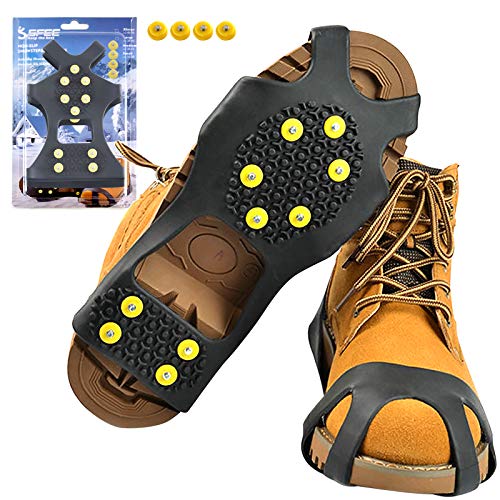
Ten stainless steel spikes distinguish these cleats from the coil pattern of Yaktrax Walk Medium and the eight-stud layout of Aliagle 8-Stud Ice Cleats, Large. The medium size is described for US men’s shoe sizes 5–8 and women’s 7–10; the product line also has S, L and XL sizes. Sfee says its flexible material maintains performance down to −40°C. The studded design suits buyers who want discrete points of contact on icy routes, but spike-style cleats are not the same as waterproof shoe covers. Match the size to the footwear you plan to wear them over.
Bottom line: Choose these for medium footwear and a 10-spike traction pattern.
Aliagle 8-Stud Ice Cleats, Large
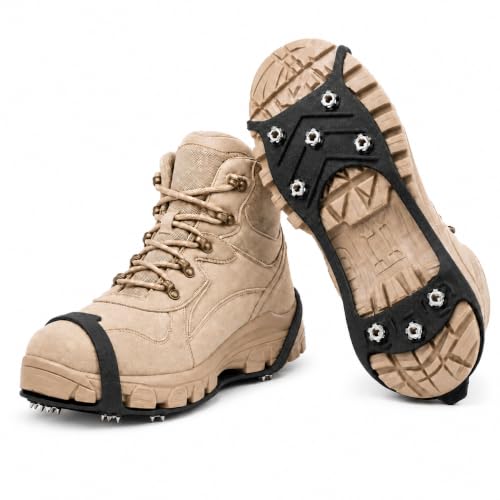
Eight metal studs, arranged as five at the forefoot and three at the heel, make this cleat layout different from the 10-spike design of Sfee 10-Spike Ice Cleats, Medium. The large size is given for US men’s 7–10.5 and women’s 8–11.5 footwear; the product line covers additional sizes from S through XL. Aliagle says its TPE construction was tested on several footwear styles, including work, hiking and insulated boots. This option is aimed at larger footwear, but the size is not a universal fit: compare your boot size and bulk with the range.
Bottom line: Pick this for large footwear within its size range and an eight-stud layout.
GOWENIC Sand-Textured Rubber Covers

A coarse sand texture blended into rubber separates these covers from steel-studded and coil-style cleats. GOWENIC says the stretch-on design fits over boots, casual shoes and dress shoes, making it a flexible option when footwear styles vary. The product is a single pair of covers rather than a named cleat size, so the universal-fit claim may not resolve fit for unusually wide or bulky boots. Consider it when you prefer a continuous textured sole instead of protruding metal points, and check that it stretches securely over the shoes you intend to wear.
Bottom line: Choose these for a stretch-on rubber cover with a textured sole.
How to choose snow and ice shoe covers
Start by deciding whether the main problem is slick footing, wet shoes, or both. Traction cleats use coils or metal studs underfoot; waterproof overshoes cover more of the shoe and prioritize blocking water. For frequent walking on packed snow, a coil pattern spreads contact beneath the foot, while studded designs place points at the forefoot and heel. If your route is mostly slush and puddles, coverage and a secure opening matter more than spike count. Match the size to the actual shoe or boot you will wear, especially if it is insulated or wide. A useful rule: if the fit range excludes your shoe size, choose a different size or design rather than relying on stretch alone. Cleats can feel awkward on hard indoor floors, so remove them before walking on smooth tile.
Traction types for snow and ice
Coil, stud and textured rubber soles provide different contact patterns, not interchangeable levels of grip. Coils form a linked underfoot surface; steel studs create concentrated contact points, while coarse-textured rubber avoids separate metal points. The product choices also differ in stud count and placement, so compare the layout as well as the total. Waterproof overshoes are a separate category: a nonslip sole may help, but a water barrier does not make an overshoe equivalent to a cleat. Use this guide to narrow the type before checking fit.
| Need | Type to consider | Trade-off |
|---|---|---|
| Walking on packed snow | Coil traction | Not a waterproof shoe covering |
| Studded contact points | Steel-stud cleats | Metal points can be uncomfortable indoors |
| Wet snow or slush coverage | Waterproof overshoes | Not a substitute for dedicated cleats on ice |
Check cleat sizing against winter footwear
Choose sizing based on the shoe or boot worn underneath, not just your usual everyday shoe. Insulated boots and wide work footwear take up more space, so a marginal fit can make a stretchy cover harder to install or less secure. Use the manufacturer’s size range where one is given, and compare the category’s actual footwear—not a different pair—with that range. For overlapping size ranges, the smaller size is generally the closer choice for standard footwear, while the larger size may better accommodate bulky boots; the Aliagle sizing guidance makes that distinction explicitly. Before heading outside, pull the cover fully into place and check that the traction elements sit under the sole rather than twisted toward the sides.
Use traction cleats safely
Traction cleats are outdoor aids, not a guarantee against falls; ice can remain slick even with spikes or coils. Walk with shorter steps and avoid sudden turns on slopes, since a grippy sole cannot eliminate the risk of losing balance. Remove cleats before smooth indoor flooring, where coils or metal studs can reduce secure contact and may damage floors. Check the attachment and sole before each outing: loose or shifted covers can leave part of the shoe without the intended traction. Keep waterproof overshoes and traction cleats distinct in your decision; if you need both dry feet and added grip, verify that the chosen combination fits together securely.
Frequently Asked Questions
Are coil cleats or studded cleats better for icy walks?
Coil cleats use a linked underfoot pattern, while studded cleats concentrate contact at metal points. Choose based on the route and footwear fit; neither design removes the risk of slipping.
Can I wear traction cleats inside my home?
Remove cleats before walking on smooth indoor floors. Metal studs and coils are designed for outdoor surfaces and can feel unstable or damage flooring indoors.
How should ice cleats fit over winter boots?
The cleat should match the size range for the boot you will actually wear, including its width and insulation bulk. A tight or twisted fit can keep the traction pattern from sitting correctly under the sole.
Do waterproof overshoes provide grip on black ice?
A nonslip sole does not make an overshoe equivalent to a dedicated ice cleat. For routes with ice, choose a traction design with coils or studs and ensure it fits your footwear.
When should I replace worn traction covers?
Inspect the attachment, sole and traction elements before winter outings. Replace a cover if its rubber is split or its coils or studs are loose, missing or no longer held securely.