
Indian Head Gasket Sealer: 5 Options Compared

Permatex Indian Head Shellac, 2 oz. x 12 is the Indian Head gasket sealer to choose when you need a hard-setting shellac compound for gasket materials, rather than a pour-in cooling-system repair. Choose a different product if you want a liquid additive intended for coolant leaks or a formulation sold for a particular cylinder count.
Indian Head shellac is applied at a gasket joint; pour-in sealers work through the engine’s cooling system. Those are different repair approaches, not interchangeable products.
We earn a commission if you buy through links on this page. As an Amazon Associate I earn from qualifying purchases. Products are compared on manufacturer specifications, not hands-on testing.
- Best overall: Permatex Indian Head Shellac, 2 oz. x 12 – Hard-setting shellac seals common gasket materials and comes as twelve 2-ounce containers.
- Best for a one-step pour-in: K-Seal ST3501 Pour & Go, 16 oz. – The 16-fluid-ounce formula is made for coolant-system leaks up to 0.64 mm.
- Best for 4-cylinder engines: Steel Seal Head Gasket Fix, 4-Cylinder – This pour-in repair sealer is specifically for 4-cylinder engines.
| Product | Best for | Type | Package size | Engine fit | Shop |
|---|---|---|---|---|---|
| Permatex Indian Head Shellac, 2 oz. x 12 | Gasket dressing | Hard-setting shellac | 12 × 2 oz. | Common gasket materials | Check Price on Amazon |
| K-Seal ST3501 Pour & Go, 16 oz. | Small coolant leaks | Pour-in coolant sealer | 16 fl oz. | Cars and heavy-duty machinery | Check Price on Amazon |
| BlueDevil Head Gasket Sealer, 32 oz. | Gas or diesel | Pour-in engine sealer | 32 oz. | Gasoline and diesel | Check Price on Amazon |
| Steel Seal Head Gasket Fix, 4-Cylinder | 4-cylinder engines | Pour-in head gasket fix | — | 4-cylinder engines | Check Price on Amazon |
| Steel Seal Head Gasket Fix, 8-Cylinder | 8-cylinder engines | Pour-in head gasket fix | — | 8-cylinder engines | Check Price on Amazon |
Indian Head gasket sealer and alternatives
Compare the shellac compound with pour-in sealers by application, package size, and stated engine fit.
Permatex Indian Head Shellac, 2 oz. x 12

Unlike the pour-in products below, this is a hard-setting shellac compound for sealing common gasket materials. The package contains twelve 2-ounce containers, useful when you need multiple applications or want smaller containers on hand. Permatex gives a temperature range of -65°F to 350°F and says the compound resists diesel fuels and most auto shop fluids. It is the closest match for someone seeking Indian Head gasket sealer for a gasket joint. It is not the same kind of product as a coolant additive intended to address a leak in an assembled engine.
Bottom line: Choose this for shellac gasket dressing, not a pour-in cooling-system repair.
K-Seal ST3501 Pour & Go, 16 oz.

K-Seal ST3501 Pour & Go, 16 oz. is a pour-in coolant-system sealer, not gasket shellac, and its leak-size limit makes it distinct from the other alternatives. K-Seal says its formula can seal leaks up to 0.64 mm and works with all types of coolant; it names blown head gaskets, cracked heads, and porous engine blocks among its uses. The 16-fluid-ounce container suits buyers seeking a one-step coolant additive. Its purpose is not general gasket dressing, so choose a shellac compound when sealing a gasket during assembly rather than treating a coolant leak.
Bottom line: Choose this for a pour-in coolant treatment with a leak-size limit.
BlueDevil Head Gasket Sealer, 32 oz.

BlueDevil Head Gasket Sealer, 32 oz. is the largest quantified pour-in container here at 32 ounces and is described for gasoline and diesel engines. BlueDevil says it is intended to seal leaks involving head gaskets, warped or cracked heads, heater cores, and freeze plugs, and that its formula contains no solid or particulate matter. That makes it a different choice from the hard-setting Permatex shellac, which is applied to gasket materials. Consider this only when you want an engine or cooling-system additive; it is not a gasket-joint dressing for assembly.
Bottom line: Choose this when you want a pour-in product described for gasoline and diesel engines.
Steel Seal Head Gasket Fix, 4-Cylinder
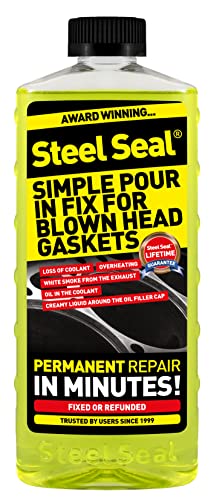
Steel Seal Head Gasket Fix, 4-Cylinder is the cylinder-specific option for 4-cylinder engines, unlike the general shellac compound and the 8-cylinder Steel Seal product. It is presented as a do-it-yourself pour-in head gasket fix, so its application differs from coating a gasket with shellac. The maker says it is for head gasket leaks and describes its formula as triple-patented. Choose it only if your engine matches the 4-cylinder fit and you are seeking a pour-in repair approach. It does not serve as a general-purpose gasket sealant for assembly.
Bottom line: Choose this only for a 4-cylinder engine needing a pour-in head gasket fix.
Steel Seal Head Gasket Fix, 8-Cylinder

Steel Seal Head Gasket Fix, 8-Cylinder is the Steel Seal alternative for 8-cylinder engines, while Steel Seal Head Gasket Fix, 4-Cylinder is the separate 4-cylinder version. The product is described as a do-it-yourself pour-in fix for a head gasket crack, rather than shellac applied at a gasket joint. Its cylinder-specific fit is the key selection point: match the product to the engine before considering this approach. Buyers seeking Indian Head compound for use with gasket material should choose the shellac instead; this product is aimed at a different repair method.
Bottom line: Choose this only when the engine is an 8-cylinder and a pour-in fix is the intended approach.
How Indian Head gasket sealer differs from pour-in sealers
Indian Head shellac is a gasket-joint compound, while pour-in head gasket sealers are cooling-system additives. A gasket dressing is applied where gasket material meets a surface; a pour-in formula circulates with coolant and is marketed for leaks in parts such as head gaskets or heater cores. That difference matters more than bottle size: a coolant additive is not a substitute for shellac during gasket assembly. Conversely, shellac does not circulate through an engine to address an assembled-system leak. Choose by repair method first, then compare temperature range, package quantity, or engine fit among products intended for that method.
How to choose a head gasket sealer
Choose by identifying whether the job is gasket assembly or a coolant leak in an assembled engine. For gasket dressing, a hard-setting compound made for gasket materials is the relevant type. For pour-in options, confirm the engine fit and product purpose; the Steel Seal options are split between 4- and 8-cylinder engines, while other products state broader compatibility. Keep the repair limit in mind: a sealer is not a replacement for diagnosing a failed or damaged engine component. If the engine is overheating or losing coolant rapidly, stop driving and address the cause before relying on an additive. Never open a hot cooling system; wait until the engine is fully cool because pressurized coolant can cause severe burns.
What to compare among pour-in head gasket sealers
Package size and stated engine fit make the pour-in options easier to distinguish, but they do not establish that every leak can be sealed. K-Seal gives a maximum leak size of 0.64 mm and says it works with all coolant types. BlueDevil names gasoline and diesel engines and identifies several leak locations, while Steel Seal separates its products by cylinder count. Use the table to narrow by fit and product form; the capacities are not proof of equivalent treatment coverage or repair duration. Confirm the engine’s cylinder count and coolant type before selecting a pour-in product.
| Need | Product type to consider | Selection check |
|---|---|---|
| Seal gasket material during assembly | Hard-setting shellac compound | Common gasket materials |
| Pour-in option, leak up to 0.64 mm | Coolant-system sealer | Check the product’s leak and coolant compatibility limits |
| Pour-in option for a 4- or 8-cylinder engine | Cylinder-specific head gasket fix | Match the cylinder count |
Common mistakes when using head gasket sealer
The most common selection mistake is treating gasket shellac and pour-in coolant sealer as the same product category. They work in different places and suit different repair steps. Another mistake is choosing a cylinder-specific formula without confirming the engine’s cylinder count; a 4-cylinder and an 8-cylinder product are not interchangeable by name alone. Buyers can also overlook an additive’s limit: K-Seal’s leak-size threshold is 0.64 mm, not a promise for larger damage. For any cooling-system work, let the engine cool completely before opening the cap, and do not keep driving an overheating vehicle while hoping a sealer will correct the underlying failure.
Frequently Asked Questions
Is Indian Head gasket sealer a pour-in additive?
No. Indian Head is a hard-setting shellac compound for sealing common gasket materials, while pour-in sealers are added to the cooling system. Choose based on whether you are dressing a gasket joint or addressing a leak in an assembled engine.
How much heat can Permatex Indian Head shellac handle?
Permatex gives the compound a temperature range of -65°F to 350°F. That range describes the shellac compound, not a guarantee that it will repair engine damage or compensate for an incorrectly assembled gasket.
Can a pour-in sealer fix every head gasket leak?
No sealer should be assumed to repair every failure. K-Seal gives a maximum leak size of 0.64 mm, so damage beyond that stated limit is outside its described capability; overheating or rapid coolant loss calls for stopping the vehicle and diagnosing the cause.
Should I open a radiator while the engine is hot?
No. Wait until the engine is fully cool before opening a radiator or pressurized coolant reservoir, since hot coolant and steam can escape and cause serious burns. A cooling system can remain pressurized after driving.
How do I choose between the Steel Seal versions?
Match the product to the engine’s cylinder count: one version is for 4-cylinder engines and the other is for 8-cylinder engines. These are pour-in head gasket fixes, not shellac compounds for dressing a gasket during assembly.