
Best Marker for Plastic: 4 Paint Pens Compared

12-Color Oil-Based Paint Pens is the best marker for plastic for most craft projects because its 12-color set offers more options than the white-only pairs. These oil-based paint pens are markers with opaque paint-style ink, suited to decorating rigid plastic items.
Choose a white pair instead if you need high-contrast marks on dark plastic; no marker here is identified as a specialty pen for flexible or low-adhesion plastics.
We earn a commission if you buy through links on this page. As an Amazon Associate I earn from qualifying purchases. Products are compared on manufacturer specifications, not hands-on testing.
- Best overall: 12-Color Oil-Based Paint Pens – A 12-color set gives more choices for plastic crafts, and the maker specifies a 2 mm line thickness.
- Best for white marks: Artsunlvy White Paint Pens, 2-Pack – The two-pack has white ink and a valve-action design for opaque marks on multiple surfaces.
- Best for color variety: 12-Color Quick-Dry Paint Marker Set – This 12-color oil-based set is described for plastic alongside glass, fabric, ceramic, wood, and metal.
| Product | Best for | Color options | Pack count | Line or tip | Shop |
|---|---|---|---|---|---|
| 12-Color Oil-Based Paint Pens | Multicolor crafts | 12 colors | 12 pens | 2 mm line | Check Price on Amazon |
| Artsunlvy White Paint Pens, 2-Pack | White markings | White | 2 pens | Medium point | Check Price on Amazon |
| 12-Color Quick-Dry Paint Marker Set | Mixed craft surfaces | 12 colors | 12 markers | — | Check Price on Amazon |
| TOOMGGA White Oil-Based Paint Pens, 2-Pack | Fast-drying white marks | White | 2 pens | Medium tip | Check Price on Amazon |
Paint Markers for Plastic
Compare color range, pack size, and the kind of marking each paint pen is meant to handle.
12-Color Oil-Based Paint Pens
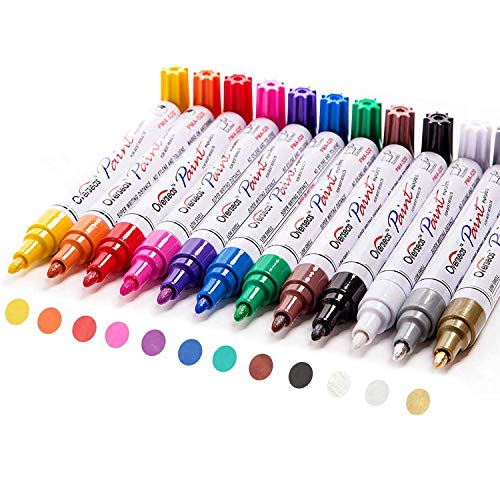
12-Color Oil-Based Paint Pens is the broadest color choice here, with 12 oil-based paint pens and a 2 mm line thickness. The maker says the ink is opaque, quick-drying, and intended for plastic as well as wood, metal, canvas, and other craft surfaces. The 5 mm tip diameter is also specified, which helps distinguish the nib size from the narrower stated line. This set suits projects where several colors matter more than having a dedicated white pair. As with any paint marker, adhesion can be less reliable on some plastics, so test a hidden spot first.
Bottom line: Choose it for multicolor plastic crafts that call for a 2 mm line.
Artsunlvy White Paint Pens, 2-Pack

Artsunlvy White Paint Pens, 2-Pack focuses on white marks rather than a palette, making it a straightforward choice for labels, outlines, or details that need contrast. Its valve-action marker format is specified for surfaces including plastic, rubber, glass, and metal; the maker says its opaque ink dries fast and resists water and fading. The medium point suits general marking rather than work that requires a fine line dimension. Choose this pair when white is the color you need. It is less suitable for a project that depends on several colors or a precisely measured line width.
Bottom line: Pick it when you need white marks and do not need multiple colors.
12-Color Quick-Dry Paint Marker Set

12-Color Quick-Dry Paint Marker Set pairs 12 colors with a broad craft-surface purpose, including plastic, glass, fabric, ceramic, wood, and metal. The maker says the oil-based paint is waterproof after drying and can be modified with alcohol, so the set may appeal to people working across different materials. Choose it for color variety across mixed craft materials; if line dimensions matter, compare the 2 mm line on 12-Color Oil-Based Paint Pens instead.
Bottom line: Choose it for a varied craft palette across several material types.
TOOMGGA White Oil-Based Paint Pens, 2-Pack
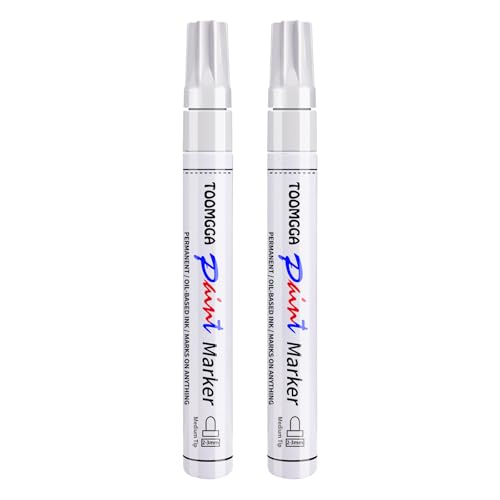
TOOMGGA White Oil-Based Paint Pens, 2-Pack is another white-only pair, but its maker gives a drying-time claim: the ink dries within a minute. It also specifies 5 ml of ink per marker and describes a glossy, opaque mark for light and dark surfaces, including plastic. Those details make it useful when quick-drying white marks are the priority. The medium tip does not come with a line-width measurement, so it is not the clearest fit for precise stroke sizing. It is also a two-color-free option; choose a multicolor set if the design needs more than white.
Bottom line: Pick it for white marks when the one-minute drying time matters.
How to Choose a Paint Marker for Plastic
Choose by color and line needs first, then consider the plastic surface. A multicolor set is useful for illustrations or color-coded details, while white pairs suit high-contrast marks on dark material. Among these choices, only 12-Color Oil-Based Paint Pens gives a line thickness of 2 mm; the white pairs specify a medium point without a line measurement. Paint-style marker ink sits on the surface rather than coloring through plastic, so texture, flexibility, and surface cleanliness can affect the result. For small lettering or fine outlines, look for a line width rather than relying on a broad point label. Test the chosen pen on a hidden area before completing the visible design.
Plastic Type and Marker Adhesion
Plastic type matters because not every plastic accepts paint equally well. Polyethylene (PE) and polypropylene (PP) have low surface energy, which makes paint adhesion more difficult than on many rigid plastics such as ABS or acrylic. A simple decision rule is to treat PE or PP as a higher-risk surface: test first, and choose a marker explicitly intended for that plastic if the mark must last. Smooth surfaces may also give paint less texture to grip than lightly textured ones. Clean off dirt and oils with mild soap and water, rinse, and let the surface dry completely before marking; do not assume that a waterproof-after-drying claim guarantees adhesion to every plastic.
Preparing Plastic Before Marking
Start with a clean, dry surface and a small test mark in an inconspicuous place. Oils, dust, or mold-release residue can interfere with paint, and even a quick-drying formula needs to dry before handling. Avoid aggressive solvents unless the plastic manufacturer says they are compatible, because some plastics can haze, soften, or crack when exposed to them. Let the mark dry fully before stacking or rubbing the item, and use ventilation while applying oil-based markers. These pens are not identified as food-safe, so do not mark a surface that will directly contact food. Flexible plastic can bend and crack a surface coating; for bendable items, test after flexing too.
Paint Marker Types at a Glance
Use the marker format that matches the job: a color set supports designs with multiple hues, while a white pair is aimed at single-color marking. A medium-point label describes a general marker size, but a measured line width is more useful when the stroke must fit a small space. The chart compares the available choices by their documented format; surface testing remains important because plastic composition affects adhesion.
| Need | Choice | Deciding detail |
|---|---|---|
| Multiple colors and measured line | 12-Color Oil-Based Paint Pens | 12 colors; 2 mm line |
| White, valve-action format | Artsunlvy White Paint Pens, 2-Pack | Two white pens; medium point |
| Multiple colors across craft materials | 12-Color Quick-Dry Paint Marker Set | 12 colors; no line width given |
| White with a drying-time claim | TOOMGGA White Oil-Based Paint Pens, 2-Pack | Two pens; maker says within a minute |
Frequently Asked Questions
Will paint markers stay on every type of plastic?
No; paint adhesion varies with plastic composition and surface condition. Polyethylene and polypropylene are particularly challenging low-surface-energy plastics, so test a hidden area before making a full design.
How should plastic be cleaned before using a marker?
Wash away dirt and oils with mild soap and water, then rinse and dry the plastic fully. Avoid unverified solvents because some plastics can haze, soften, or crack.
Can paint markers be used on food containers?
Do not use these markers on areas that directly contact food, because food-contact suitability is not established here. Restrict marks to exterior areas that will not touch food.
How long should paint marker ink dry on plastic?
Drying time varies by formula, ink thickness, and conditions. One pen maker claims drying within a minute, but allow the mark to dry before handling and test first on the intended plastic.
Can flexible plastic crack after it is marked?
A surface paint film can be stressed when flexible plastic bends, so test the mark after flexing the material. For frequently bent items, use a marking product specifically intended for flexible plastic.