
Walking Shoes for a Broken Toe: 3 Options Compared

For most people, the BraceAbility closed-toe medical walking shoe is the clearest fit because it has a roomy square toe box and a closed design for dressings. Choose a different option if its size range does not fit; post-op shoes are stiff-soled recovery footwear, not substitutes for a clinician’s fracture-care instructions.
We earn a commission if you buy through links on this page. As an Amazon Associate I earn from qualifying purchases. Products are compared on manufacturer specifications, not hands-on testing.
- Best overall: BraceAbility Closed-Toe Medical Walking Shoe – Its closed square-toe box is designed to leave room for swelling, socks or casts.
- Best for a large size: ProCare Squared Toe Post-Op Shoe – Its range covers men’s sizes 9.5–12 and women’s sizes 10.5–13.
- Best for adjustable fit: Vive Adjustable Post-Op Shoe – Two adjustable straps can accommodate casts or bandages, and it fits either foot.
| Product | Best for | Size range | Length | Weight | Shop |
|---|---|---|---|---|---|
| BraceAbility Closed-Toe Medical Walking Shoe | Room for dressings | Women’s 7–9.5; men’s 6–8.5 | 10.75 in | 0.53 lb | Check Price on Amazon |
| ProCare Squared Toe Post-Op Shoe | Larger size range | Men’s 9.5–12; women’s 10.5–13 | 10.71 in | — | Check Price on Amazon |
| Vive Adjustable Post-Op Shoe | Adjustable bandage fit | Men’s 7.5–9.5; women’s 10–11.5 | 10.83 in | 0.64 lb | Check Price on Amazon |
Walking Shoes for a Broken Toe
Compare the size range and toe-area design, then follow your clinician’s guidance on whether and how to walk during recovery.
BraceAbility Closed-Toe Medical Walking Shoe

Unlike the other options, this shoe specifically describes a closed toe box with space for swelling, socks or casts. The unisex design fits either foot, and the medium size covers women’s 7–9.5 or men’s 6–8.5. Its dimensions are 10.75 inches long, 4.25 inches wide and 3.5 inches high. That makes it a practical candidate when keeping a dressing covered is important. Its medium size range is narrower than the large ProCare range, so check the chart against your shoe size before choosing.
Bottom line: Choose this if a closed toe and room for a dressing matter most.
ProCare Squared Toe Post-Op Shoe
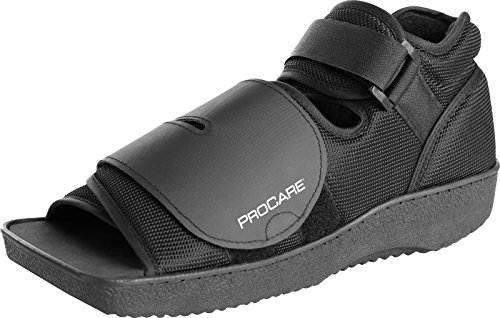
The ProCare option is the one here with a large-size range: men’s 9.5–12 or women’s 10.5–13. Its squared-toe post-op shape is suited to recovery footwear, and the shoe is made from synthetic fabric. The length is 10.71 inches, with a height of 0.59 inch and width of 2.99 inches. This is a useful match when the other shoes’ medium or small ranges are too small. The features do not describe adjustability, so buyers needing to fit over bulky bandages should confirm that fit before ordering.
Bottom line: Choose this if its large size range matches your shoe size.
Vive Adjustable Post-Op Shoe
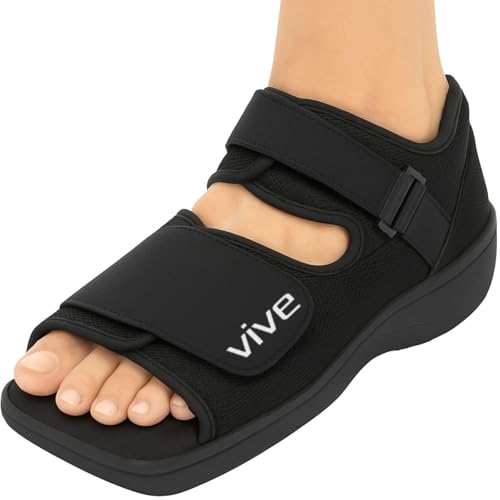
Two adjustable straps distinguish this shoe; the product says they can accommodate casts or bandages. Its square toe design fits either the left or right foot, and its sizing range is men’s 7.5–9.5 or women’s 10–11.5. The length is 10.83 inches, width 4.41 inches and height 3.54 inches. It suits someone who needs strap adjustment around a dressing, but its size range does not extend as high as ProCare’s. Check the sizing chart and leave space at the toes rather than choosing a snug fit.
Bottom line: Choose this when strap adjustment around a dressing is the priority.
How to Choose a Walking Shoe for a Broken Toe
Choose a shoe that protects the toes without squeezing them, and use the fit your clinician recommends for the specific fracture. Post-op shoes commonly have a stiff, relatively flat sole and a squared or open toe area; the style and closure determine how well a dressing or swelling can fit. As a general shoe-fit check, leave about 3/8 to 1/2 inch beyond the longest toe, but do not use that measurement to override medical advice for an injured toe. The models here have different stated size ranges, so compare the range with your usual US shoe size and account for any bandage. A shoe that pinches, slips or shifts your foot is a poor fit; ask the treating clinician about alternatives.
Fit and Toe Room During Recovery
Toe room matters because swelling and dressings can change how a shoe fits from one day to the next. Check fit while wearing the sock or dressing you expect to use, and make sure the injured toe does not press against the front or side. A post-op shoe may have straps or a fixed fit; adjustable straps can help accommodate bandages, but they should not be tightened enough to cause pressure or numbness. Avoid choosing solely by length: width, toe-box shape and whether the shoe stays securely on the foot also matter. If swelling increases, pain worsens, or the fit becomes tight, contact the clinician managing the fracture instead of simply forcing the foot into the shoe.
Walking Safely With a Broken Toe
Walking limits depend on which toe is broken and the fracture’s severity, so use the weight-bearing plan given by the treating clinician. A broken big toe can affect balance and push-off more than a smaller toe, and some fractures need more than a stiff-soled shoe. Do not assume that a post-op shoe makes unrestricted walking safe. Keep walking distances within the clinician’s advice, and use any prescribed crutches or other support. Seek prompt medical advice for worsening pain, new numbness, color change, or a dressing that becomes wet or tight. A fracture that is open, visibly deformed, or associated with severe pain needs urgent assessment rather than shoe selection alone.
Common Post-Op Shoe Fit Mistakes
The most common fit mistake is buying by the usual shoe size without checking the product’s size range and the extra space needed for a dressing. Another is tightening straps until the shoe feels locked in place; the shoe should stay secure without creating pressure on the foot. Wear the same type of sock or bandage used during recovery when checking fit, and walk only as permitted by the clinician. Post-op shoes may also raise one foot compared with the other, which can alter balance; move carefully and ask the clinician whether a height difference is a concern for your recovery. Replace a wet or damaged dressing as directed by the care team rather than relying on shoe coverage to keep it clean.
Frequently Asked Questions
How long does a broken toe usually take to heal?
Many broken toes take about 4 to 6 weeks to heal, although the timeline depends on the toe and fracture. Follow-up is important if pain or swelling is not improving as expected.
Can I walk on a broken toe in a post-op shoe?
Only walk as much as your clinician allows; a post-op shoe does not make every fracture safe for weight-bearing. Big-toe fractures and more severe injuries may need different support or restrictions.
Should a walking shoe for a broken toe feel tight?
No, the shoe should stay secure without pressing on the injured toe. Check the fit with any dressing in place, and seek advice if the toe becomes numb, more painful or changes color.
Can I use a post-op shoe on either foot?
Some post-op shoes are designed for either foot, including the BraceAbility and Vive options here. Confirm the specific model’s fit guidance, since not every recovery shoe is necessarily interchangeable.
When should a broken toe get medical attention?
Get prompt assessment for an open wound, obvious deformity, severe pain, numbness or a toe that turns pale or blue. People with diabetes or circulation problems should contact a clinician promptly after a toe injury.