
Cover Windows From Sun: 5 Shade Options Compared

For broad, cut-to-fit blackout coverage, RUseeN Portable Blackout Shade 118 x 57 in is the strongest starting point because its 118-by-57-inch fabric can be trimmed for smaller windows. Choose a smaller panel such as Portable Blackout Cover 40 x 57 in for a compact opening, or Dwersty Reflective Static-Cling Film 17.5 x 78.7 in if you want reflective film rather than a removable blackout fabric cover.
Blackout panels block incoming light when fitted over the window, while reflective film reduces glare and offers daytime privacy only under the right lighting conditions.
We earn a commission if you buy through links on this page. As an Amazon Associate I earn from qualifying purchases. Products are compared on manufacturer specifications, not hands-on testing.
- Best overall: RUseeN Portable Blackout Shade 118 x 57 in – Its 118-by-57-inch cuttable fabric offers the broadest coverage among the blackout panels.
- Best for large windows: BKSAI Magnetic Blackout Cover 79 x 57 in – The 79-by-57-inch magnetic panel is wider than the smaller fabric options.
- Best for daytime privacy: Dwersty Reflective Static-Cling Film 17.5 x 78.7 in – The reflective static-cling film creates a daytime mirror effect when outdoor light is stronger.
| Product | Best for | Size | Attachment | Material or finish | Shop |
|---|---|---|---|---|---|
| RUseeN Portable Blackout Shade 118 x 57 in | Wide window coverage | 118 x 57 in | Cut-to-fit fabric | Black fabric, silver-gray coating | Check Price on Amazon |
| BKSAI Magnetic Blackout Cover 79 x 57 in | Magnetic mounting | 79 x 57 in | Adhesive-backed magnets | 420D Oxford polyester | Check Price on Amazon |
| BKSAI Magnetic Blackout Cover 39 x 57 in | Narrower openings | 39 x 57 in | Adhesive-backed magnets | 420D Oxford fabric | Check Price on Amazon |
| Portable Blackout Cover 40 x 57 in | Compact windows | 40 x 57 in | Hook-and-loop plus adhesive stickers | Black fabric, silver coating | Check Price on Amazon |
| Dwersty Reflective Static-Cling Film 17.5 x 78.7 in | Daytime privacy | 17.5 x 78.7 in | Static cling | Black-silver reflective film | Check Price on Amazon |
Window Covers for Sun
Compare the coverage dimensions and mounting approach before choosing a sun-blocking window cover.
RUseeN Portable Blackout Shade 118 x 57 in

The 118-by-57-inch cuttable panel gives this option the broadest coverage among the fabric blackout choices here. RUseeN says its coated fabric blocks sunlight and UV rays and reduces heat; the panel is intended for temporary indoor use, including bedrooms, nurseries, RVs, and travel. Trim it to match a smaller window, but measure first because cutting cannot be undone and the finished edge may not cover the frame. This is a fabric shade rather than a rigid blind, so it suits buyers who prioritize broad, portable coverage over a fixed window treatment.
Bottom line: Choose this for a wide opening or when you want extra fabric to trim.
BKSAI Magnetic Blackout Cover 79 x 57 in

The magnetic attachment system distinguishes this panel from the hook-and-loop and static-cling options. BKSAI says the 420D Oxford polyester blocks light completely and that its adhesive-backed magnets allow tool-free setup; the iron pieces align with magnets attached to the window frame. Its 79-by-57-inch dimensions make it a larger panel than the 39-by-57-inch version. Check that the window opening and frame can accommodate the panel before attaching the adhesive-backed parts; this is a temporary fabric cover, not a permanent shade or film.
Bottom line: Pick this when magnetic attachment and a larger panel suit the window.
BKSAI Magnetic Blackout Cover 39 x 57 in
The 39-by-57-inch size suits a narrower opening than the larger BKSAI panel, while retaining its magnetic mounting approach. The fabric is 420D Oxford, and BKSAI says the blackout cover blocks light and uses adhesive-backed magnets to attach to the window frame. Beige coloring makes this option visually distinct from the black panels. Measure the glass and frame before choosing: a panel that is too narrow can leave uncovered edges, while this compact size offers less spare fabric to adapt to a wider window.
Bottom line: Choose this for a narrower window where beige fabric is preferred.
Portable Blackout Cover 40 x 57 in

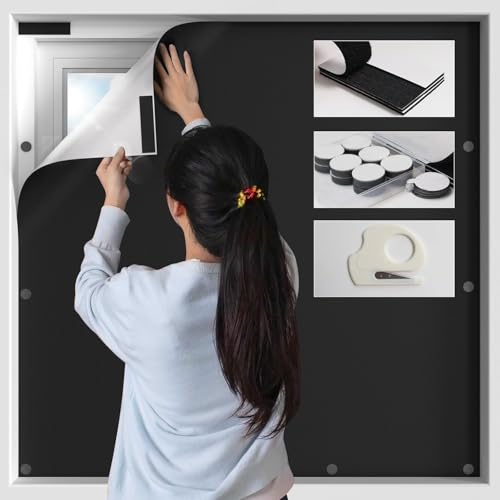
The 40-by-57-inch panel is a compact blackout option with two attachment components: six pairs of hook-and-loop strips and 12 nano-adhesive stickers. The maker says its silver-coated back blocks sunlight and reduces UV entry, and describes the panel as insulating. Its manageable dimensions suit smaller windows better than the 79- or 118-inch-wide panels. The material is described as cuttable, so measure the opening before trimming; unlike a roll of film, this cover is an opaque fabric panel intended to darken the room.
Bottom line: Choose this for a compact opening and a hook-and-loop installation.
Dwersty Reflective Static-Cling Film 17.5 x 78.7 in

Unlike the fabric panels, this product is a narrow strip of reflective window film rather than a full blackout cover. The 17.5-by-78.7-inch sheet has a static-cling fit and backing grids marked at 1-inch intervals for cutting. The maker says it blocks heat and glare and provides daytime privacy when outdoor light is brighter than indoor light. That privacy effect reverses at night or when the interior is brighter, so this film is not a substitute for a nighttime privacy covering or a darkening shade.
Bottom line: Pick this for reflective daytime coverage, with a separate nighttime privacy plan.
How to Choose a Sun-Blocking Window Cover
Choose by deciding whether the priority is blocking light, reducing glare, or gaining daytime privacy. Opaque blackout fabric is the better match for darkening a room; reflective film changes the light and view through glass but does not provide the same room-darkening coverage. Measure the visible glass and the frame area you want covered before selecting a panel. A cover must extend far enough to avoid exposed edges, and a cuttable panel should be measured twice before trimming. For film, plan the sheet layout against the glass dimensions; a 17.5-inch-wide roll may require multiple strips for a broad pane. For nighttime privacy, reflective film alone is insufficient because its mirror effect depends on which side is brighter.
Blackout Fabric Compared With Reflective Film
Blackout fabric and reflective film solve different sunlight problems. Fabric panels make an opaque barrier and are suited to room darkening; reflective film is a glass-applied option intended to reduce glare and create a daytime mirror effect. The film’s privacy effect works when outdoor light is stronger, but disappears when indoor light is stronger, such as at night. Use this decision guide to match the material to the need.
| Need | Suitable type | Important limitation |
|---|---|---|
| Darken a room | Opaque blackout fabric | Edges need close coverage |
| Daytime mirror privacy | Reflective film | Does not provide nighttime privacy |
| Temporary portable coverage | Cuttable fabric panel | Measure before trimming |
Measure Window Covers Before Trimming
Measure the glass width and height, then decide whether the cover should overlap the frame or stop at the glass edge. For an interior panel, coverage beyond the glass helps avoid bright slivers around the sides; the amount of overlap depends on the mounting surface and available frame. For a film sheet, account for the actual width of each strip and plan seams before cutting. A 1-inch backing grid helps mark cuts, but does not replace measuring the window. Test the dimensions with removable paper or painter’s tape before cutting fabric, since excess material can be removed but a short panel cannot be restored.
Window Film Privacy and Sunlight Limits
Reflective window film gives privacy only when the outside is brighter than the room, so nighttime indoor lighting can reverse the effect. Draw a separate curtain or shade after dark if privacy matters. Film also differs from a blackout cover: a reflective surface can soften glare and alter incoming sunlight, while an opaque panel is the direct choice for blocking the view and darkening the room. Follow the film maker’s glass compatibility and installation guidance, especially for insulated or specialty glass, since film products can have application restrictions. Clean glass and careful alignment help avoid trapped dust and visible seams during static-cling installation.
Frequently Asked Questions
Does reflective window film provide privacy at night?
No, reflective film does not reliably provide privacy at night. The mirror effect fades when indoor light is stronger than outdoor light, so use a separate curtain or shade after dark.
How much wider should a blackout cover be?
A blackout cover should extend beyond the glass enough to avoid uncovered edges; the required overlap depends on the frame and mounting area. Measure both the glass and the usable frame before trimming.
Can a window blackout panel be cut to fit?
Cuttable fabric panels can be trimmed to smaller dimensions, but removing material is irreversible. Measure the opening twice and leave enough fabric to cover the intended edges.
Does reflective film block all sunlight?
Reflective film is not the same as an opaque blackout panel, so do not choose it when complete room darkening is the goal. Film is used for reflective coverage and may reduce glare according to its maker.
Can a magnetic blackout shade fit any window?
A magnetic panel needs enough area for the panel and a frame surface for its adhesive-backed magnets. Compare the panel dimensions with the opening and frame before attaching it.