
Best Ankle Support Football Cleats Compared by Fit

For football cleats with the clearest ankle-support feature, choose Under Armour Highlight RM Football Cleats, Size 10: its textile collar is paired with a performance synthetic upper that provides durable support. Players seeking a wide fit should consider Under Armour Spotlight Hammer Wide Cleats instead, while ARYSE XFAST Ankle Brace is an ankle brace rather than a cleat.
We earn a commission if you buy through links on this page. As an Amazon Associate I earn from qualifying purchases. Products are compared on manufacturer specifications, not hands-on testing.
- Best overall: Under Armour Highlight RM Football Cleats, Size 10 – The textile collar and synthetic upper are specified to provide fit, mobility and durable support.
- Best for wide feet: Under Armour Spotlight Hammer Wide Cleats – The cleats are built with an E width and have a molded rubber outsole.
- Best for added bracing: ARYSE XFAST Ankle Brace – This is a separate ankle brace and stabilizer intended for use in multiple field sports.
| Product | Best for | Upper or collar | Outsole or traction | Fit | Shop |
|---|---|---|---|---|---|
| Under Armour Highlight RM Football Cleats, Size 10 | Collar support | Synthetic upper; textile collar | Molded rubber cleats | Men’s size 10 | Check Price on Amazon |
| Under Armour Highlight RM Football Cleats, Size 9 | White colorway | Synthetic upper; textile collar | Molded rubber cleats | Men’s size 9 | Check Price on Amazon |
| Under Armour Spotlight Hammer Wide Cleats | Wide-foot fit | Synthetic upper | Molded rubber outsole | Men’s size 12, E width | Check Price on Amazon |
| ARYSE XFAST Ankle Brace | Separate ankle brace | Brace and stabilizer | — | X-Large; single | Check Price on Amazon |
Football Cleats for Ankle Support
Compare collar construction and fit first, then choose the traction setup for your field surface.
Under Armour Highlight RM Football Cleats, Size 10
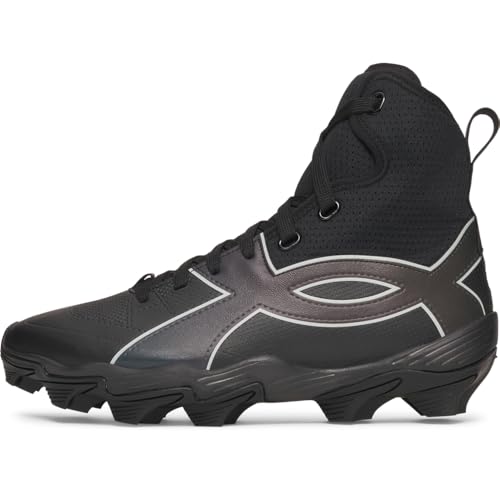
The size 10 black version is distinguished by its specific fit; its textile collar and molded rubber cleats match the white size 9 version. The performance synthetic upper and textile collar provide a lightweight fit, mobility and durable support, while the die-cut EVA sockliner adds comfort underfoot. Choose this pair if men’s size 10 and the black colorway suit your needs. A textile collar does not establish a particular ankle-protection rating, so players who require a specific level of support should account for that limitation.
Bottom line: Pick this if men’s size 10 and a textile collar fit your needs.
Under Armour Highlight RM Football Cleats, Size 9

The size 9 white version gives players a different size and colorway from the black size 10 pair, while keeping the same specified collar and traction setup. Its performance synthetic upper and textile collar provide a lightweight fit, mobility and durable support; rubber molded cleats are specified for traction on all surfaces. Choose it when men’s size 9 and white suit your needs. The collar is not a protection rating, which matters to players looking for a defined level of ankle stabilization.
Bottom line: Choose this when men’s size 9 and white are the right fit.
Under Armour Spotlight Hammer Wide Cleats

The E-width construction is the key distinction for players who need more room across the foot. These football cleats have a synthetic upper and full-length EVA midsole, while the molded rubber outsole is specified for traction on all field surfaces. If ankle support is the deciding requirement, compare collar construction separately rather than treating a wide fit as ankle stabilization.
Bottom line: Pick these for an E-width fit, not for a specified ankle-support collar.
ARYSE XFAST Ankle Brace

Unlike the other options, this is an ankle brace and stabilizer, not a football cleat. Its use spans football, soccer, lacrosse and rugby, making it relevant to players looking for support worn separately from footwear. It may suit a player considering an additional brace; check that the brace fits comfortably with the chosen cleat and does not interfere with its fit.
Bottom line: Consider this only if you want a separate brace rather than cleats.
How to Choose Football Cleats for Ankle Support
Start with collar construction, but do not treat a collar as a guarantee of injury prevention. Football cleats range from low-cut designs to higher collars; a higher upper can cover more of the ankle, while a brace adds a separate layer around it. Fit still matters: heel lift or a loose midfoot can undermine a secure feel. Try cleats with the socks you play in and lace them firmly without numbness or pressure. If you need a specific level of support after an ankle injury, ask a qualified clinician about the right brace or footwear setup rather than relying on collar height alone.
Next match the outsole to your surface. Molded rubber cleats are generally suited to firm natural grass and many artificial surfaces, while detachable studs allow length changes for softer ground. Use only the sole type permitted by your league and field operator.
How Collar Support and Ankle Braces Differ
A cleat collar is part of the shoe; an ankle brace is a separate support worn with it. The distinction matters because collar coverage, lacing and brace bulk all affect comfort and fit. A brace should sit smoothly without bunching inside the upper, and the cleat should still hold the heel securely. A collar or brace should never be considered a guarantee against sprains. Players returning after an injury should get individualized advice on whether bracing is appropriate.
The practical decision rule is simple: if support is the priority, favor a cleat whose features explicitly identify a supportive collar, then check whether the footwear accommodates any brace you use. Do not size up automatically to fit a brace; excess space can cause slipping. Confirm proper fit with the brace and game socks together.
Football Cleat Fit and Field Surface
Football cleats should feel snug around the heel and midfoot, with enough toe room to move without sliding. Width is as important as length: an E-width shoe is designed for a wider fit than standard-width footwear. A wide cleat can relieve side pressure, but it does not provide ankle stabilization by itself. When trying a pair, check for heel movement during a short jog and for pressure across the forefoot during cuts.
Surface and rules also shape the choice. Molded rubber patterns are a common all-around option, while detachable studs can be selected for field conditions where allowed. Avoid using metal or detachable studs on surfaces or in leagues that prohibit them. The table below separates the support feature from the shoe’s fit and traction role.
| Need | Feature to prioritize | What to verify |
|---|---|---|
| Ankle-area support | Supportive collar or compatible brace | Secure heel fit with brace worn |
| Wide-foot comfort | Wider width designation | No side pressure or heel slip |
| Field traction | Outsole suited to the surface | League and field rules |
Common Mistakes When Choosing Supportive Cleats
One common mistake is assuming that a higher-looking collar prevents ankle injuries. Shoe construction and personal fit differ, and a collar description does not establish a medical protection rating. Another is choosing a shoe that is too large to make room for a brace; extra length or width can let the foot shift during direction changes. Fit the cleat with the intended brace and socks instead.
Players also sometimes overlook the surface. A traction pattern suited to one field can feel wrong or violate rules on another. Check the field surface and permitted stud type before committing, and replace footwear when the outsole is damaged or the upper no longer holds the foot securely.
Frequently Asked Questions
Do high-top football cleats prevent ankle sprains?
No cleat collar can guarantee prevention of ankle sprains. Collar height and support feel vary, so players returning from an injury should ask a qualified clinician whether a brace or specific footwear setup is appropriate.
Should football cleats fit tightly around the ankle?
Football cleats should hold the heel and midfoot securely without causing numbness or pressure. Try them with game socks and any brace you plan to wear, and check for heel lift during movement.
Can I wear an ankle brace inside football cleats?
Many players wear braces with cleats, but the combination must fit without bunching or loosening the heel. Try the specific brace with the shoe and socks before using it for play.
Are molded football cleats suitable for artificial turf?
Molded rubber cleats are commonly used across multiple field surfaces, but the field operator’s rules control what is allowed. Confirm the permitted outsole and stud type before playing.
What does E width mean in football cleats?
E width indicates a wider fit than standard-width footwear. Check that the wider shoe relieves side pressure without adding heel movement, since width does not itself provide ankle support.