
DREO PTC Fan Heater Models Compared by Room and Size

For most shoppers, DREO Atom One PTC Heater is the more versatile DREO PTC fan heater because its compact 10.31-inch body adds 70-degree oscillation and a remote. Choose DREO 25-Inch Oscillating Heater for a taller 25-inch design, or DREO 10-Inch PTC Heater if a particularly small footprint matters more than oscillation.
We earn a commission if you buy through links on this page. As an Amazon Associate I earn from qualifying purchases. Products are compared on manufacturer specifications, not hands-on testing.
- Best overall: DREO Atom One PTC Heater – Its 10.31-inch height and 70-degree oscillation balance portability with spreading heat across a room.
- Best for taller coverage: DREO 25-Inch Oscillating Heater – The 25-inch heater combines 70-degree oscillation with an airflow speed of 11.5 ft/s.
- Best for compact spaces: DREO 10-Inch PTC Heater – At 10 inches tall and 6.02 inches wide, it has the smallest footprint.
| Product | Best for | Height | Oscillation | Wattage | Shop |
|---|---|---|---|---|---|
| DREO Atom One PTC Heater | Room flexibility | 10.31 in | 70° | Up to 1,500 W | Check Price on Amazon |
| DREO 25-Inch Oscillating Heater | Taller room heater | 25 in | 70° | — | Check Price on Amazon |
| DREO 16-Inch Oscillating Heater | Timer and ECO mode | 15.8 in | 70° | 1,500 W | Check Price on Amazon |
| DREO 10-Inch PTC Heater | Small footprint | 10 in | — | 1,500 W | Check Price on Amazon |
DREO PTC fan heaters
Compare these DREO ceramic fan heaters by size, oscillation and the controls that fit your room.
DREO Atom One PTC Heater
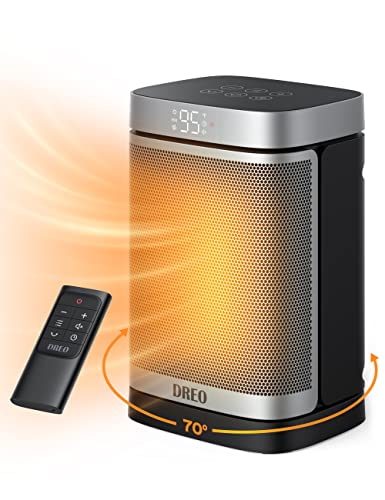
At 10.31 inches tall, this compact model adds 70-degree oscillation, unlike the smaller fixed-body option. DREO says its Hyperamics system provides up to 1,500 watts of heating power; the package of features also includes a remote, ECO mode, a 12-hour timer and five modes. The design suits someone who wants to move a heater between a desk and floor without choosing a tall tower. Its limitation is the compact size: buyers prioritizing a taller heater for a larger room should consider a different model.
Bottom line: Choose it for portable placement and oscillating heat in a smaller room.
DREO 25-Inch Oscillating Heater

The 25-inch height sets this heater apart from the compact DREO models, and DREO says its airflow reaches 11.5 feet per second. Its features include a thermostat, remote, child lock, tip-over and overheat protection, and 70-degree oscillation; the maker also says operation can be as quiet as 25 dB. This format suits a buyer who wants a taller heater with a broad sweep rather than a small unit beside a desk. The tradeoff is its 7.87-inch square footprint and 7.26-pound weight, making it less convenient to carry from place to place.
Bottom line: Pick it when a taller oscillating heater matters more than easy portability.
DREO 16-Inch Oscillating Heater

This 15.8-inch model sits between the compact and 25-inch DREO heaters in height, while keeping 70-degree oscillation. It has 1,500-watt PTC ceramic heating, a remote, ECO mode and a 12-hour timer; its safety features include tip-over and overheat protection. The maker specifies a 6-foot flat power cord and advises plugging directly into a wall outlet rather than using an extension cord. That placement rule matters if the only outlet is far from the intended spot. This model suits buyers seeking a mid-height oscillating design, but not those who need an especially compact heater.
Bottom line: Choose it for mid-height oscillation, a timer and ECO mode.
DREO 10-Inch PTC Heater

The 10-inch body and 6.02-inch width give this model the smallest footprint of the four, making it the compact choice for a desk-side or bedside spot. DREO says its 1,500-watt PTC system and heat-funnel design provide fast warmth and farther air circulation than traditional heaters. The features include a thermostat, remote, 12-hour timer and five modes. Its key tradeoff is that no oscillation feature is identified, unlike the two oscillating models, so it is less suited to buyers seeking heat that sweeps across a wider area.
Bottom line: Pick it when a compact footprint outweighs oscillation.
How to choose a DREO PTC fan heater
Choose by room placement and heater height first; wattage alone does not tell you how evenly warmth will spread. PTC ceramic heaters pass electricity through a positive-temperature-coefficient element, while a fan moves the warmed air into the room. Portable electric heaters commonly draw up to 1,500 watts, which is about 12.5 amps on a 120-volt circuit; avoid sharing a circuit with other high-draw appliances. If you want air to move across a sitting area, prioritize an oscillating design; a fixed compact heater is better suited to directing warmth toward one nearby spot.
For a confined desk or bedside area, favor a compact body; for a wider seating zone, choose a model with oscillation. Heater output does not replace central heat, and room insulation, ceiling height and drafts affect how quickly a space warms.
Where to place a portable fan heater
Leave at least 3 feet of open space between a portable heater and bedding, curtains, furniture or other combustibles. Set the heater on a firm, level floor, not on a bed, rug with a deep pile or elevated surface where it can tip. Keep the air intake and outlet unobstructed; blocking either can cause overheating and reduce airflow. A practical decision rule is to skip a location that cannot keep a 3-foot clear zone around the heater.
Plug a space heater directly into a wall outlet rather than an extension cord or power strip, and avoid running the cord under rugs. The cord and plug can heat under high load. Turn the heater off when leaving the room or going to sleep, even when it has a timer or safety shutoff.
Fan heater sizes and features compared
Compact and tower-style fan heaters serve different placement needs; oscillation spreads airflow, while a smaller fixed heater concentrates warmth nearby. Use this comparison to match heater shape to the intended spot.
| Need | Design choice | Why it fits |
|---|---|---|
| Desk-side warmth | Compact, fixed heater | Smaller body is easier to position near one user |
| Airflow across a seating area | Oscillating heater | Moves warmed air through a wider arc |
| Taller placement profile | Tower-style heater | Uses more vertical space and less floor width than a broad unit |
Measure the available floor area and confirm that the chosen spot can maintain the required clearance. A tall body does not by itself establish a room-size rating, so consider the room’s insulation and drafts as well.
Safe operation and upkeep
Portable fan heaters need clear airflow and regular dust removal; accumulated dust can reduce airflow and create a burnt-dust smell when heating resumes. Unplug the heater and let it cool completely before wiping the exterior or cleaning around the intake with a dry cloth or soft brush. Never spray cleaner or pour water into a heater, and do not operate it near water or in a bathroom.
Tip-over and overheat protections are useful safeguards, not permission to leave a heater unattended. Check the plug and cord for discoloration, looseness or damage before seasonal use, and stop using a unit with a damaged cord. Keep children and pets at least 3 feet away from the heater and its hot outlet air.
Frequently Asked Questions
How many watts does a portable fan heater use?
Many portable fan heaters use up to 1,500 watts on high. On a 120-volt circuit, that is about 12.5 amps, so avoid running another high-draw appliance on the same circuit.
How much clearance should a space heater have?
Keep at least 3 feet between a portable heater and combustible items such as curtains, bedding and furniture. Place it on a firm, level floor with the intake and outlet unobstructed.
Can I plug a space heater into an extension cord?
No; plug a space heater directly into a wall outlet. Extension cords and power strips can overheat under the heater’s sustained electrical load.
Do ceramic fan heaters need regular cleaning?
Yes; remove dust from the exterior and intake regularly, with the heater unplugged and fully cool. Dust buildup can restrict airflow and cause a burnt-dust odor when the unit runs.
Is it safe to leave a fan heater on overnight?
The safer practice is to switch a portable heater off before sleeping or leaving the room. A timer or tip-over protection does not replace supervision and clear space around the heater.