
Best Recycled Golf Balls: 4 Packs Compared by Condition

Top Flite Reload 24-Pack suits most golfers who want recycled golf balls with few visible marks, because its grading describes balls with very few player marks and no scuffs or blemishes. Choose Callaway Assorted B/C Grade 72-Pack for a larger pack with visible wear, or Bastex Hit-Away 50-Pack if you need balls only for practice; Titleist Pro V1 Reload 30-Pack is a refinished option rather than a simple reused-ball grade.
We earn a commission if you buy through links on this page. As an Amazon Associate I earn from qualifying purchases. Products are compared on manufacturer specifications, not hands-on testing.
- Best overall: Top Flite Reload 24-Pack – Its condition description calls for very few player marks and no scuffs or blemishes.
- Best for bulk supply: Callaway Assorted B/C Grade 72-Pack – The 72-ball assortment is the largest pack and may show scuffs, discoloration, or markings.
- Best for refinished appearance: Titleist Pro V1 Reload 30-Pack – These balls may be stripped, painted, stamped, or clear coated.
- Best for practice: Bastex Hit-Away 50-Pack – The seller identifies these worn, blemished balls for hit-away practice, not course play.
| Product | Best for | Pack size | Condition | Intended use | Shop |
|---|---|---|---|---|---|
| Top Flite Reload 24-Pack | Light visible wear | 24 balls | Very few marks; no scuffs or blemishes | General play | Check Price on Amazon |
| Callaway Assorted B/C Grade 72-Pack | Large practice supply | 72 balls | Good grade; scuffs or blemishes possible | Mixed play | Check Price on Amazon |
| Titleist Pro V1 Reload 30-Pack | Refinished appearance | 30 balls | Stripped, painted, stamped, or coated | General play | Check Price on Amazon |
| Bastex Hit-Away 50-Pack | Backyard practice | 50 balls | Worn, discolored, scuffed, blemished | Practice only | Check Price on Amazon |
Recycled Golf Balls Compared
Compare the pack count and condition grade first, then match the ball to course play or practice.
Top Flite Reload 24-Pack

For golfers who want a recycled pack with minimal visible wear, this 24-ball set is described as having very few player marks and no scuffs or blemishes. The balls are white, may carry assorted logos, and are made in the USA. That condition makes this a more suitable choice for regular play than visibly worn practice balls. The limitation is that the set contains mixed logos, so golfers who want matching markings should choose another option. The specifications do not identify the original ball models, so expect a variety rather than a single model.
Bottom line: Pick this if a clean appearance matters more than matching ball models.
Callaway Assorted B/C Grade 72-Pack
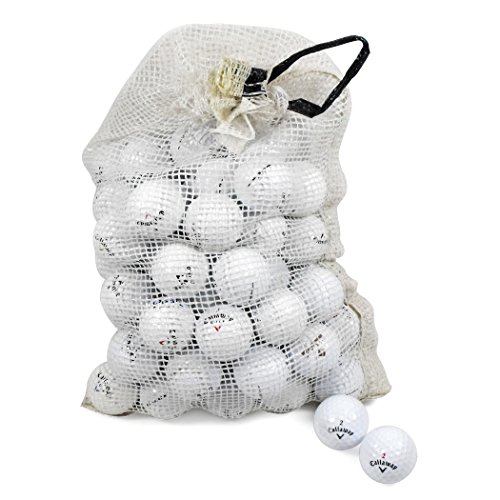
The 72-ball count is the largest pack here, making this assortment useful when quantity matters more than uniform appearance. The grade allows light scuffs, blemishes, minor discoloration, smudged print, player markings, or logos, but the balls are described as free of cuts. Models and cover constructions vary, so feel and greenside response can differ from ball to ball. The specifications mention Callaway HEX and Tour Aero patterns among the assortment. Choose another pack if you want a consistent single model or a more uniform look.
Bottom line: Choose this when you want the most balls and can accept visible wear.
Titleist Pro V1 Reload 30-Pack

Unlike a condition-graded used assortment, this 30-pack of Pro V1 balls may have been stripped, painted, stamped, or clear coated to give it a new-ball-like appearance and feel. That processing can appeal to golfers who prioritize appearance, but the small “Refinished” marking is required by law on refinished balls. Check competition requirements before using refinished balls in an event, since altered equipment can raise conformity questions. Packaging may vary, and the specifications do not define a wear grade, so this is less useful if you want to select by visible wear.
Bottom line: Pick this if you specifically want refinished Pro V1 balls and understand the marking.
Bastex Hit-Away 50-Pack
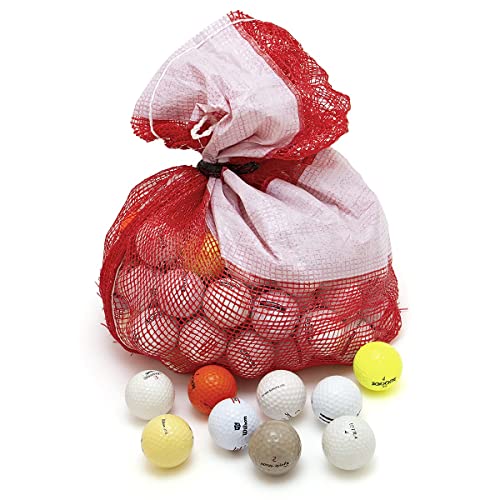
These 50 mixed-color balls are expressly meant for hit-away practice and range-style sessions rather than course play. Expect worn, discolored, blemished, or scuffed surfaces, with logos and pen marks possible; the pack comes in a mesh carry bag. That makes this a practical choice for repeated backyard swings where cosmetic condition is secondary. The key limitation is explicit: the grade is not considered suitable for playing a course. Choose a better-condition pack if you need balls for a round or want predictable appearance.
Bottom line: Choose this for practice sessions where wear and mixed markings do not matter.
How to choose recycled golf balls
Start with condition and intended use: clean-looking balls suit regular play, while heavily worn balls are better kept for practice. Golf balls used under the Rules of Golf must be at least 1.68 inches in diameter and no more than 1.62 ounces in weight. A recycled label alone does not tell you whether a ball is an unchanged used ball, a refinished ball, or a low-grade practice ball. Look for the condition grade and any processing note, then choose a more uniform grade if you rely on consistent feel. If you play competitions, verify that a refinished ball is permitted before putting it in play; its appearance alone does not establish conformity.
Condition grades and visible wear
Condition labels describe appearance, not a standardized level of performance across every seller. A near-new-looking grade generally allows fewer visible marks than a good or practice grade, but the exact tolerance can differ. Scuffs, discoloration, smudged print, and logos mainly affect appearance; cuts or substantial damage are a separate concern because they can interfere with flight and contact. Choose a grade by setting a measurable threshold: if you want balls with no visible scuffs, avoid grades that explicitly permit scuffs or blemishes. Assorted model packs may also mix cover and dimple designs, so do not assume every ball will feel or respond identically.
Used versus refinished golf balls
Used balls retain their original finish, while refinished balls may be stripped, painted, stamped, or coated. A refinished surface can make balls look more uniform, but the treatment makes the ball different from a straightforward used-ball assortment. Golf balls are limited by the rules to 1.62 ounces and a minimum diameter of 1.68 inches, but meeting those dimensions alone does not prove that an altered ball conforms to all equipment rules. For casual play, choose based on condition and appearance; for a competition round, check the event’s ball requirements and the applicable conformity rules before play. Do not confuse a new-looking finish with a new ball.
Choosing pack size for play or practice
Pack size should match how quickly you use or lose balls. A 24- or 30-ball pack is easier to sort and store than a 72-ball assortment, while a high-count pack can make sense for repeated practice. For course play, a consistent model and condition grade help keep feel and flight more predictable; mixed assortments trade that consistency for variety. For backyard practice, visibly worn balls are often sufficient if the seller says they are intended for hit-away use. Keep practice balls away from people, windows, and vehicles, and use a clear hitting area with enough room for an errant shot.
Frequently Asked Questions
What size should a regulation golf ball be?
A conforming golf ball must have a diameter of at least 1.68 inches and weigh no more than 1.62 ounces. Those limits are useful checks, but they do not establish whether a refinished ball meets every equipment rule.
Are recycled golf balls suitable for a tournament?
Some used balls may be suitable, but a refinished or altered ball can raise conformity concerns. Check the competition’s ball requirements before play rather than relying on its appearance.
Do mixed-model recycled balls play consistently?
Mixed-model packs can vary in construction, cover, feel, and dimple design from ball to ball. Choose a single-model pack if consistency matters more than having a larger assortment.
Can scuffed golf balls still be used for practice?
Light surface blemishes may be acceptable for practice, but cuts or severe damage can affect flight and contact. Keep balls sold specifically for hit-away practice out of course play if their grade says they are not suitable for a round.
How many recycled balls should I keep for a round?
Carry enough balls for your usual round and the course conditions; a pack size is not a round requirement. Water hazards, thick rough, and unfamiliar courses can increase how many you lose, so bring extras when those conditions are likely.