
Livestock Water Tank Heaters: 5 Models Compared

Farm Innovators Ice Chaser 1500W is the named livestock water tank heater and its 1,500-watt thermostatic, submersible design is the deciding fit for a stock tank that needs a higher-wattage unit. Choose Farm Innovators Convertible 1250W if you want floating or submerged placement, or Rubbermaid-Compatible 1500W Heater if you need a replacement sized for compatible Rubbermaid tanks.
A tank de-icer warms water to hold an open drinking area in freezing weather. Match wattage and placement to tank volume, material and winter exposure before choosing.
We earn a commission if you buy through links on this page. As an Amazon Associate I earn from qualifying purchases. Products are compared on manufacturer specifications, not hands-on testing.
- Best overall: Farm Innovators Ice Chaser 1500W – Its 1,500-watt thermostatic submersible design is the clearest match for a livestock stock tank.
- Best for flexible placement: Farm Innovators Convertible 1250W – The removable ring changes it between floating and submersible setups.
- Best for Rubbermaid tanks: Rubbermaid-Compatible 1500W Heater – It names compatible 50- to 300-gallon Rubbermaid tanks and requires a drain hole over 1.75 inches.
| Product | Best for | Wattage | Placement | Tank fit | Shop |
|---|---|---|---|---|---|
| Farm Innovators Ice Chaser 1500W | Submersible setup | 1,500 W | Submersible | Plastic tanks | Check Price on Amazon |
| Farm Innovators Convertible 1250W | Flexible placement | 1,250 W | Floating or submersible | Stock tanks or troughs | Check Price on Amazon |
| K&H Stock Tank Deicer 500W | Caged placement | 500 W | Floating or submersible | Plastic, rubber, or metal | Check Price on Amazon |
| Qanskm Utility De-Icer 500W | Small containers | 500 W | Submersible | 5–50 gal | Check Price on Amazon |
| Rubbermaid-Compatible 1500W Heater | Rubbermaid replacement | 1,500 W | Submersible | Rubbermaid 50–300 gal | Check Price on Amazon |
Livestock Water Tank Heaters Compared
Compare each unit’s wattage, placement and stated tank fit before selecting a de-icer.
Farm Innovators Ice Chaser 1500W

Farm Innovators Ice Chaser 1500W stands out for its 1,500-watt rating and submersible format. Its cast-aluminum body and thermostatic control are maker-described features; the maker says it operates only when needed and is safe for plastic tanks. An anti-chew cord protector is included. This suits buyers seeking a submerged unit for a livestock stock tank, especially where plastic compatibility matters. Its limitation is placement: unlike floating-or-submersible models, this unit is presented as submersible, so it is less suitable when a floating setup is preferred.
Bottom line: Choose this if you want a 1,500-watt submersible heater for a plastic stock tank.
Farm Innovators Convertible 1250W

Farm Innovators Convertible 1250W is the only option here that converts between floating and submersible use by leaving on or removing its ring. Its cast-aluminum construction and self-regulating thermostat are maker-described; the maker says it activates as water nears freezing and switches off after the water opens. A full-length cord guard is also described. The dual setup suits tanks where surface placement or keeping the unit on the floor matters. Its 1,250-watt rating is lower than Farm Innovators Ice Chaser 1500W, so buyers comparing wattage should factor in tank size and winter exposure rather than assuming the units are interchangeable.
Bottom line: Pick this when a floating or submerged setup is useful.
K&H Stock Tank Deicer 500W
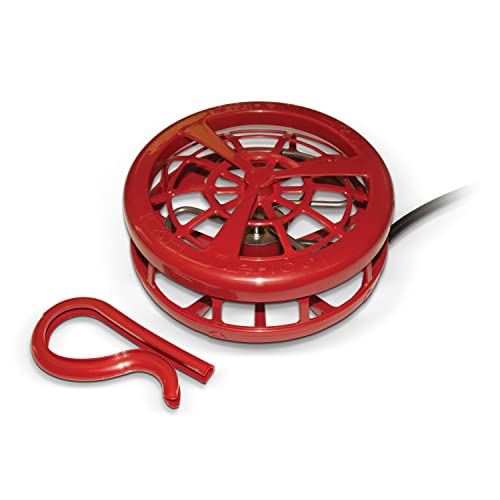
K&H Stock Tank Deicer 500W differs with a protective cage and cord clip, plus maker-specified compatibility with plastic, rubber and metal tanks. Its 500-watt thermostat-controlled design can float or submerge; the maker says the thermostat switches as needed to help prevent freezing. This suits buyers who value a contained placement option or use a nonmetal tank. The 500-watt rating is substantially below Farm Innovators Ice Chaser 1500W and Farm Innovators Convertible 1250W, so it may not be the right choice for larger or more exposed water volumes; the maker points buyers to a wattage zone chart for sizing.
Bottom line: Choose this for cage-secured placement and broad tank-material compatibility.
Qanskm Utility De-Icer 500W
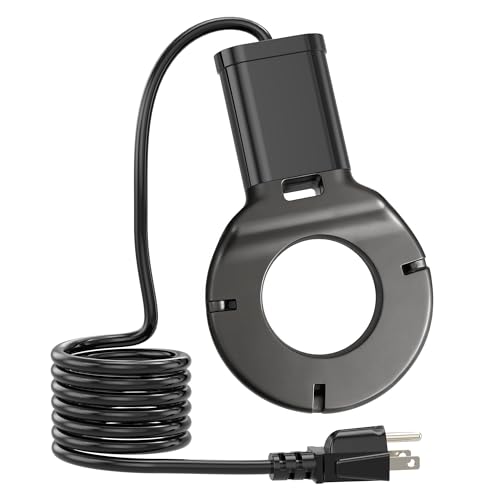
Qanskm Utility De-Icer 500W is the small-container option, with a range of 5 to 50 gallons and a 10-foot power cord. Its automatic control is described as starting below 35°F and stopping at 77°F. The maker describes it for buckets, small animal waterers and birdbaths as well as livestock use, so it suits a smaller watering setup rather than a large trough. Its container range is narrower than the tank-specific compatibility described for Rubbermaid-Compatible 1500W Heater; check volume and placement needs before treating it as a stock tank solution.
Bottom line: Pick this for a small 5- to 50-gallon livestock water container.
Rubbermaid-Compatible 1500W Heater

Rubbermaid-Compatible 1500W Heater is the fit-specific choice: it names Rubbermaid stock tanks from 50 through 300 gallons and several compatible tank model codes. It is described as a 1,500-watt thermostatically controlled submersible replacement. The key limitation is the tank’s drain opening: the maker says its diameter must exceed 1.75 inches. This makes the unit most appropriate for owners replacing a heater in one of the named tanks, not for buyers selecting a general-purpose de-icer. Confirm the tank model and opening measurement before ordering.
Bottom line: Choose this only when the Rubbermaid tank model and drain opening match.
How to Choose a Livestock Water Tank Heater
Tank volume, winter exposure and placement should decide wattage before brand features do. The options here span 500 to 1,500 watts, and one 500-watt model specifically names containers from 5 to 50 gallons; those ratings are not interchangeable across all tank sizes or climates. As a practical rule, favor a small-container fit for containers no larger than 50 gallons, then verify sizing guidance for larger or more exposed tanks. Thermostats reduce continuous operation by switching heating on and off, but thermostat behavior differs: one model gives explicit 35°F and 77°F thresholds while others describe operation near freezing. Compare placement next: a floating unit, a submerged unit and a convertible unit solve different tank layouts.
Floating or Submersible De-Icer Placement
Floating units sit at the water surface, while submersible units are intended to rest under water; some heaters allow either configuration. A removable ring is the differentiator on a convertible design, whereas other models are presented only as submersible or as floating-or-submersible with a cage. Match placement to tank shape and animal access: a cage or cord clip can help secure positioning, but it does not replace safe electrical setup. Keep cord connections dry and protected, and use a properly installed ground-fault circuit interrupter (GFCI) outlet outdoors around water. Never energize an immersion heater outside water; follow the unit’s own operating instructions for placement and water coverage.
Tank Material and Fit Checks
Tank material matters because heater designs do not all claim the same compatibility. The compared products name plastic, rubber and metal compatibility for one model, plastic for another, and specified Rubbermaid tanks for a fit-specific replacement. Before buying, check whether the heater is designed for the tank material and whether its placement method fits the trough. A measurable fit rule applies to Rubbermaid-Compatible 1500W Heater: its maker requires a drain-plug opening wider than 1.75 inches, along with a named compatible tank model. For other units, do not assume that a generic stock tank label guarantees a fit to every volume or shape. Use the heater’s fit range and wattage guidance rather than relying on the tank’s appearance alone.
Safe Winter Use and Common Mistakes
Electrical water heaters need protection from shock, cord damage and unintended access by animals. Use a GFCI-protected outdoor receptacle and keep plugs and connections out of standing water; inspect the cord and guard before winter use. A chew-resistant sleeve or protective cage is a product feature, not proof that an animal cannot damage or reach the wiring. Do not run a submersible unit dry, and do not position an energized unit where livestock can pull or step on its cord. Another common mistake is selecting wattage without considering tank size and exposure: a 500-watt unit named for 5- to 50-gallon containers is not automatically appropriate for a larger trough. Recheck water level and heater position during cold spells.
Frequently Asked Questions
How many watts does a livestock tank heater need?
The choices here range from 500 to 1,500 watts, and the 500-watt utility model names 5- to 50-gallon containers. Tank volume and exposure to cold affect the required wattage, so use a model’s fit guidance rather than assuming the highest wattage is always right.
Can a stock tank heater go in a plastic tank?
Some are designed for plastic: Farm Innovators Ice Chaser 1500W is described as safe for plastic, and K&H Stock Tank Deicer 500W names plastic, rubber and metal tanks. Confirm material compatibility for the specific heater; keep an immersion heater underwater while energized.
Should a tank de-icer float or sit underwater?
Either arrangement can be appropriate when the heater is designed for that placement. Convertible models use a removable ring to switch modes, while some units are only described as submersible; follow the unit’s placement directions and maintain water coverage.
Do livestock water tank heaters need a GFCI outlet?
A GFCI-protected outdoor outlet is the prudent choice for electrical equipment used near water because it helps reduce shock risk by interrupting ground-fault current. Keep connections dry and protected, and do not use a heater with a damaged cord.
What drain hole size does the Rubbermaid heater require?
The Rubbermaid-compatible model requires a drain-plug opening greater than 1.75 inches. Confirm both the opening measurement and tank model, since its fit is limited to named Rubbermaid tank sizes and codes.