
Waterproof Glue for Shower: 3 Adhesives Compared

For a shower repair needing a clear adhesive, Gorilla Max Strength Adhesive, 7 oz is the strongest fit because its maker says it bonds tile and works under water on wet surfaces. Choose Flex Glue Clear, 2.8 oz for a smaller tube or Gorilla Max Strength Adhesive, 2.5 oz for small touch-ups; for a flexible seal along a moving joint, use a sealant instead of glue.
We earn a commission if you buy through links on this page. As an Amazon Associate I earn from qualifying purchases. Products are compared on manufacturer specifications, not hands-on testing.
- Best overall: Gorilla Max Strength Adhesive, 7 oz – Its maker says the waterproof, gap-filling adhesive bonds tile and works on wet surfaces.
- Best for compact repairs: Flex Glue Clear, 2.8 oz – The 2.8-ounce clear tube is sized between the two Gorilla adhesive tubes.
- Best for touch-ups: Gorilla Max Strength Adhesive, 2.5 oz – The 2.5-ounce tube is positioned for quick fixes and touch-ups.
| Product | Best for | Tube size | Shop |
|---|---|---|---|
| Gorilla Max Strength Adhesive, 7 oz | Tile and gap repairs | 7 oz | Check Price on Amazon |
| Flex Glue Clear, 2.8 oz | Small clear repairs | 2.8 oz | Check Price on Amazon |
| Gorilla Max Strength Adhesive, 2.5 oz | Quick touch-ups | 2.5 oz | Check Price on Amazon |
Waterproof Glue for Shower Repairs
Compare the adhesive formats and surface claims before choosing glue for a shower repair.
Gorilla Max Strength Adhesive, 7 oz
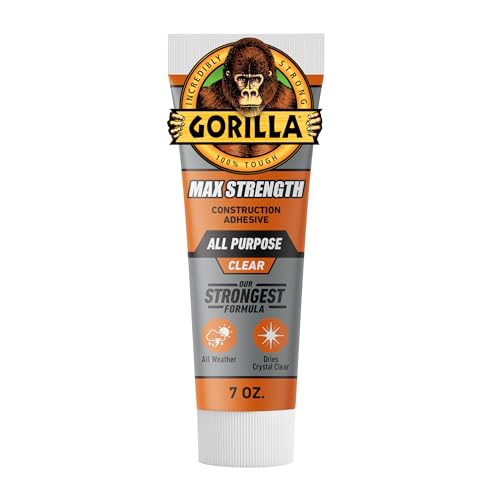
For a larger shower repair, this 7-ounce tube provides more adhesive than the other two glue options. Gorilla says the formula bonds tile, glass, stone and other surfaces, fills gaps, and works under water on wet surfaces. It dries clear and is paintable after 2 hours; the maker also says it allows up to 30 minutes of working time for repositioning. Choose it when the repair involves a compatible rigid surface and needs gap filling. Its larger tube is less suited to a small touch-up where a smaller package may be easier to manage.
Bottom line: Pick this for a larger, gap-filling repair involving tile or another compatible surface.
Flex Glue Clear, 2.8 oz

For a smaller application than the 7-ounce option, this clear 2.8-ounce tube is the compact choice. Its maker says the rubberized adhesive is waterproof, works underwater, resists UV, and is solvent-free and VOC compliant. Listed uses include showers, pools, concrete, brick, wood and RV repairs. The maker also describes it as an instant-grab adhesive that will not run or drip. Pick it when those application claims and surfaces suit the job; the specifications do not provide a working-time or cure-time figure to plan around.
Bottom line: Choose this for a compact repair where a clear, rubberized adhesive suits the surfaces.
Gorilla Max Strength Adhesive, 2.5 oz

For quick fixes and touch-ups, this is the smallest glue tube in the comparison at 2.5 ounces. Gorilla says the adhesive is waterproof, works under water, fills gaps, and bonds surfaces including glass, tile, stone, metal and wood. Its clear finish can suit repairs where visible residue matters, and the maker says it is paintable. The specifications give fewer application-specific claims than the 7-ounce option, so this size is best for a modest repair rather than a project needing more adhesive. It is glue, not a flexible seam sealant.
Bottom line: Pick this for a small touch-up on a compatible surface, not for sealing a moving seam.
Choose glue or sealant for the shower joint
Use adhesive to bond parts together; use sealant to close a seam against water. A shower corner or tub-to-tile joint can move as surfaces expand and contract, so flexible silicone sealant is generally a better fit there than rigid construction adhesive. For a loose tile or attached accessory, an adhesive may be appropriate if its maker lists the materials involved. The shower product here that is a sealant is not glue, so do not substitute it for a bonding adhesive. Before starting, identify whether the repair needs a bond between two surfaces or a flexible water barrier along a gap.
Check the surfaces and shower exposure
Surface compatibility is the first buying rule: choose an adhesive whose maker names both materials being bonded. Tile and glass are included in the claims for the two Gorilla adhesive sizes, while the smaller Flex tube lists wood, brick and concrete among its uses. “Waterproof” does not by itself establish that every adhesive bonds every wet or submerged surface. If a repair will be continuously submerged rather than exposed to ordinary shower splashes, confirm that intended use before ordering. Follow the product’s cure and water-exposure directions; keep the shower dry until the adhesive is ready for water contact.
Compare glue types for shower repairs
For shower repair, the key distinction is a bonding adhesive versus a seam sealant, followed by tube size and surface claims. Adhesive joins parts; silicone sealant fills a joint while accommodating movement. The glue options here are clear and claim waterproof use, but their formats and stated uses differ. Use this guide to match the repair rather than treating these products as interchangeable.
| Repair need | Suitable type | Decision point |
|---|---|---|
| Bonding tile or compatible parts | Construction or rubberized adhesive | Verify both surfaces are named |
| Closing a moving tub or corner seam | Flexible silicone sealant | Choose sealant, not glue |
| Small application | Smaller adhesive tube | Match tube amount to repair size |
Prepare the repair and manage water exposure
Clean, dry surfaces generally give adhesive a better chance to bond than dusty or soapy surfaces, even when a formula claims to work on wet surfaces. Remove loose residue and old failing material without damaging the tile or surrounding finish. Apply only as directed and avoid exposing the repair to shower water before the product’s readiness time. Waterproof or underwater-use claims are not a substitute for checking whether the chosen adhesive is intended for the exact materials and exposure. For a shower seam, use a sealant designed to remain flexible rather than relying on adhesive to bridge a moving gap.
Frequently Asked Questions
Can waterproof glue replace shower caulk?
No; glue bonds surfaces, while caulk seals a joint that may move. Use a flexible silicone sealant for tub-to-tile seams and adhesive for bonding compatible parts.
Can waterproof adhesive be applied to wet tile?
Some formulas claim wet-surface use, but that does not apply to every adhesive. Check the product’s surface directions and confirm both materials are compatible before applying.
How long should glue cure before shower use?
The needed wait depends on the adhesive and the application, so use the product’s water-exposure directions before running the shower. A waterproof claim alone does not establish a cure time.
Is construction adhesive flexible enough for shower corners?
Construction adhesive is intended to bond materials, not replace flexible seam sealant. Shower corners and tub edges can move, so use a sealant made for joints in those locations.
How do I remove old adhesive from shower tile?
Start by checking the old adhesive type and tile finish, then use a removal method safe for that surface. Avoid sharp scraping that can chip tile or scratch glass.