
Best Mop for Textured Vinyl Floors: 5 Picks Compared

The O-Cedar H2prO is the best mop for textured vinyl floors here because its built-in jets saturate a washable microfiber pad while dual tanks separate clean and dirty water. Choose a mop with a dedicated stain-removing pad or wringer instead if you need a different approach to working dirt out of grooves.
We earn a commission if you buy through links on this page. As an Amazon Associate I earn from qualifying purchases. Products are compared on manufacturer specifications, not hands-on testing.
- Best overall: O-Cedar H2prO Flat Mop – Built-in water jets wet the pad, and the dual-tank system separates clean and dirty water.
- Best for floor grooves: CLEANHOME 3-Pad Mop – Its polyester microfiber pad is described as better for removing stains in cracks.
- Best for wringing control: O-Cedar EasyWring Spin Mop – A bucket wringer controls moisture, and two extra refills are included.
| Product | Best for | Pad count | Water system | Handle length | Shop |
|---|---|---|---|---|---|
| O-Cedar H2prO Flat Mop | Everyday cleaning | 1 washable pad | Dual-tank; built-in jets | — | Check Price on Amazon |
| CLEANHOME 3-Pad Mop | Groove-focused cleaning | 3 washable pads | Manual damp or dry use | 44–55 in | Check Price on Amazon |
| O-Cedar EasyWring Spin Mop | Bucket wringing | Mop head; 2 extra refills | Bucket with built-in wringer | — | Check Price on Amazon |
| 800 ml Refillable Spray Mop | Targeted spray cleaning | 3 reusable pads | 800 ml refillable bottle | — | Check Price on Amazon |
| BPAWA 4-Pad Flat Mop | Adjustable reach | 4 washable pads | Manual damp or dry use | 32–59 in | Check Price on Amazon |
Mops for Textured Vinyl Floors
Match the mop’s pad and water system to how you want to loosen and collect dirt from textured surfaces.
O-Cedar H2prO Flat Mop

The H2prO stands apart with a dual-tank system that keeps clean and dirty water separate. Built-in jets evenly wet the reusable microfiber pad, and the maker says one fill can clean up to 650 square feet. That combination suits routine cleaning where you want fresh water during the pass rather than dipping into a shared bucket. The mop is intended for vinyl as well as hardwood and tile.
Bottom line: Choose this for everyday vinyl cleaning with separate clean and dirty water.
CLEANHOME 3-Pad Mop

The CLEANHOME is the most targeted option for floor cracks because one of its three washable pads is described as better at removing stains in tile cracks. The chenille pad absorbs water, while the twist microfiber pad is intended for dusting; the 55-inch handle adjusts from 44 to 55 inches. This variety suits households that want separate pad textures for dry sweeping and damp work. The limitation is that the crack-cleaning claim refers to tile, not textured vinyl, so treat it as a useful pad choice rather than a guaranteed result on every vinyl pattern.
Bottom line: Pick this when pad choice and adjustable reach matter more than a built-in water system.
O-Cedar EasyWring Spin Mop

The EasyWring differs from the flat mops by using a bucket with a built-in wringer, giving you a way to remove water before mopping. Its microfiber head is washable and reusable, and two extra refills come with the system. The maker says it is safe on hard floors including vinyl and claims it removes over 99% of bacteria with water alone. It is a better fit for someone who prefers bucket cleaning than a flat pad system. A round spin mop head is less suited to close edge work than a flat mop head.
Bottom line: Choose this if you prefer a bucket-and-wringer method for vinyl floors.
800 ml Refillable Spray Mop
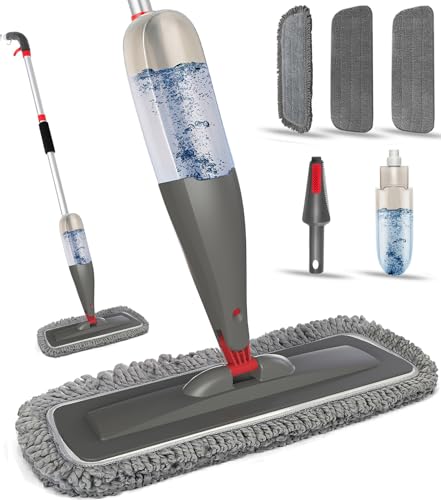
This spray mop uses a hand trigger and a refillable 800 ml bottle, unlike the bucket and dual-tank systems in the other picks. The maker says it needs no batteries; three reusable pads are included, and the swivel head is designed to reach areas such as baseboards. Its format suits quick, controlled damp mopping without carrying a bucket. The maker does not identify a pad specifically for lifting dirt from grooves, so buyers whose main concern is embedded debris may prefer the CLEANHOME’s crack-focused pad or a bucket method.
Bottom line: Pick this for trigger-controlled spraying and a refillable bottle.
BPAWA 4-Pad Flat Mop

The BPAWA offers the longest adjustable handle range among these flat mops, extending from 32 to 59 inches, and includes four reusable pads attached with hook-and-loop fasteners. The maker says it can also be used on walls and ceilings, making it a multi-surface wiping tool as well as a floor mop. It suits homes where handle reach and having spare pads are priorities. Unlike the CLEANHOME, the maker does not single out a pad for stains in cracks, so it is a more general-purpose option for textured vinyl.
Bottom line: Choose this when adjustable reach and four reusable pads are your priorities.
How to choose a mop for textured vinyl floors
For dirt caught in grooves, start with a microfiber pad that can make contact with the surface, then choose how you want to wet it. Flat mops let you guide a pad over one area; spray models add moisture at the handle, while bucket systems let you wring out a mop head. Textured vinyl is still a resilient floor, but pooling water can seep at seams or edges, so use a damp rather than dripping pad. If you can see standing water after a pass, wring or spray less. Avoid abrasive scouring pads and stiff wire brushes, which can scratch vinyl wear layers; use a soft brush only when the flooring maker permits it.
Cleaning grooves without leaving residue
Loose grit should be removed before wet mopping because particles can drag across the vinyl surface. Sweep or vacuum first, using a hard-floor setting without a beater brush. Work in small sections and rinse or change the pad when it visibly carries dirt; otherwise, the pad can redistribute residue across the floor. Use a cleaner labeled for vinyl or the flooring maker’s recommended solution, since solvent, wax, and abrasive cleaners can dull or damage some finishes. Do not flood seams, and dry any puddles promptly. For a stubborn groove, a soft nylon brush with diluted vinyl-safe cleaner can help loosen debris before wiping it up.
Flat, spray, and bucket mops compared
The best mop format depends on whether you prioritize targeted moisture, fresh water separation, or wringing. A spray mop puts a small amount of solution on the floor; a dual-tank mop separates clean and dirty water; a bucket wringer removes water from a round head. The table pairs each approach with a practical use and limitation.
| Mop style | Useful when | Trade-off |
|---|---|---|
| Flat reusable pad | You want a washable pad and guided passes | Pad must be changed as it collects soil |
| Trigger spray | You want controlled, localized moisture | Requires refilling the bottle |
| Dual tank | You want clean and dirty water separated | Tank capacity limits area between fills |
| Spin bucket | You want to wring out a mop head | Bucket takes more storage space |
How much moisture textured vinyl needs
A lightly damp mop is generally a better choice than a soaking wet one for vinyl planks and sheets. Excess water can work into joints, edges, and transitions, especially where seams are not fully sealed. Spray a small amount, or wring the mop until the pad feels damp rather than saturated; a visible puddle is a sign to reduce moisture. Clean in the direction of plank seams when possible, then wipe pooled water near walls or transitions. If the floor is glued or has a manufacturer-specific finish, check the floor care instructions for cleaner compatibility and limits on wet cleaning.
Frequently Asked Questions
Can a steam mop be used on textured vinyl flooring?
Avoid steam unless the flooring manufacturer explicitly approves it. Heat and moisture can damage vinyl wear layers, adhesives, or plank joints, and warranty rules vary by floor.
How often should vinyl floors be damp mopped?
Damp mop when tracked-in soil or spills warrant it, rather than on a fixed daily schedule. Sweep or vacuum grit more often because abrasive particles can scratch the wear layer.
What cleaner works on textured vinyl plank floors?
Use a cleaner labeled safe for vinyl or the flooring maker’s recommended solution. Avoid wax, abrasive powders, and solvent-based products that may affect the finish.
How do I remove dirt from vinyl floor grooves?
First lift loose grit with a soft-bristle vacuum or broom, then work a vinyl-safe cleaner into stubborn grooves with a soft nylon brush. Wipe the loosened soil away with a clean microfiber pad and avoid flooding seams.
Can reusable mop pads go in the washing machine?
Wash pads only if their care label permits machine washing, and skip fabric softener because it can leave residue that reduces absorbency. Let pads dry fully before storing them.