
Telfa Adhesive Island Dressing: Sizes and Fit Compared

For most shoppers seeking a Telfa adhesive island dressing, Telfa Adhesive Island Dressing, 4 x 5 in is the clearest fit because it gives a defined 4 x 5-inch size and describes its absorbent cotton core and perforated non-adherent film. Choose a smaller 2 x 3.75-inch option when that coverage is sufficient; the two sizes suit different wound footprints.
We earn a commission if you buy through links on this page. As an Amazon Associate I earn from qualifying purchases. Products are compared on manufacturer specifications, not hands-on testing.
- Best overall: Telfa Adhesive Island Dressing, 4 x 5 in – Combines a 4 x 5-inch size with a cotton core and perforated, non-adherent wound-contact film.
- Best for smaller coverage: Telfa Adhesive Island Dressing, 2 x 3.75 in – Its 2 x 3.75-inch pad is the smaller stated size and comes in a 50-count box.
- Best for lightly draining wounds: Covidien 7540 Telfa Dressing, 4 x 5 in – The maker identifies it for lightly draining wounds and describes an all-in-one dressing.
| Product | Best for | Dressing size | Box count | Wound contact | Shop |
|---|---|---|---|---|---|
| Telfa Adhesive Island Dressing, 4 x 5 in | Defined 4 x 5 fit | 4 x 5 in | 25 | Perforated non-adherent film | Check Price on Amazon |
| Telfa Adhesive Island Dressing, 2 x 3.75 in | Smaller dressing size | 2 x 3.75 in | 50 | Non-woven pad | Check Price on Amazon |
| 7539LF Telfa Island Dressing, 2 x 3.75 in | Sterile latex-free option | 2 x 3.75 in | 50 | Gauze | Check Price on Amazon |
| 7540 Telfa Island Dressing, 4 x 5 in | 7540 model number | 4 x 5 in | 25 | Gauze | Check Price on Amazon |
| Covidien 7540 Telfa Dressing, 4 x 5 in | Light drainage coverage | 4 x 5 in | 25 | Non-adherent Telfa pad | Check Price on Amazon |
Telfa Adhesive Island Dressing Options
Compare the dressing sizes, pack counts, and wound-contact features before choosing coverage.
Telfa Adhesive Island Dressing, 4 x 5 in

This option gives the most specific construction information among the 4 x 5-inch choices: its absorbent core is 100% USP-grade cotton, and the bonded wound-contact film has 382 holes per square inch. The soft non-woven backing seals on all four sides, and the dressing is sterile and not made with natural rubber latex. It suits shoppers who want a pad size and wound-contact design in one product. The box contains 25, so it is a smaller pack than the 50-count 2 x 3.75-inch options.
Bottom line: Choose this when you want a 4 x 5-inch dressing with a described cotton core and perforated film.
Telfa Adhesive Island Dressing, 2 x 3.75 in
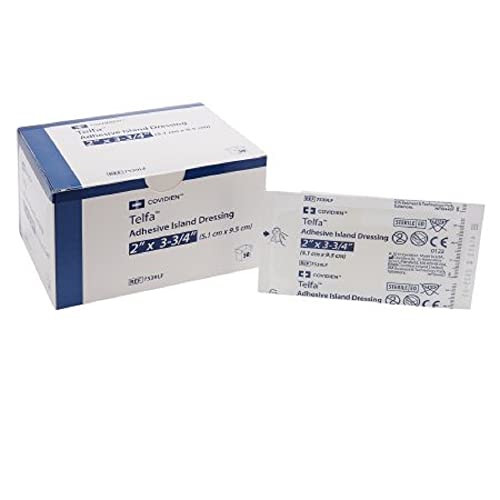
The 2 x 3.75-inch size makes this the smaller stated Telfa island dressing, with a 50-count box. Its product features describe a soft non-woven pad, sterile individual wrapping, and an adhesive border that avoids the need for separate tape. It is aimed at minor cuts, abrasions, surgical sites, and lightly draining wounds, so compare the pad dimensions with the area that needs coverage rather than choosing by count alone.
Bottom line: Pick this when a 2 x 3.75-inch pad is enough and a 50-count box suits your needs.
7539LF Telfa Island Dressing, 2 x 3.75 in
This 7539LF option pairs a 2 x 3.75-inch dressing size with sterile, latex-free construction and a 50-count box. It is the same smaller size class as the other 50-count choice, but the name identifies it as sterile gauze rather than describing a non-woven pad. That distinction matters if you are comparing wound-contact materials. The available features do not describe its adhesive-border construction or individual wrapping, so choose it on the size, sterility, and latex-free attributes rather than assuming those details match another version.
Bottom line: Choose this when the 2 x 3.75-inch size and stated sterile, latex-free gauze attributes are your priorities.
7540 Telfa Island Dressing, 4 x 5 in

The 7540 model number identifies this 4 x 5-inch, 25-count Telfa island dressing, making it a direct size and pack-count match to the other 4 x 5-inch option. Its product name calls it sterile gauze and adhesive, while the features repeat the model and size rather than adding construction specifics. It may suit shoppers selecting by the 7540 identifier, but it offers less wound-contact detail here than the version specifying cotton absorbent core and perforated film. Verify the exact pad dimensions if coverage is close to the wound edge.
Bottom line: Pick this if you need the 7540 model and a 4 x 5-inch dressing.
Covidien 7540 Telfa Dressing, 4 x 5 in

This 4 x 5-inch option is specifically described for lightly draining wounds and as a convenient all-in-one dressing. The soft non-woven backing conforms around a wound and seals on all four sides; its non-adherent pad is intended not to disrupt healing tissue. The pack contains 25, matching the other 4 x 5-inch choice.
Bottom line: Choose this when the use for lightly draining wounds is the deciding factor.
How to choose a Telfa adhesive island dressing
Choose by wound footprint first, then by construction and pack count. A dressing pad should extend beyond the wound so the adhesive border can contact intact, clean, dry skin; if the wound reaches the edge of the pad, move to a larger size. The options here center on 2 x 3.75-inch and 4 x 5-inch dressings, so measure the area needing coverage rather than the incision alone. For lightly draining wounds, an absorbent core helps manage fluid, but a saturated dressing needs changing to keep moisture from collecting against surrounding skin. Sterile, single-use dressings are not substitutes for medical assessment of deep, heavily bleeding, or infected wounds.
What the dressing layers do
An island dressing combines an absorbent central pad with an adhesive border, eliminating a separate tape layer. The non-adherent wound-contact surface is designed to reduce disruption when the dressing is removed, while perforations allow wound fluid to pass toward the absorbent core. Telfa Adhesive Island Dressing, 4 x 5 in specifies 382 holes per square inch and a cotton core; these are construction facts, not a guarantee that every Telfa version has identical layers. Dressing capacity depends on wound output and how much of the pad is available to absorb fluid. For steady or heavy drainage, seek clinical guidance on a dressing with suitable absorbency rather than relying on an island pad alone.
How size and pack count affect fit
The smaller stated size is 2 x 3.75 inches, while the larger is 4 x 5 inches; a larger pad gives more central coverage but also needs a wider area of intact skin for the border. Measure the wound and surrounding skin in inches before selecting a size, especially on curved or narrow body areas. A 50-count box reduces how often you replenish compared with a 25-count box, but pack count does not indicate absorbency or pad dimensions. Keep each sterile dressing sealed until use, and do not reuse a dressing once removed. Avoid stretching adhesive edges over wet or oily skin, which can weaken the seal.
When to change an island dressing
Change a dressing when it becomes wet, dirty, loose, or saturated; drainage reaching the border is a clear sign that the pad may no longer contain fluid effectively. Light drainage is the intended use for one 4 x 5-inch version, but wound output can change over time. Wash hands before handling a sterile package, and avoid touching the wound-contact surface. Seek medical advice for increasing redness, warmth, swelling, worsening pain, pus, fever, or a wound that is deep or not closing. A dressing protects the area but does not diagnose or treat infection.
Frequently Asked Questions
How much larger should an island dressing be than the wound?
Leave enough pad area to cover the wound and enough adhesive border to stick to clean, dry surrounding skin. These options have 2 x 3.75-inch and 4 x 5-inch sizes, so measure the wound plus the needed margin before choosing.
Can Telfa island dressings be cut to fit?
The 4 x 5-inch version described here says its bonded film can be cut to shape without separating. Cutting changes the dressing’s outline, so keep the wound covered and preserve enough adhesive border to hold it in place.
Are island dressings suitable for heavy drainage?
The intended use for one option is lightly draining wounds, not heavy drainage. If fluid saturates the pad or reaches its adhesive border quickly, get clinical advice about a more absorbent dressing.
How often should an adhesive island dressing be changed?
Change it when it becomes wet, dirty, loose, or saturated rather than using a fixed interval for every wound. Check it at least daily, and change sooner if drainage reaches the border or the dressing no longer stays sealed.
Is every Telfa island dressing latex-free?
The 4 x 5-inch version explicitly says it is not made with natural rubber latex, and the 7539LF option is identified as latex free. Confirm the exact package for any other version if latex avoidance is essential.