
Cantu Repair Leave-In Conditioner: 3 Formulas Compared

For a repair-focused Cantu leave-in, choose Cantu Repair Cream with Shea Butter, 16 oz if you want a 16-ounce shea butter formula that targets breakage; Cantu Repair Cream with Argan Oil, 16 oz is the 16-ounce argan oil alternative. Choose Cantu Leave-In Cream for Natural Hair, 12 oz instead if you want the smaller natural hair formula and daily application guidance.
We earn a commission if you buy through links on this page. As an Amazon Associate I earn from qualifying purchases. Products are compared on manufacturer specifications, not hands-on testing.
- Best overall: Cantu Repair Cream with Shea Butter, 16 oz – Its 16-ounce shea butter formula is specifically positioned to help reduce breakage and split ends.
- Best for argan oil: Cantu Repair Cream with Argan Oil, 16 oz – It pairs a 16-ounce size with argan oil and use on relaxed, natural or color-treated hair.
- Best for natural hair: Cantu Leave-In Cream for Natural Hair, 12 oz – It is a 12-ounce shea butter leave-in with a direct apply-to-damp-hair routine.
| Product | Best for | Formula focus | Size per pack | Use guidance | Shop |
|---|---|---|---|---|---|
| Cantu Repair Cream with Shea Butter, 16 oz | Breakage concerns | Shea butter | 16 oz × 2 | Leave-in, rinse-out, daily | Check Price on Amazon |
| Cantu Repair Cream with Argan Oil, 16 oz | Argan oil formula | Argan oil | 16 oz × 2 | Leave-in, rinse-out, damaged areas | Check Price on Amazon |
| Cantu Leave-In Cream for Natural Hair, 12 oz | Natural hair routine | Shea butter | 12 oz × 2 | Damp hair, do not rinse | Check Price on Amazon |
Cantu Repair Leave-In Conditioner Options
Compare each formula’s oil focus, pack size and stated use before choosing a leave-in routine.
Cantu Repair Cream with Shea Butter, 16 oz
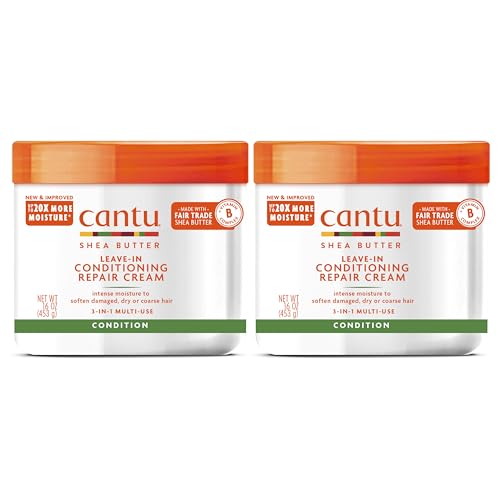
Cantu Repair Cream with Shea Butter, 16 oz is the most explicitly repair-focused choice here: its shea butter formula is intended to soften, strengthen and smooth hair from roots to ends, and it is positioned to help reduce breakage and split ends. The pack contains two 16-ounce containers, and the cream can be used daily on damaged areas, rinsed out as a conditioner or left in as a treatment. The formula excludes drying alcohol and silicones. Choose another option if argan oil or a smaller pack better fits your routine; the specifications make no claim about a specific hair texture.
Bottom line: Choose this for a larger shea butter repair cream aimed at breakage and split-end concerns.
Cantu Repair Cream with Argan Oil, 16 oz

Cantu Repair Cream with Argan Oil, 16 oz stands apart with pure argan oil rather than the shea butter in the other repair cream. Its formula is intended for over-heated or styled hair and names relaxed, natural and color-treated hair as use cases. Each pack has two 16-ounce containers, and the cream can be applied to damaged areas daily, rinsed out or used as a leave-in treatment. The formula excludes drying alcohol and silicones. Pick the shea butter option if reducing breakage and split ends is your main stated concern; this formula emphasizes elasticity and shine instead.
Bottom line: Choose this if argan oil and care for styled, relaxed or color-treated hair match your priorities.
Cantu Leave-In Cream for Natural Hair, 12 oz

Cantu Leave-In Cream for Natural Hair, 12 oz is the natural hair-oriented alternative, not the repair cream formula: it uses pure shea butter and is intended to support stronger, healthier hair with daily use. The pack contains two 12-ounce containers, smaller than either 16-ounce repair cream pack. Its directions specify applying a generous amount to the ends of damp hair, working toward the roots, combing through and leaving it in. The formula excludes parabens, sulfates, phthalates and silicones. Choose one of the repair creams if you specifically want its three-use routine or explicit breakage-focused positioning.
Bottom line: Choose this for a natural hair leave-in with clear application directions and a smaller pack size.
How to choose a Cantu repair leave-in conditioner
Start with the formula focus: the two repair creams differ by argan oil versus shea butter, while the 12-ounce cream is aimed at natural hair. A leave-in conditioner stays in the hair after application; a rinse-out conditioner is washed away, so confirm you are buying the format you intend to use. For the clearest breakage-oriented positioning among these choices, choose the formula that specifically mentions reducing breakage and split ends. If oil preference leads the decision, choose argan oil for the elasticity and shine aims, or shea butter for moisture and smoothing. Creams can weigh down fine hair more readily than sprays, so start with a small amount on the ends and add only if needed.
How to apply leave-in cream
Apply leave-in cream to damp hair in small sections so it can be distributed evenly; the natural hair formula specifically directs use from the ends toward the roots, followed by combing through without rinsing. A practical decision rule is to begin with a dime-size amount per section, then add more only where hair still feels dry or difficult to comb. Concentrate heavier creams on mid-lengths and ends rather than the scalp, especially if roots get oily quickly. Avoid applying a large amount all at once: excess cream can leave hair coated or limp. Keep product out of eyes, and stop use if irritation occurs.
Leave-in and rinse-out conditioner uses
A leave-in remains on the hair, while a rinse-out conditioner is removed after conditioning; the repair creams here are presented for either approach, but the natural hair cream is directed to remain in. When using a dual-purpose cream as a rinse-out, apply it after shampooing, then rinse it thoroughly rather than layering it with a leave-in by default. Curly or coily hair often benefits from distributing conditioner in sections, while finer or straighter hair may need less product to avoid buildup. If hair feels waxy or limp, reduce the amount or reserve the cream for the ends. Do not assume every conditioner is interchangeable: use the package directions for the particular formula.
Common leave-in conditioner mistakes
The most common mistake is applying too much cream near the roots; begin with a small amount and keep most of it on mid-lengths and ends. Another is confusing a leave-in with a rinse-out: leaving a product in is appropriate only when its directions support that use. Hair damage can also come from repeated high heat, so conditioner should not be treated as a substitute for lowering heat exposure or using a suitable heat protectant. Avoid adding a heavy layer to already coated hair; cleanse buildup as needed and reassess the amount next time. If hair becomes unusually brittle or scalp irritation develops, pause the product rather than increasing the dose.
Frequently Asked Questions
Can Cantu repair cream be used as a rinse-out conditioner?
The two repair creams are described for both rinse-out and leave-in use. Apply as a rinse-out after shampooing and rinse thoroughly; the natural hair cream instead directs users not to rinse.
Should leave-in conditioner go on wet or dry hair?
Damp hair is a reliable starting point because the natural hair formula specifically directs application to damp hair. Work from ends toward roots and comb through for even distribution.
How much leave-in conditioner should I start with?
Begin with about a dime-size amount per section, focusing on the ends, then add more only if needed. Fine or easily weighed-down hair generally needs less cream than dense, dry lengths.
Can leave-in conditioner replace heat protectant?
Do not assume a leave-in provides heat protection unless its directions say so. Repeated high heat can damage hair, so use a product specifically intended for heat protection when styling with hot tools.
How can I keep leave-in cream from weighing hair down?
Apply a small amount to damp mid-lengths and ends, keeping it away from roots. If hair feels coated or limp, use less next time or reserve the cream for the driest areas.