
Jigs for Sharpening Lawn Mower Blades Compared

SporGain Adjustable Sharpener with Four Guide Pins suits most people because it adjusts from 15° to 45°, fits blades 1.65 to 3.60 inches wide, and includes four angle-grinder guide pins. Choose SporGain Sharpener and Magnetic Balancer Kit or Blue Adjustable Sharpener and Balancer Kit instead if you want a blade balancer in the kit; SporGain Adjustable Sharpener with Ball-Bearing Handle is an alternative if you prefer its ball-bearing handle.
A sharpening jig holds a mower blade at a set angle while an angle grinder restores its cutting edge. Before choosing, compare blade width and grinder fit, and secure the removed blade before sharpening.
We earn a commission if you buy through links on this page. As an Amazon Associate I earn from qualifying purchases. Products are compared on manufacturer specifications, not hands-on testing.
- Best overall: SporGain Adjustable Sharpener with Four Guide Pins – Fits blades 1.65 to 3.60 inches wide, adjusts from 15° to 45°, and includes four guide pins.
- Best for a balancer: SporGain Sharpener and Magnetic Balancer Kit – Combines an adjustable sharpener with a wall-mounted magnetic blade balancer.
- Best for longer blades: Blue Adjustable Sharpener and Balancer Kit – Fits blades up to 30 inches long and includes a blade balancer.
| Product | Best for | Blade width | Balancer included | Shop |
|---|---|---|---|---|
| SporGain Adjustable Sharpener with Four Guide Pins | Most mower blades | 1.65–3.60 in. | No | Check Price on Amazon |
| SporGain Sharpener and Magnetic Balancer Kit | Balancing after sharpening | — | Yes, wall-mounted magnetic | Check Price on Amazon |
| Blue Adjustable Sharpener and Balancer Kit | Blades up to 30 inches | 1.69–3.54 in. | Yes | Check Price on Amazon |
| SporGain Adjustable Sharpener with Ball-Bearing Handle | Right or left blades | 1.65–3.60 in. | No | Check Price on Amazon |
Jigs for Sharpening Lawn Mower Blades
Compare blade fit, angle adjustment, and whether each sharpening jig includes a balancer.
SporGain Adjustable Sharpener with Four Guide Pins

Four angle-grinder guide pins distinguish this jig, with bushings designed to fit the pins and reduce wobble during sharpening. The holder adjusts from 15° to 45° and accommodates blades 1.65 to 3.60 inches wide. That range makes it a useful match for many straight, mulching, and high-lift mower blades when their width falls within the jig’s limits. The maker says the thumb screws adjust the blade holder and grinder bushing. A balancer is not part of this product, so buyers who want to check blade balance after sharpening should choose a kit that includes one.
Bottom line: Pick this if your blade is 1.65 to 3.60 inches wide and you want multiple grinder guide pins.
SporGain Sharpener and Magnetic Balancer Kit

The included wall-mounted magnetic balancer sets this kit apart: it combines sharpening with a way to check blade balance afterward. The sharpener has a thick-metal frame, ball bearings, an enlarged 25 mm handle, and a 15°–45° adjustment range. Choose it if you want both functions together and do not need a blade-width range to guide your selection. The specifications do not establish a width limit, so confirm your blade fits before ordering. A wall-mounted balancer also needs a suitable place to install it.
Bottom line: Choose this if a wall-mounted magnetic balancer matters more than a width range.
Blue Adjustable Sharpener and Balancer Kit
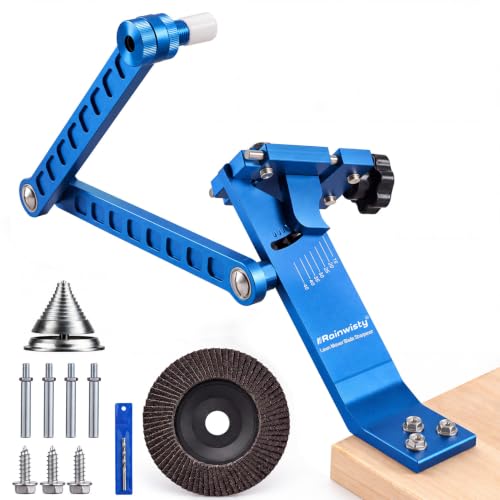
Blade length is the distinguishing fit detail here: this kit is specified for blades up to 30 inches long, with a maximum thickness of 0.28 inch. It also fits blades 1.69 to 3.54 inches wide and includes a balancer. The adjustable jig covers 15° to 45°, so it can be set to match a blade’s bevel. This is a clear option when both the blade dimensions and balancer inclusion matter. Its width range is narrower than the SporGain jigs that specify 1.65 to 3.60 inches, so check the blade measurement before choosing it.
Bottom line: Pick this if your blade is within its dimensions and you want a balancer included.
SporGain Adjustable Sharpener with Ball-Bearing Handle
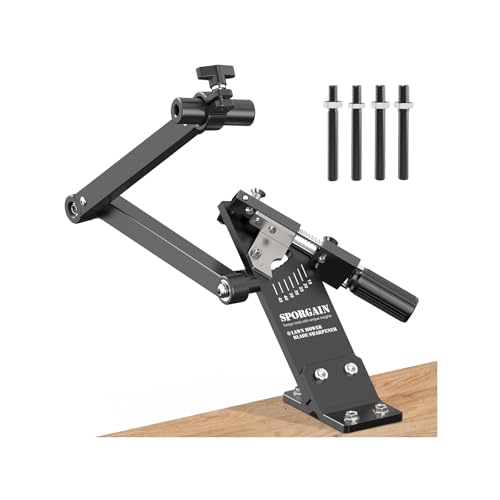
A ball-bearing handle and four angle-grinder adapter screws distinguish this SporGain jig. It adjusts from 15° to 45° and fits blades 1.65 to 3.60 inches wide; the maker says it works with right- and left-hand blades as well as standard straight, mulching, and high-lift styles. The 25 mm handle gives the frame a different handling feature from a basic blade holder. This product does not include a balancer, so it is less suited to someone seeking an all-in-one sharpening and balancing kit.
Bottom line: Choose this if you want a ball-bearing handle and your blade fits the width.
How to choose a lawn mower blade sharpening jig
Match the jig to the blade width and the angle you need to maintain. These products offer a 15°–45° adjustment range, while the width limits vary slightly: some cover 1.65–3.60 inches and another covers 1.69–3.54 inches. Measure the blade at its widest point rather than relying on the mower model alone. The angle should follow the blade’s existing bevel; removing extra metal to create a steeper or shallower edge can shorten blade life. Also check grinder compatibility: guide pins or adapter screws must fit the grinder setup. If you want to check balance after sharpening, select a kit with a balancer rather than assuming a jig includes one.
Blade fit and bevel angle
Use the blade’s width and bevel as the first fit checks; the jigs are not universal for every blade dimension. A mower blade’s cutting edge is commonly sharpened to about 30°, but the original bevel is the better guide because blade designs differ. Set the jig to follow that bevel instead of grinding a new profile. These products advertise adjustment between 15° and 45°, but that range does not guarantee a fit for every blade. Measure blade width, and, where limits are provided, thickness and length too. If a blade falls outside a dimension, do not force it into the holder; select a jig whose fit covers the blade.
| Need | Choose by | What to verify |
|---|---|---|
| Basic sharpening jig | Blade width and grinder guide fit | Blade bevel and adapter fit |
| Sharpening plus balancing | Kit that includes a balancer | Balancing surface or wall space |
| Long blade fit | Maximum blade length | Length and thickness limits |
Safe sharpening and balancing
Remove the blade before sharpening and prevent the mower from starting: disconnect the spark-plug wire on a gas mower or remove the battery on a cordless mower. Wear eye protection and gloves, and clamp the blade securely; an angle grinder can throw sparks and metal fragments. Keep the grinder moving lightly rather than holding it in one spot, which can overheat the cutting edge. After sharpening, check balance with a blade balancer: a blade that tips consistently to one side needs a small amount of material removed from the heavier side. Recheck balance after each pass instead of grinding away a large amount at once.
Frequently Asked Questions
What angle should I sharpen a mower blade at?
About 30° is a common mower-blade bevel, but use the blade’s existing edge as the guide. The jigs here adjust from 15° to 45°, so set the holder to match rather than changing the bevel unnecessarily.
Should I balance a mower blade after sharpening?
Yes, check balance after sharpening because uneven material removal can make one side heavier. A blade balancer helps identify which side needs a small amount of additional grinding.
Can I sharpen a mower blade without removing it?
Removing the blade is the safer approach when using an angle grinder. Disconnect the spark-plug wire or remove the battery first, then clamp the blade securely before grinding.
How do I know whether a jig fits my mower blade?
Measure the blade width and compare it with the jig’s range; the products with limits cover widths from 1.65 to 3.60 inches. Also check any blade thickness or length limit and confirm the grinder guide or adapter fits.
How often should mower blades be sharpened?
A common rule is to sharpen after about 20 to 25 hours of mowing, though sandy soil and frequent contact with debris can dull an edge sooner. Inspect the edge regularly and sharpen when it becomes visibly nicked or ragged.