
Highest Rated Celtic Salt: 4 Types Compared

For most kitchens, Celtic Sea Salt Fine Ground, 1 lb suits everyday cooking because its fine grains dissolve evenly in recipes; choose Celtic Sea Salt Light Grey Coarse, 1 lb instead if you want coarse crystals for finishing. The products here are Celtic sea salts, but none has stated rating data to distinguish them by rating.
Choose an 18-ounce fine ground option if you prefer a larger package, and compare grain texture rather than mineral-count claims when deciding how to use the salt.
We earn a commission if you buy through links on this page. As an Amazon Associate I earn from qualifying purchases. Products are compared on manufacturer specifications, not hands-on testing.
- Best overall: Celtic Sea Salt Fine Ground, 1 lb – Fine grains dissolve evenly for everyday cooking and baking.
- Best for finishing: Celtic Sea Salt Light Grey Coarse, 1 lb – Coarse crystals provide a larger-grain texture at the table.
- Best for larger pack: Le Marinier Organic Fine Ground, 18 oz – Fine ground salt comes in an 18-ounce package.
| Product | Best for | Grind | Package size | Origin | Shop |
|---|---|---|---|---|---|
| Celtic Sea Salt Fine Ground, 1 lb | Everyday cooking | Fine | 16 oz | Coastal salt beds | Check Price on Amazon |
| Celtic Sea Salt Light Grey Coarse, 1 lb | Coarse finishing | Coarse | 16 oz | — | Check Price on Amazon |
| Le Marinier Organic Fine Ground, 18 oz | Larger fine pack | Fine | 18 oz | French ocean marshes | Check Price on Amazon |
| Sante Naturelle Organic Fine Ground, 18 oz | Moist fine salt | Fine | 18 oz | French ocean marshes | Check Price on Amazon |
Celtic salt options by grind and package size
Compare the grain texture and package size first, since those are the clearest practical differences among these salts.
Celtic Sea Salt Fine Ground, 1 lb
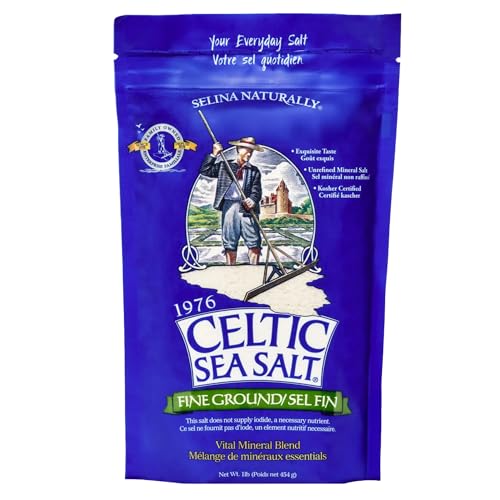
Fine grains distinguish this option from the coarse crystals in Celtic Sea Salt Light Grey Coarse, 1 lb, making it suited to recipes where salt needs to disperse throughout the food. The 16-ounce package is a practical size for regular cooking, baking, and seasoning. The maker says it is hand-harvested and lab tested, and describes it as unrefined and free from additives. Fine salt packs more densely by volume than coarse crystals, so swapping it into a recipe by teaspoon can change the salt amount; weigh it when precision matters. Its fine texture is less suited to a crunchy finishing sprinkle.
Bottom line: Choose this for recipes and everyday seasoning where fine grains are useful.
Celtic Sea Salt Light Grey Coarse, 1 lb

Coarse crystals set this salt apart from the fine ground choices, giving it a more noticeable texture when sprinkled over food at the end of cooking. The 16-ounce package weighs 1 pound, matching Celtic Sea Salt Fine Ground, 1 lb in package weight while differing in grind. Its features describe it as vegetarian, and the maker says it is hand-harvested and lab tested. Because coarse crystals dissolve more slowly than fine grains, they are less convenient when a recipe calls for salt to blend quickly into a batter or sauce. Choose it when visible crystals and a coarse bite matter more than rapid dissolving.
Bottom line: Pick this when you want coarse crystals for a finishing sprinkle.
Le Marinier Organic Fine Ground, 18 oz
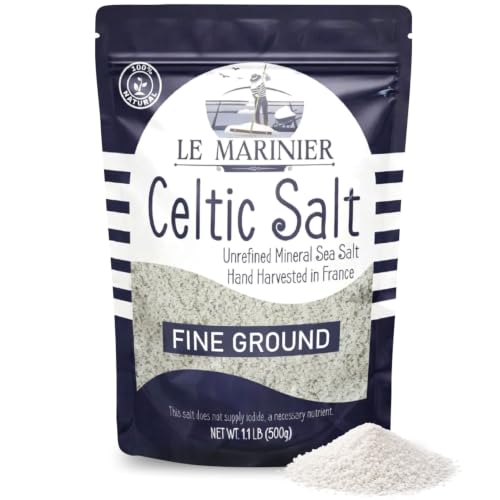
An 18-ounce package makes this fine ground salt the larger option compared with the 16-ounce packages from Celtic Sea Salt Light Grey Coarse, 1 lb and Celtic Sea Salt Fine Ground, 1 lb. The maker says it is hand-harvested in French ocean marshes and unrefined, with no additives or chemicals added. Fine grains suit cooking and baking because they disperse readily through mixtures; they are also easier to measure consistently by volume than coarse crystals, although weighing remains more precise. The product is labeled organic in its name, but the fields do not identify a certifier. Its fine texture is not the pick for a coarse, crunchy finish.
Bottom line: Choose this if you want fine grains in an 18-ounce package.
Sante Naturelle Organic Fine Ground, 18 oz

This fine ground salt is described by the maker as slightly moist, a texture distinction from the other fine options and the coarse crystals in Celtic Sea Salt Light Grey Coarse, 1 lb. Its 18-ounce package matches Le Marinier Organic Fine Ground, 18 oz in size. The maker says it is hand-harvested in French ocean marshes and unrefined. Fine grains can blend smoothly into recipes, while moisture may affect how readily salt pours and how it behaves in a shaker; a dry, tightly sealed container helps limit clumping.
Bottom line: Pick this if you prefer fine salt with a slightly moist texture.
How to choose Celtic salt for cooking
Choose by grain size first: fine salt is generally easier to distribute through doughs, batters, and sauces, while coarse salt gives a more perceptible finish. A teaspoon is not a reliable one-for-one swap between different grain sizes because fine grains pack more tightly than coarse crystals. Weigh salt when recipe precision matters, especially in baking; otherwise, follow the recipe’s type and measure. Salt is primarily sodium chloride, so trace-mineral claims should not be treated as a substitute for a varied diet. These products differ most clearly in grind and package size, so base the choice on how you cook rather than on unprovided ratings.
Fine versus coarse Celtic salt
Fine salt is the easier choice when a recipe needs salt to disperse evenly, while coarse crystals make sense as a finishing texture. Fine crystals have more surface area relative to their size and typically dissolve faster in liquids; coarse crystals can remain perceptible longer. Use this guide to match texture to task rather than assuming the same volume measure provides the same salt amount.
| Kitchen need | Grind to choose |
|---|---|
| Mixing into batter or sauce | Fine |
| Sprinkling for a crystal texture | Coarse |
| Matching a recipe by weight | Either; weigh it |
For a recipe measured by teaspoons, use the specified grain style when possible; with a different grind, measure cautiously or use a scale.
Package size and storage for sea salt
Package weight helps estimate how often you will replenish salt, but it does not describe how much space the crystals occupy. These options come in 16-ounce and 18-ounce packs, a difference of 2 ounces by weight. Store sea salt in a tightly closed, dry container away from steam and splashes; moisture can make crystals clump, particularly when a salt already has a moist texture. Avoid shaking a container directly over a steaming pot, since condensation can enter and cause caking. A small, dry spoon is more useful for measuring than pouring from a bag, especially when you need a repeatable amount.
What to know about mineral claims
Sea salt’s mineral content varies with its source and processing, but salt remains primarily sodium chloride rather than a meaningful replacement for mineral-rich foods. Claims of dozens of trace minerals do not tell you the amount of each mineral in a serving, so compare these products by cooking use and texture instead. Sodium content also matters regardless of whether salt is labeled sea salt, Celtic, or unrefined: the FDA Daily Value for sodium is less than 2,300 milligrams per day for people ages 14 and older. That is a daily limit, not a target for a single meal. Use salt sparingly and consider the total sodium in packaged ingredients as well.
Frequently Asked Questions
Can fine Celtic salt replace coarse salt in recipes?
Fine Celtic salt can work in place of coarse salt, but a teaspoon may contain a different amount because fine grains pack more tightly. Weighing the salt is the more consistent way to substitute.
Does Celtic sea salt dissolve faster than coarse salt?
Fine-grained Celtic salt generally dissolves faster than coarse crystals because its grains are smaller. For a cold mixture, stirring and time also affect how quickly salt dissolves.
How should I store Celtic salt to prevent clumping?
Keep Celtic salt in a tightly closed, dry container away from steam and splashes. A dry spoon and avoiding direct shaking over a boiling pot help limit moisture exposure.
Is Celtic salt a significant source of minerals?
Celtic salt is primarily sodium chloride, and trace-mineral claims do not establish meaningful amounts of each mineral per serving. The FDA Daily Value for sodium is less than 2,300 milligrams per day for most people ages 14 and older.