
Vinyl to Vinyl Glue: 4 PVC Adhesives Compared

For most vinyl-to-vinyl PVC repairs, HH-66 Vinyl Cement, 8 oz is the clearest fit because it is an 8-ounce vinyl cement with a maker-claimed service range of -10 °F to 150 °F. Choose HH-66 Toluene-Free Vinyl Cement, 1 oz if you specifically want a toluene-free formula, or Loctite Vinyl, Plastic & Fabric Adhesive, 2-Pack if you need an adhesive also labeled for plastic and fabric.
We earn a commission if you buy through links on this page. As an Amazon Associate I earn from qualifying purchases. Products are compared on manufacturer specifications, not hands-on testing.
- Best overall: HH-66 Vinyl Cement, 8 oz – An 8-ounce HH-66 vinyl cement with a maker-claimed service range of -10 °F to 150 °F.
- Best for toluene-free formula: HH-66 Toluene-Free Vinyl Cement, 1 oz – HH-66 cement in a 1-ounce size, with a toluene-free formula.
- Best for fabric and plastic: Loctite Vinyl, Plastic & Fabric Adhesive, 2-Pack – The adhesive is labeled for vinyl, plastic, and fabric.
| Product | Best for | Size | Material use | Temperature range | Shop |
|---|---|---|---|---|---|
| HH-66 Vinyl Cement, 8 oz | Larger PVC repairs | 8 fl oz | Vinyl, PVC, canvas | -10 °F to 150 °F | Check Price on Amazon |
| HH-66 Toluene-Free Vinyl Cement, 1 oz | Toluene-free option | 1 oz | Vinyl, PVC | -10 °F to 150 °F | Check Price on Amazon |
| Clear Vinyl Cement, 130 ml | Inflatable repairs | 130 ml | PVC | — | Check Price on Amazon |
| Loctite Vinyl, Plastic & Fabric Adhesive, 2-Pack | Fabric and plastic | 2 × 1 oz | Vinyl, plastic, fabric | — | Check Price on Amazon |
Vinyl to Vinyl Glue Options
Compare these adhesives by intended material, container size, and the temperature range stated for the HH-66 formulas.
HH-66 Vinyl Cement, 8 oz

Among these options, HH-66 Vinyl Cement, 8 oz pairs the largest container size with an HH-66 vinyl cement formula. The maker says it bonds vinyl, PVC, and canvas, can be applied underwater, and remains serviceable from -10 °F to 150 °F after setting; it also cites ASTM C711 and ASTM D7149 for flexibility and serviceability claims. The 8-ounce size suits repeated repairs or a larger project. Its application range is 35 °F to 95 °F, so buyers working outside that window should consider whether their repair conditions fit.
Bottom line: Choose this for a larger PVC or vinyl repair when its application temperature range fits.
HH-66 Toluene-Free Vinyl Cement, 1 oz
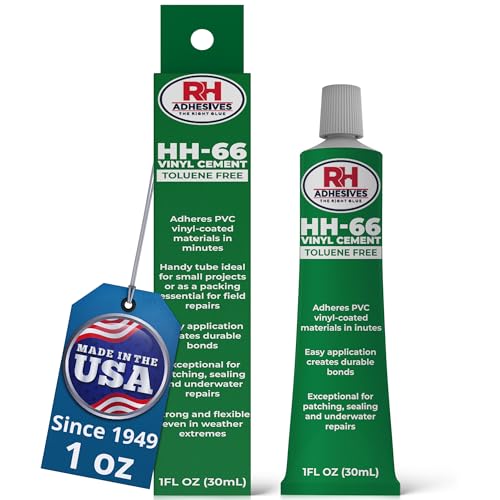
HH-66 Toluene-Free Vinyl Cement, 1 oz is the small-container HH-66 option, distinguished by its toluene-free formula. The maker says it bonds vinyl and PVC, can be applied underwater, and remains serviceable from -10 °F to 150 °F after setting; its application range is 35 °F to 95 °F. The 1-ounce size may suit a limited repair where a larger container would be unnecessary. The material scope is narrower than the adhesive labeled for plastic and fabric, so buyers repairing those materials should verify compatibility before choosing it.
Bottom line: Pick this for a small vinyl or PVC repair when a toluene-free formula is the priority.
Clear Vinyl Cement, 130 ml

Clear Vinyl Cement, 130 ml is marketed for inflatable repairs and mutual bonding of PVC, while also naming pool liners, tarps, hot tubs, and air mattresses as uses. Its maker claims a clear, flexible bond with resistance to water, salt, chemicals, hot water, and UV-related yellowing after curing. At 130 ml, it provides a middle-sized container compared with the 1-ounce and 8-ounce HH-66 options. The claims do not give an application or service temperature range, so this is less useful when temperature limits are central to the repair decision.
Bottom line: Choose this for a PVC inflatable or similar listed use when a clear bond is wanted.
Loctite Vinyl, Plastic & Fabric Adhesive, 2-Pack

Unlike the PVC-cement options, Loctite Vinyl, Plastic & Fabric Adhesive, 2-Pack is labeled for vinyl, plastic, and fabric, making its material range the main reason to consider it. The product name identifies it as a flexible, waterproof polyurethane adhesive supplied as two 1-ounce tubes. That combination may suit small repairs involving fabric or plastic alongside vinyl.
Bottom line: Pick this when the repair includes fabric or plastic as well as vinyl.
How Vinyl-to-Vinyl Adhesives Bond
Vinyl cement is commonly a solvent-based adhesive that softens compatible PVC surfaces so they fuse as the solvent evaporates; a general-purpose flexible adhesive instead relies on its own adhesive layer. That difference matters most on flexible PVC seams, where the bonded joint needs to bend with the material. PVC is not interchangeable with every plastic called vinyl: formulations, coatings, and plasticizers vary, and an adhesive suitable for one sheet or fabric may not suit another. Match the adhesive label to the exact substrate and repair use, rather than choosing by the word “vinyl” alone. Solvent-based products can release vapors, so work with ventilation and keep them away from ignition sources; read the product safety directions before application.
Choosing Glue for the Repair
Choose by the substrate first, then by the amount of adhesive and the repair conditions. PVC cement is the more direct match for compatible PVC-to-PVC seams, while an adhesive labeled for plastic and fabric has a broader stated material scope. A practical decision rule is to choose a product explicitly naming both materials when the repair joins vinyl to fabric or plastic; for two PVC surfaces, prioritize a vinyl cement. The container sizes here range from 1 ounce to 8 fluid ounces, with one option sized at 130 ml. Do not assume a larger container means a different bond: the useful distinction is material fit, formulation preference, and whether the repair uses enough adhesive to justify that size.
| Repair need | What to prioritize |
|---|---|
| PVC joined to PVC | Vinyl cement labeled for PVC |
| Vinyl joined to fabric or plastic | Adhesive labeled for both materials |
| Small isolated repair | A smaller container |
Preparing Vinyl Before Gluing
Clean, well-matched surfaces are essential for a sound adhesive joint: remove dirt, oils, and residue, then let any cleaning solvent evaporate fully before gluing. Keep the repair area flat and supported so flexible material does not shift while the bond sets. PVC cement and polyurethane adhesives can use different application steps and cure times, so do not transfer one product’s process to another. Avoid aggressive sanding on thin vinyl, which can weaken or puncture the material. Test an inconspicuous area when appearance matters, since even clear adhesives can leave visible residue or affect a finish. Follow the adhesive’s own label for preparation, application, and cure time.
Temperature, Water, and Safe Use
Application temperature and the temperature a cured bond can tolerate are separate limits. The HH-66 products here give a 35 °F to 95 °F application range and a maker-claimed service range of -10 °F to 150 °F after setting; those ranges should not be treated as a promise that every repair will work in those conditions. A claim of underwater application is product-specific, not a general rule for vinyl adhesives, and it does not replace the product’s preparation directions. For solvent-containing adhesives, use ventilation, avoid flames and sparks, and keep the container closed when not in use. Never inflate or load a repaired item until the adhesive has fully cured according to its label.
Frequently Asked Questions
Can vinyl glue bond two PVC surfaces?
Yes, vinyl cement is commonly used to bond compatible PVC surfaces by softening them at the joint. Check that the adhesive names PVC and allow its full labeled cure time before putting the repair under strain.
Can I use vinyl cement on an inflatable?
Some vinyl cements are marketed for inflatables, but the material must match the adhesive’s compatibility. Patch flexible PVC only with a product naming PVC or inflatables, and wait until fully cured before reinflating.
Does waterproof mean I can glue underwater?
No; waterproof after curing and application underwater are different claims. Use an underwater application only when the specific adhesive explicitly permits it, and follow its preparation directions.
What temperature can vinyl cement handle?
The HH-66 options here give a maker-claimed service range of -10 °F to 150 °F after setting, but the application range is 35 °F to 95 °F. Other vinyl adhesives can have different limits, so check the adhesive label.
Can vinyl glue join vinyl to fabric?
Some adhesives are labeled for both vinyl and fabric, while PVC vinyl cement may be intended for PVC surfaces. For a mixed-material seam, choose an adhesive that names both substrates and test a hidden area if appearance matters.