
Everbilt Squeak-Free Door Hinges: 4 Options Compared

The Everbilt squeak-free door hinge is not among these choices, so choose an alternative by matching its 3.5-inch size, finish and pack count to your door. The satin nickel option gives a squeak-free guarantee and door-weight limit; choose a different option if you need matte black or a larger pack.
We earn a commission if you buy through links on this page. As an Amazon Associate I earn from qualifying purchases. Products are compared on manufacturer specifications, not hands-on testing.
- Best overall: Hardware Essentials 854321 – The satin nickel hinge includes a 10-year squeak-free guarantee and a maximum door-weight rating.
- Best for large projects: TDCHINGES Matte Black 36-Pack – The matte black 3.5-inch hinges come in a 36-pack.
- Best for removable-pin access: TDCHINGES Matte Black 18-Pack – The 18-pack includes a removable riveted pin.
| Product | Best for | Finish | Pack count | Shop |
|---|---|---|---|---|
| Hardware Essentials 854321 | Rated door loads | Satin nickel | 5 hinges | Check Price on Amazon |
| TDCHINGES Matte Black 36-Pack | Large projects | Matte black | 36 hinges | Check Price on Amazon |
| TDCHINGES Matte Black 18-Pack | Removable-pin access | Matte black | 18 hinges | Check Price on Amazon |
| Matte Black No-Squeak 18-Pack | Non-removable pin | Matte black | 18 hinges | Check Price on Amazon |
Everbilt Squeak-Free Door Hinge Alternatives
Compare these door hinges by their size, finish, quantity and installation features.
Hardware Essentials 854321

Unlike the matte black options, this satin nickel hinge gives a specific door-weight limit and a 10-year squeak-free guarantee. The maker says two hinges support a door up to 100 pounds, or three support up to 150 pounds; it is intended for residential doors up to 1-3/8 inches thick. A removable pin can aid installation and removal. Choose it when those limits and the finish suit the door. The main limitation is quantity: a five-pack may not be the right count for a project requiring many hinges.
Bottom line: Pick this when its satin nickel finish and stated door-weight limits match your door.
TDCHINGES Matte Black 36-Pack

The 36-pack stands apart from the smaller quantities, making it the option to consider when replacing many hinges in one project. These 3.5-inch matte black hinges have rounded corners, six holes and a plain bearing design; the package includes 216 screws. The maker describes them as no-squeak hinges and says they can rotate 270 degrees. Their fit is for light-duty hollow-core doors, so they are a less suitable choice when you need a specified door-weight rating or a satin nickel finish.
Bottom line: Choose this for a multi-door project that calls for matte black hinges in a 36-pack.
TDCHINGES Matte Black 18-Pack

This 18-pack differs from the other TDCHINGES option by including a removable riveted pin, which can make pin removal relevant to installation or door removal. The 3.5-inch matte black hinges have rounded corners, six holes and a plain bearing design, and the pack includes 108 screws. The maker describes them as no-squeak hinges and says they rotate 270 degrees. The pack is half the size of the 36-pack, so it is less suited to replacing hinges across many doors at once.
Bottom line: Pick this when you want a matte black 18-pack with a removable riveted pin.
Matte Black No-Squeak 18-Pack
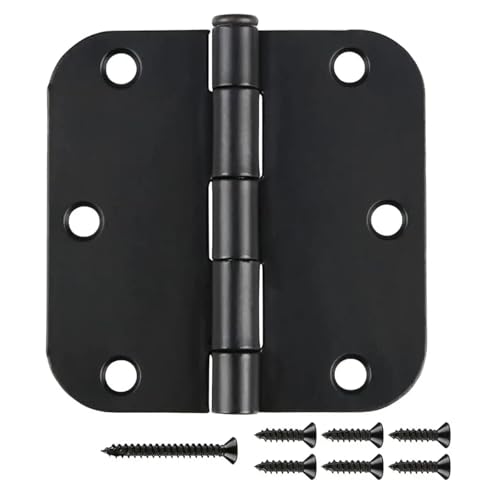
This 18-pack is the matte black option whose features specify a non-removable riveted pin, unlike the removable-pin TDCHINGES alternative. The hinges are 3.5 inches, have rounded corners and use a plain bearing design; the pack includes 108 screws. The maker describes the hinges as smooth-operating and no-squeak, and says they can rotate 270 degrees. The non-removable pin is a limitation if you need to take the pin out to remove a door, and no door-weight rating is provided in its specifications.
Bottom line: Choose this for a matte black 18-pack when a non-removable pin suits the installation.
How to choose a squeak-free door hinge
Choose a hinge by matching its dimensions, corner shape, finish and load limit to the door and frame. A 3.5-inch hinge is a common residential size, but matching the old hinge’s height and corner radius helps avoid enlarging or reshaping the mortise. A full-mortise hinge sits flush when its leaf is recessed into the door and jamb. For load, use the hinge maker’s limit rather than treating pack size or a heavy-looking leaf as a capacity rating. As a practical rule, if the door exceeds 1-3/8 inches thick or its weight is above 150 pounds, do not assume these stated specifications establish a fit; verify the required hinge rating before choosing.
Hinge size, corners and fit
Measure the existing hinge leaf from top to bottom and side to side, then compare the corner shape and screw-hole pattern. These options use 3.5-inch leaves, while their corner descriptions include rounded corners or a 5/8-inch radius; those terms can describe the same rounded-corner geometry, but confirm the actual radius against the mortise. A replacement that is too large may extend beyond the mortise, while a smaller leaf can leave exposed wood or fail to cover the recess. Check the door and jamb thickness as well as hinge size: the satin nickel option specifies suitability for doors up to 1-3/8 inches thick, while the matte black options are described as suitable for light-duty hollow-core doors.
Plain-bearing and squeak-free hinge claims
A plain-bearing hinge uses a pin-and-knuckle arrangement without a separate ball-bearing race, while ball-bearing hinges are often selected for heavier or frequently used doors. The matte black options are described as plain-bearing and no-squeak; the satin nickel option carries a 10-year squeak-free guarantee from its maker. A guarantee is not a substitute for checking fit, load rating or installation. Hinge noise can also result from a loose screw, a misaligned door, dirt or corrosion around the pin, rather than the hinge type alone. For a rubbing door, check whether the door edge contacts the jamb before replacing hinges solely to address sound.
Hinge quantity and safe installation
Hinge count and placement affect support, but the correct setup depends on door weight, height and the hinge maker’s rating. One option specifies a maximum of 100 pounds with two hinges and 150 pounds with three, for residential doors up to 1-3/8 inches thick; do not transfer those limits to the other hinges. Mark screw locations with the hinge leaf held flush in its mortise, then drill pilot holes using a bit sized for the screw and the wood. Support the door during removal or installation so it cannot fall or pinch fingers. If an existing door is heavy, damaged, or not held securely by its frame, get help rather than relying on a pack’s screw count as a safety rating.
Frequently Asked Questions
What size are standard residential door hinges?
A 3.5-inch hinge is a common size for residential doors, but size alone does not confirm fit. Match the old leaf’s height, width, corner radius and hole locations to avoid changing the mortise.
How many hinges does a door need?
Many residential doors use two or three hinges, but door weight, height and the hinge rating determine the appropriate count. The satin nickel option specifies 100 pounds maximum with two hinges and 150 pounds with three.
Can you remove a door with a non-removable pin hinge?
A non-removable pin is not designed to be pulled out for routine door removal. If removal by taking out the pin matters, choose a hinge whose features specify a removable pin.
What does a 5/8-inch radius hinge corner mean?
A 5/8-inch radius describes the curved corner geometry of a rounded hinge leaf. Check the existing mortise because a different corner shape or radius can keep a replacement leaf from sitting flush.
Why can a door hinge squeak after installation?
A hinge can squeak when its pin area is dirty or corroded, or when a loose screw or misaligned door puts friction on the knuckles. First check screw tightness and whether the door rubs the jamb; a squeak-free claim does not correct a fit problem.