
Aluminum Sulfate for Plants: 4 Options Compared

For a 5-pound option for acid-loving shrubs, Aluminum Sulfate 5 lb is a direct match; choose Hi-Yield Aluminum Sulfate 10 lb if you want a 10-pound package. Aluminum sulfate is a soil amendment used to lower soil pH, but the right amount depends on your starting pH and soil buffering.
For blue hydrangeas, check soil pH and plant variety before applying: color is affected by both acidity and aluminum availability, so a soil acidifier is not a guarantee of blue blooms.
We earn a commission if you buy through links on this page. As an Amazon Associate I earn from qualifying purchases. Products are compared on manufacturer specifications, not hands-on testing.
- Best overall: Aluminum Sulfate 5 lb – A 5-pound package with fertilizer-grade aluminum sulfate and use guidance for acid-loving shrubs.
- Best for larger gardens: Hi-Yield Aluminum Sulfate 10 lb – The 10-pound package is larger than the 5-pound options.
- Best for hydrangea color: Hoffman Blue Magic Aluminum Sulfate – Its features specifically describe use as an acidifying soil conditioner for hydrangeas and other acid-loving plants.
| Product | Best for | Package size | Aluminum content | Named plant use | Shop |
|---|---|---|---|---|---|
| Aluminum Sulfate 5 lb | Acid-loving shrubs | 5 lb | 9.0% metallic aluminum | Hydrangeas, rhododendrons, blueberries | Check Price on Amazon |
| Southern Ag Aluminum Sulfate 5 lb | Labeled shrub use | 5 lb | 9.0% metallic aluminum | Hydrangeas, rhododendrons, blueberries | Check Price on Amazon |
| Hoffman Blue Magic Aluminum Sulfate | Hydrangea gardens | — | — | Hydrangeas, azaleas, rhododendrons | Check Price on Amazon |
| Hi-Yield Aluminum Sulfate 10 lb | Larger garden areas | 10 lb | — | Azaleas, gardenias, camellias | Check Price on Amazon |
Aluminum Sulfate for Plants
Compare package size and stated use, then base application on your soil and the product label.
Aluminum Sulfate 5 lb

Aluminum Sulfate 5 lb pairs a 5-pound package with a 9.0% metallic aluminum content, making it a straightforward option for gardeners treating acid-loving shrubs. Its use list includes hydrangeas, rhododendrons, blueberries, dogwoods, holly, gardenias, camellias, and azaleas. The directions say to broadcast evenly, wash material off foliage, and water it in; it is not for spray application. This suits a smaller garden or a trial area. The package size may be limiting when treating many shrubs, and the label rate should guide application rather than a guessed amount.
Bottom line: Choose it for a smaller planting of acid-loving shrubs when a 5-pound package suits the area.
Southern Ag Aluminum Sulfate 5 lb

Southern Ag Aluminum Sulfate 5 lb is another 5-pound aluminum sulfate option with 9.0% metallic aluminum and the same acid-loving shrub uses as Aluminum Sulfate 5 lb. Its features also specify broadcasting evenly, washing it off foliage, and watering afterward, rather than spraying. That makes it a fit for gardeners who want those application cautions alongside use for hydrangeas, azaleas, blueberries, and related shrubs. Its package and stated composition do not set it apart from Aluminum Sulfate 5 lb for garden coverage, so compare the label instructions before deciding which is a better fit for your specific planting.
Bottom line: Pick it when you want the Southern Ag-named 5-pound option for acid-loving shrubs.
Hoffman Blue Magic Aluminum Sulfate
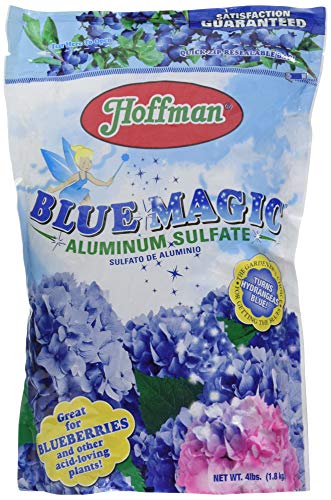
Hoffman Blue Magic Aluminum Sulfate is framed as an acidifying soil conditioner for hydrangeas and a broad group of acid-loving plants, including azaleas, rhododendrons, holly, camellias, gardenias, and blueberries. That makes it relevant when hydrangeas are the main reason for adjusting soil acidity. Buyers planning a measured treatment should confirm package size and application rate before using it, since those determine how much area a package can cover and cannot be inferred from the product name.
Bottom line: Choose it when hydrangeas are the main focus and you can verify its size and label rate.
Hi-Yield Aluminum Sulfate 10 lb

Hi-Yield Aluminum Sulfate 10 lb comes in a 10-pound package, twice the size of Aluminum Sulfate 5 lb and Southern Ag Aluminum Sulfate 5 lb, and its features explicitly describe use across larger garden areas. It is intended for acid-loving plants such as azaleas, gardenias, camellias, and rhododendrons; the features also mention aluminum sulfate use for maintaining blue hydrangea color. Application rates vary by application type and area dimensions, so the product label is central to calculating a suitable amount. The larger package can be less convenient for a small planting, and the features warn against using it on white or pink hydrangeas unless blue is desired.
Bottom line: Choose it for a larger planting when its label rate and hydrangea color caveat fit your plans.
How to choose aluminum sulfate for plants
Start with a soil test, because aluminum sulfate changes acidity and a soil’s buffering capacity affects how much amendment is needed. Most acid-loving landscape plants do well around pH 4.5 to 6.0, though the preferred range varies by plant; many garden plants prefer soil closer to neutral. A test gives the starting point and helps avoid lowering pH too far. Apply only the amount on the product label for your measured area, then retest before repeating. If your soil is already in the plant’s preferred range, adding an acidifier can create an unnecessary problem. For large areas or persistently alkaline soil, a local soil-testing service can help interpret results and amendment needs.
Hydrangea color and soil pH
Blue hydrangea blooms generally require acidic soil, often around pH 5.2 to 5.5, and access to aluminum; pink flowers are more common in less acidic conditions. The response depends on hydrangea type and cultivar, so a soil treatment cannot guarantee a particular color. White hydrangeas generally do not change color in the same way, and some cultivars are not color-responsive. Aluminum sulfate can lower pH, but excessive use may make soil too acidic and expose roots to harmful aluminum levels. Test the soil first, make gradual changes, and follow the specific product label. If preserving pink or white blooms is important, avoid an acidifying treatment unless a soil test shows a separate need.
Aluminum sulfate compared with elemental sulfur
Aluminum sulfate and elemental sulfur can both lower soil pH, but they work differently. Aluminum sulfate dissolves and reacts in soil more quickly; elemental sulfur depends on soil microbes converting it, a process slowed by cold or dry soil. That distinction matters when choosing an approach, but speed does not make a larger application safer. Soil texture, existing pH, moisture, and organic matter affect the result. Use this guide to match the method to the garden goal, then use a soil test and product label for quantities.
| Need | General approach | Key consideration |
|---|---|---|
| Adjust pH with aluminum sulfate | Use a labeled aluminum sulfate soil amendment | Can act relatively quickly; avoid excess aluminum |
| Gradually acidify soil | Consider elemental sulfur | Microbial action takes time and is temperature-dependent |
| Maintain current soil condition | Test before amending | No amendment may be needed if pH is suitable |
Application and plant safety
Spread soil amendments evenly over the intended area and keep granules off leaves, stems, and hard surfaces; some product labels also direct gardeners to wash foliage and water after broadcasting. Aluminum sulfate is not a foliar spray, and direct contact can injure plant tissue. Measure the bed rather than estimating by handfuls, since an uneven or excessive dose can leave concentrated patches. Keep the product in its original container and away from children and pets, and avoid breathing dust during handling. Wear gloves and eye protection when spreading granules, then follow the label for watering, storage, and cleanup. Retest soil before any repeat treatment.
Frequently Asked Questions
How quickly does aluminum sulfate lower soil pH?
Aluminum sulfate can react faster than elemental sulfur, which must be converted by soil microbes. The result still depends on soil buffering, moisture, temperature, and the amount applied, so test before repeating a treatment.
What soil pH turns hydrangeas blue?
Blue hydrangea color is commonly associated with soil around pH 5.2 to 5.5 and available aluminum. Cultivar also matters, and white hydrangeas generally do not shift color like responsive pink or blue varieties.
Can aluminum sulfate burn hydrangea leaves?
Yes, granules or solution contacting foliage can injure leaves. Keep it off plant surfaces, do not spray it, and water foliage as the product label directs after broadcasting.
How often should I apply aluminum sulfate to shrubs?
Do not repeat it on a fixed calendar without checking soil pH. Test after an application and reapply only if the soil remains outside the plant’s target range and the product label allows another treatment.
Can I use aluminum sulfate on every garden plant?
No; it is intended to acidify soil for plants that tolerate or prefer acidic conditions. Many vegetables and ornamentals prefer soil nearer neutral, so test first and match the pH goal to the plant.