
Golden Home Pizza Crusts: Sizes and Options Compared

Golden Home Ultra Thin 12-inch, 3 Pack suits shoppers who want a 12-inch Golden Home pizza crust, while Golden Home Ultra Thin 7-inch, 3 Crusts is a 7-inch option with 16 grams of protein in its name. Choose a different crust if you want organic ingredients or a ready-to-bake 7-inch alternative.
Thin pizza crusts are prepared bases for adding toppings and baking; the smaller options suit individual pizzas, while a 12-inch base provides more surface area.
We earn a commission if you buy through links on this page. As an Amazon Associate I earn from qualifying purchases. Products are compared on manufacturer specifications, not hands-on testing.
- Best overall: Golden Home Ultra Thin 12-inch, 3 Pack – Its 12-inch size suits a larger pizza, and unopened crusts can be stored at room temperature for up to six months.
- Best for single servings: Golden Home Ultra Thin 7-inch, 3 Crusts – The 7-inch Golden Home crust is a smaller option, with 16 grams of protein in its name.
- Best for organic ingredients: 365 Organic Rustic White 7-inch, 2 Count – The two 7-inch crusts are made with organic wheat flour.
| Product | Best for | Diameter | Count | Protein | Shop |
|---|---|---|---|---|---|
| Golden Home Ultra Thin 12-inch, 3 Pack | Larger pizzas | 12 in | 3 crusts | 16 g | Check Price on Amazon |
| Golden Home Ultra Thin 7-inch, 3 Crusts | Small pizzas | 7 in | 3 crusts | 16 g* | Check Price on Amazon |
| Mama Mary’s Thin & Crispy 7-inch, 3 Count | Quick individual pizzas | 7 in | 3 crusts | — | Check Price on Amazon |
| 365 Organic Rustic White 7-inch, 2 Count | Organic wheat flour | 7 in | 2 crusts | — | Check Price on Amazon |
Golden Home Pizza Crusts and Alternatives
Compare the sizes and formats to find a crust that fits your meal and topping plans.
Golden Home Ultra Thin 12-inch, 3 Pack
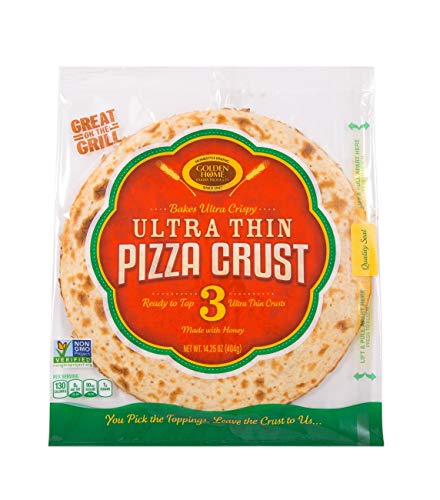
Golden Home Ultra Thin 12-inch, 3 Pack is the largest crust here at 12 inches across, making it the fit for a larger pizza rather than a personal-size one. The product name specifies a three-pack, and the maker gives a 16-gram protein figure. Unopened crusts are shelf stable for up to six months; unused crusts can be refrigerated in a resealed package for 3–5 days or frozen for up to 30 days. Its larger diameter needs more topping coverage, so measure your baking surface if space is limited.
Bottom line: Choose this if you want a 12-inch Golden Home crust and need its storage flexibility.
Golden Home Ultra Thin 7-inch, 3 Crusts

Golden Home Ultra Thin 7-inch, 3 Crusts is the compact Golden Home option: each crust measures 7 inches, compared with the 12-inch format of Golden Home Ultra Thin 12-inch, 3 Pack. Its name includes 16 grams of protein, and its three-crust count makes it suitable for separate small pizzas. A 7-inch base limits the room for toppings, which can be helpful when portioning individual meals but less convenient for serving a group from one pizza. The maker gives no storage window for this size, so plan around the package’s own handling directions.
Bottom line: Pick this when a 7-inch Golden Home base fits your portions better than a larger crust.
Mama Mary’s Thin & Crispy 7-inch, 3 Count

Mama Mary’s Thin & Crispy 7-inch, 3 Count is a ready-to-bake, thin-and-crispy alternative in the same 7-inch size as Golden Home Ultra Thin 7-inch, 3 Crusts, rather than a Golden Home product. Its maker says individual crusts bake in 7–9 minutes, which is useful when a quick meal is the priority. The three-count pack gives one base per small pizza. The maker does not give a protein amount, so buyers comparing nutrition figures should use the package label rather than assume it matches a Golden Home crust.
Bottom line: Choose this for ready-to-bake individual crusts and the 7–9-minute bake time.
365 Organic Rustic White 7-inch, 2 Count

365 Organic Rustic White 7-inch, 2 Count differs from the Golden Home options by specifying organic wheat flour and a two-crust count. Each 7-inch base is sized for a personal pizza, and the maker describes the result as thin and crispy with toasted edges. This is a smaller pack than the three-crust choices, which can suit a meal for two. The maker gives no protein figure, so it cannot be compared with the 16-gram figure in Golden Home’s product names on that basis.
Bottom line: Pick this if organic wheat flour is your deciding preference and two personal crusts are enough.
How to choose a Golden Home pizza crust
Choose by diameter first: a 12-inch base has about 2.9 times the surface area of a 7-inch base, so it holds more toppings and takes more room on a baking surface. For individual portions, a 7-inch crust keeps the footprint smaller. Thin crusts can turn crisp quickly, and wet toppings such as fresh tomatoes or watery vegetables can soften the center. Drain or blot moisture-heavy toppings before adding them. Spread toppings in a light, even layer rather than piling them in the middle. The included options differ in size, count, and stated ingredients, so choose the feature that matters most rather than assuming every thin crust handles the same topping load.
How to bake thin pizza crusts evenly
Thin prepared crusts generally need less time to crisp than thick dough, so use the package’s temperature and timing as the starting point. A home oven is commonly set around 425–450°F for pizza, but the right setting can differ by crust and appliance. Preheat fully before baking; an oven that has not reached temperature can leave the bottom pale while toppings warm. Set the crust on a baking sheet or pizza pan if it needs support, and check the underside near the end of the bake. For food safety, keep raw meat separate from ready-to-eat toppings and cook meat thoroughly before it goes on a prepared base.
How the crust sizes compare
Diameter is the clearest way to match these crusts to a meal. A 7-inch crust is generally a personal-pizza size, while a 12-inch crust serves more topping area; actual portions depend on appetite and what else is served. The table compares the key format differences, not serving recommendations.
| Format | Typical use | What to weigh |
|---|---|---|
| 7-inch thin crust | Individual pizza | Limited space for toppings |
| 12-inch thin crust | Larger shared pizza | Needs a wider pan or surface |
Measure the pan before choosing a larger base; with less than 12 inches of usable width, a 12-inch crust may not sit flat. A 7-inch crust is easier to fit on a smaller tray, but it gives less room for layered toppings.
How to store unused pizza crust
Storage depends on the crust and package: Golden Home Ultra Thin 12-inch, 3 Pack can remain shelf stable unopened for up to six months, then unused portions can be refrigerated for 3–5 days in a resealed package or frozen for up to 30 days. Keep refrigerated food at 40°F or below and frozen food at 0°F. These storage periods apply to Golden Home Ultra Thin 12-inch, 3 Pack only; do not assume that the other crusts share them. Once a package is opened, reseal it promptly to limit drying, and use clean utensils when handling the remaining crust.
Frequently Asked Questions
How big is a 7-inch pizza crust?
A 7-inch crust measures 7 inches across, or 3.5 inches from the center to the edge. It is a compact base for an individual pizza, though the serving size depends on appetite and toppings.
How much larger is a 12-inch crust than a 7-inch crust?
A 12-inch crust has about 2.9 times the surface area of a 7-inch crust. That extra room can accommodate more toppings, but it also needs a wider baking surface.
How do I keep thin pizza crust from getting soggy?
Blot or drain watery toppings before adding them, and avoid piling ingredients in the center. Thin bases have less bread beneath the toppings, so excess moisture can soften them during baking.
Can unopened pizza crust be stored at room temperature?
Golden Home Ultra Thin 12-inch, 3 Pack can be kept unopened at room temperature for up to six months. That storage window applies to that crust; check the package handling directions for other varieties.
What oven temperature should I use for thin pizza crust?
A home oven is commonly set to 425–450°F for pizza, but prepared crusts can have different directions. Preheat fully and use the crust’s package temperature and timing as the primary guide.